
The reading section of the PISA test begins with a simple task. Fifteen-year-olds have three minutes to read 21 or 22 short sentences and decide whether each one makes sense.
Yet something interesting has happened. Across 35 OECD countries, the proportion of students who answered unusually quickly while making multiple mistakes rose from 6.6% in 2018 to 11.4% in 2025.
The OECD calls them "hasty" readers and notes that their performance is hard to interpret but “it might reflect a lack of foundational skills in reading, but also a lack of attention and engagement.”
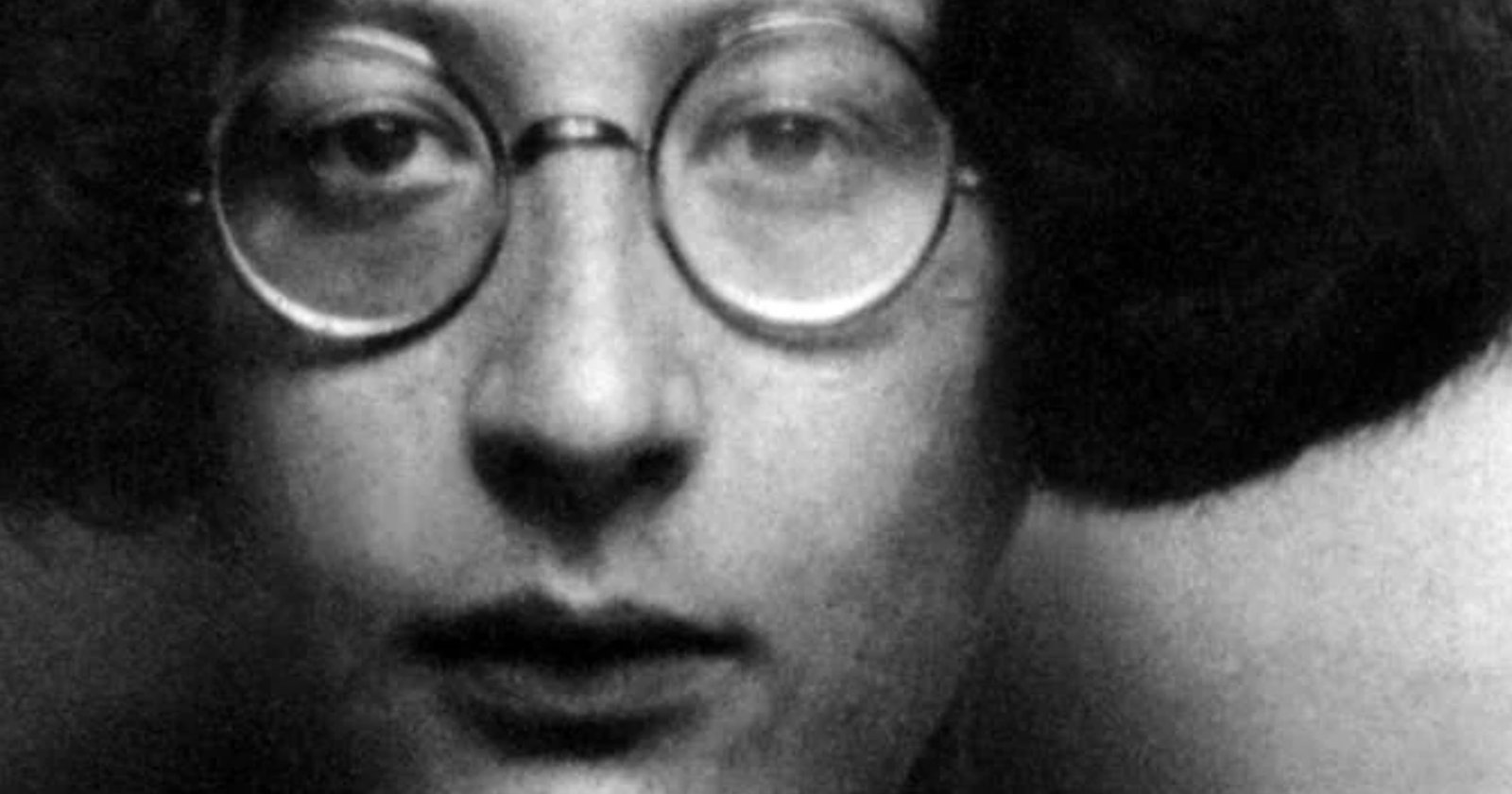
Reading the finding reminded me of something the French philosopher Simone Weil wrote more than eighty years ago.
In her 1942 essay, "Reflections on the Right Use of School Studies with a View to the Love of God," Weil argued that the real purpose of studying was to develop attention.
For Weil, this was ultimately a religious exercise. She believed that attention developed through schoolwork prepared us for prayer. But her understanding of attention is interesting even outside that religious framework.
It mattered less whether a student was learning geometry, Latin or French. What mattered was the quality of attention brought to the work.
Rather than gripping a problem more tightly, she described thought as "empty, waiting, not seeking anything."
She wasn't suggesting that we stop thinking. She wanted us to resist the temptation to force an answer before we were ready to understand it.
Weil claimed that all such mistakes, from wrong translations to absurdities in geometry problems, happen because "thought has seized upon some idea too hastily." Once we'd convinced ourselves it was right, we stopped being receptive to anything else.
I recognise this habit. When I was studying economic theory at university, I'd sometimes spend hours in the library turning a difficult concept over until it finally clicked.
I couldn't tell you now which theories kept me there so late. But I remember the difference between understanding something and merely memorising it for an exam. Understanding rarely came immediately. I had to spend time not knowing.
A secondary school geography teacher of mine used to say, "If you understand it, you won't forget it." I think that sums it up well.
Weil went further. She argued that even when a student spent an hour trying to solve a geometry problem and made no progress, the effort wasn't wasted. She believed that genuine attention could produce benefits beyond the immediate problem, even when those benefits weren't apparent.
And there's some modern research that supports a part of this idea.
In a 2021 meta-analysis published in the Review of Educational Research, Tanmay Sinha and Manu Kapur examined 53 studies involving 166 comparisons.
They found that students who attempted problems before receiving instruction generally developed better conceptual understanding and were better able to apply their knowledge to new problems. The advantage wasn't universal, however. Younger students tended to benefit more from being taught first.
The research doesn't establish Weil's deeper spiritual claim that unsuccessful effort benefits the soul. But it does challenge the assumption that struggling with a problem before learning the solution is necessarily wasted time.
Weil also thought we should examine our mistakes rather than quickly glance at the correct answer and move on. She wrote:
“Take great pains to examine squarely and to contemplate attentively and slowly each school task in which we have failed,”
That requires a different kind of patience. It's uncomfortable to discover where our reasoning went wrong, particularly when we were convinced we'd understood something.
For Weil, recognising our mistakes was an exercise in humility. We had to become willing to see what was actually there, rather than what we wanted to be there.
One of Weil's most interesting observations concerns the appearance of concentration.
Tell students to pay attention, she writes, and they'll often frown, tense their muscles and hold their breath. Yet ask them shortly afterwards what they were attending to, and they may have no answer.
As Weil puts it, "They have been concentrating on nothing."
They were making an effort, but that didn't necessarily mean they were paying attention.
For Weil, genuine attention required something different. "Attention is an effort, the greatest of all efforts perhaps, but it is a negative effort."
By this she meant allowing the mind to remain open and receptive, rather than trying to force an answer. Once we became tired, she advised stopping, resting and returning to the work.
She even argued that twenty minutes of concentrated, untired attention could be worth far more than three hours of forced application.
Modern research offers an interesting parallel to this. A 2022 meta-analysis published in Contemporary Educational Psychology found that students' minds wandered away from their learning activities about 30% of the time.
A 2013 experiment also touches on this. University students attended the same lecture, but those who multitasked on their laptops scored 55% on a subsequent comprehension test, compared with 66% for those who didn't. Both groups spent the same time in class. The difference was how they used their attention.
These studies measure distraction rather than the strained, muscular effort Weil warned against, so they don't test her twenty-minute comparison. But they do support her broader point: time spent 'studying' and time spent genuinely attending to something aren't necessarily the same.
Weil's ultimate purpose was religious. She saw attention as preparation for prayer. She wasn't simply proposing a better way to pass exams.
But I think her account of studying remains useful even outside that framework.
The PISA findings can't establish why more students are answering hastily. And Weil's philosophy can't explain a modern educational trend. What she offers is a way of thinking about attention.