
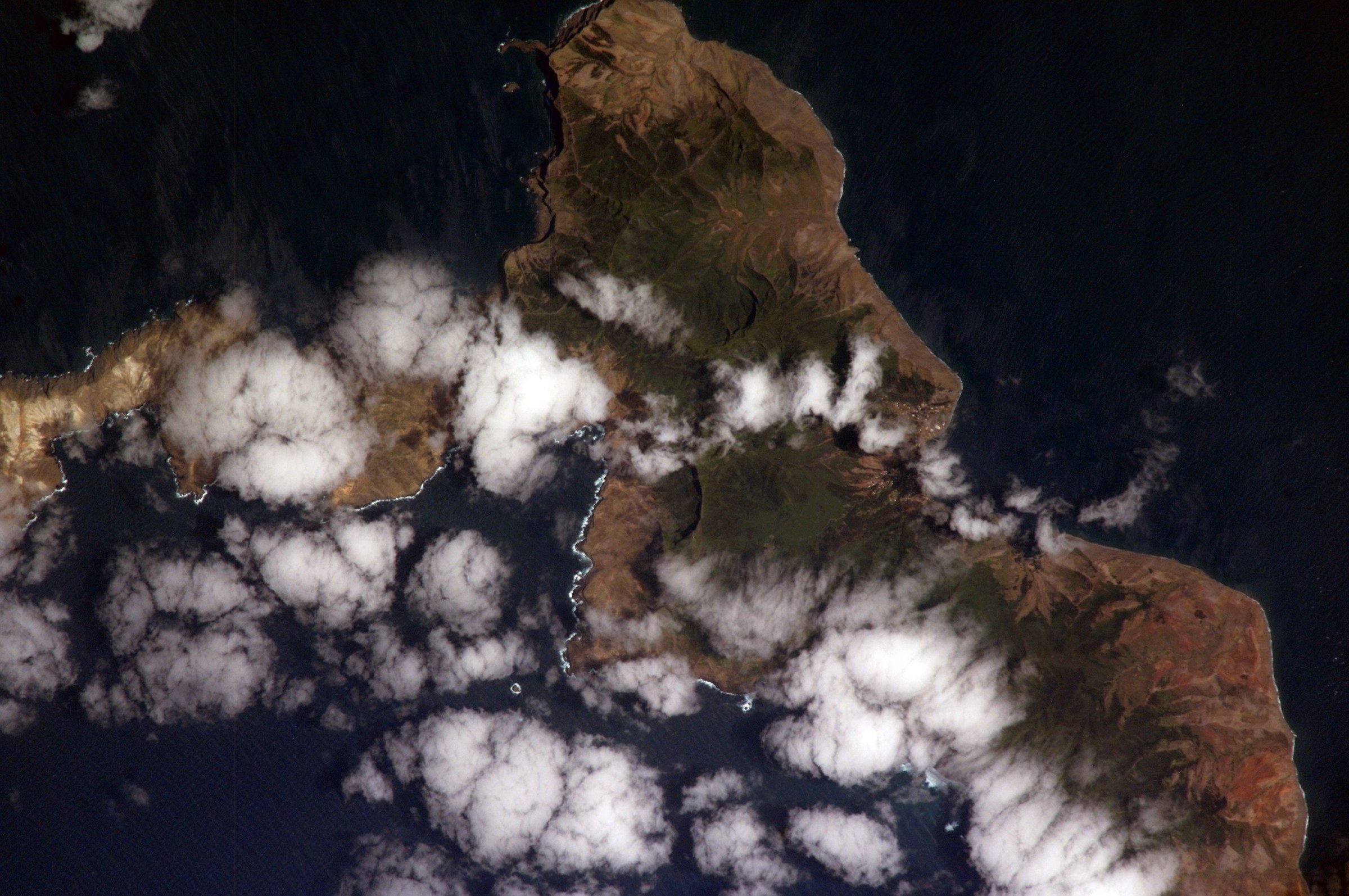

Alexander Selkirk, a Scottish sailor put ashore alone on an island in the Pacific, tamed some of the island's kids, meaning young goats, and to divert himself he "would now and then sing and dance with them and his cats", in the account left by the captain who found him, Woodes Rogers, in a transcription posted at chrisjennings.net.
Selkirk had been on the island four years and four months by the time the ships arrived, Rogers wrote.
The same narrative says that at his first coming on board, "he had so much forgot his Language for want of Use, that we could scarce understand him, for he seem'd to speak his words by halves", in the passage quoted by Princeton University Library on its Literary Classics page.
Those two scenes are not the same scene. The singing and dancing belong to the solitude. The halting speech belongs to 2 February 1709, the day the pinnace brought him off from the shore.
What do four years and four months without conversation do to a person?
Rogers published his book in London in 1712 as A Cruising Voyage Round the World, and the Princeton page calls it the first printed account of Selkirk's rescue on Isla Mas a Tierra, in the Juan Fernandez archipelago of Chile. The chrisjennings.net transcription says Rogers was at Juan Fernandez in 1709 with two ships, the Duke and the Duchess.
Selkirk joined the expedition of the buccaneer-explorer William Dampier to the Pacific in 1703, which went hunting for Spanish treasure ships along the west coast of South America, according to Princeton. Dampier captained the St. George, Thomas Stradling commanded the Cinque Ports, and Princeton's page says Selkirk was quartermaster on the Cinque Ports.
The captains fell out in the fall of 1704 and the ships parted, Princeton says. The Cinque Ports was seriously damaged and made for the Juan Fernandez Islands for repair, and Selkirk, doubting the ship's seaworthiness, demanded to be left ashore.
He regretted it quickly. Princeton's account has him running along the beach, begging to be taken back, as the ship sailed away.
For the first eight months he had to "bear up against melancholy, and the terror of being left alone in such a desolate place", Rogers wrote in the chrisjennings.net transcription.
After that comes the practical work. He built two huts of pimento trees, covered them with long grass and lined them with the skins of goats.
He killed those goats with his own gun as he wanted them, until his powder was almost spent, only a pound of it, and then got fire by rubbing two sticks of pimento wood together on his knee. He also cut his name on trees, with the time he was left and how long he had been there.
He shot the goats and used their skins for the huts, and he fed goat flesh to the cats, before he tamed any kids.
Cats and rats were already on the island, bred from animals that had got ashore from ships putting in for wood and water, Rogers wrote, and the rats gnawed his feet and clothes while he slept.
So he cherished the cats with goats' flesh until so many of them were tame that they would "lie about in hundreds", and they delivered him from the rats.
He likewise tamed some kids. The singing sits in that same sentence, as something done to divert himself, and Rogers follows it by saying Selkirk came at last to "conquer all the inconveniences of his solitude, and to be very easy". He was thirty years old.
The story of the sailor Princeton calls a possible model for Robinson Crusoe reads to me as less about adventure than about what that stretch without conversation does to a person, including his speech. The singing and the dancing happened during the years alone, and not for the men who came to get him.
A 1774 illustration in volume 2 of David Henry's An Historical Account of All the Voyages Round the World, Performed by English Navigators shows Selkirk making his cats and kids dance before Captain Cooke and his company. Princeton identifies that Cook as Edmund Cooke, one of the officers on the Woodes Rogers and William Dampier ships that rescued Selkirk. Princeton asks whether the picture is fanciful and notes that "Rogers's account contains no description of such a performance taking place when Selkirk was found."
The rescue itself, in the lines Princeton quotes, takes very few words. Selkirk had made the fire the night before when he saw the ships, which he judged to be English.
The pinnace, the ship's boat, returned from the shore with crawfish and with "a Man cloth'd in Goat-skins", who Rogers wrote looked wilder than the first owners of them.
Dampier, who piloted the English ships that found him, told Rogers this was "the best Man in her", and Rogers immediately took Selkirk on as a mate on board his ship.
What none of this gives us is Selkirk. The record is Rogers writing up another man's four years for a public that, on Princeton's account of the period, awaited each new expedition narrative with great anticipation, and there is no first-person testimony from Selkirk in these sources at all.
The 1712 wording used here is also second hand. It comes from Princeton's quotation of pages 124 to 125 and 129, and from the chrisjennings.net transcription, which gives the title as "A Voyage Around the World", rather than from a reading of a 1712 copy.
The two sources differ on details. Princeton's own prose calls Selkirk quartermaster on the Cinque Ports, while the Rogers passage quoted on the same page says he "had been Master of the Cinque-Ports". Princeton lists what he had as a musket, gunpowder, carpenter's tools, a knife, a Bible and some clothing, where the chrisjennings.net transcription of Rogers has clothes and bedding, a firelock, powder, bullets, tobacco, a hatchet, a knife, a kettle, a Bible, practical pieces, and mathematical instruments and books.
That transcription ends on clothing. Selkirk made a coat and cap of goat skins stitched with thongs cut by his knife, sewed shirts with a nail for a needle and worsted pulled out of his old stockings, and he had his last shirt on when the men found him.