
A lot of advice about getting older treats age as a problem to manage. Several old Japanese ideas start from a different place. They treat wear, change and endings as part of what gives a life, or an object, its value. Here are seven that speak to the later decades of life.
1. Ikigai: something that makes life worth living
Ikigai is usually translated as a reason for being, or a sense that life is worth living. It can come from family, work, a hobby or a role in a community. Researchers have asked about it directly. In the Ohsaki Study, a team from Tohoku University asked 43,391 Japanese adults a simple question: "Do you have ikigai in your life?" Over the next seven years, 3,048 of them died. The risk of death from any cause was significantly higher among those who said they had no ikigai, and the extra risk came from cardiovascular disease and external causes, not cancer.
We're not doctors, and this was an observational study published in 2008 in Psychosomatic Medicine. It shows a link, not proof that ikigai protects health. People who are already unwell may also be less likely to feel their life has purpose. Still, the question the researchers asked is one anyone can ask themselves at any age.
2. Kanreki: turning 60 as a fresh start
In the traditional East Asian calendar, years run in a 60-year cycle that combines the 12 zodiac animals with the five elements. Reaching 60 means completing that cycle, and in Japan the birthday is called kanreki. According to Nippon.com, there was a tradition of wearing a red chanchanko, "a kind of jacket often worn by babies," to mark the return to the start of the cycle.
The red jacket is no longer common, and the same article notes that 60 is not considered especially old in Japan today, with many people not even thinking about retirement yet.
The idea behind the custom still holds up, though: a big birthday in later life can be framed as starting a new round rather than closing out the old one.
3. Dō: treating a pastime as a way of living
Many Japanese arts carry the suffix dō, meaning "way." The Stanford Encyclopedia of Philosophy's entry on Japanese aesthetics notes that the arts in Japan are "often referred to as 'ways [of living]'," such as chadō, the way of tea, and shodō, the way of writing, or calligraphy. They are tied to Confucian practices of self-cultivation, and the entry observes that "it is not unusual in Japan for the scholar to be a fine calligrapher and an accomplished poet."
Framed this way, a hobby is not something to finish or master by a deadline. It is a practice you keep returning to. For people with more free time in later life, that framing removes the pressure to be good at something quickly.
4. Shinrin-yoku: forest bathing
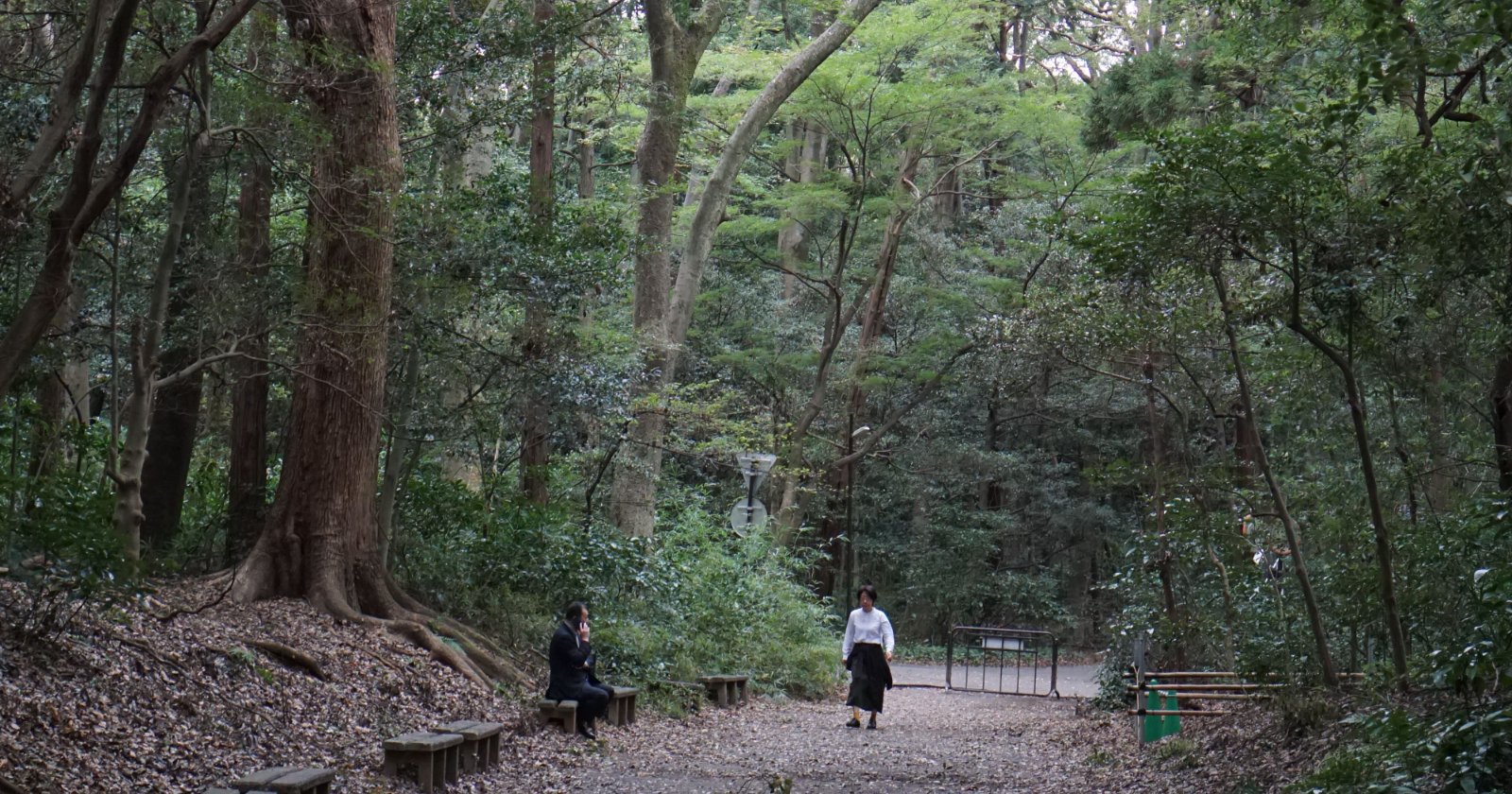
Shinrin-yoku means "forest bathing," and it involves nothing more than spending unhurried time among trees.
The term was coined in 1982 by Japan's forestry authorities, as a 2010 paper in Environmental Health and Preventive Medicine notes. Its authors, led by Bum Jin Park, ran field experiments in 24 forests across Japan with 280 participants, who spent about 15 minutes sitting and viewing the scenery and roughly 15 more walking, either in a forest or in a city.
The paper reports that "forest environments promote lower concentrations of cortisol, lower pulse rate, lower blood pressure" compared with city settings. The participants were all male university students around 22 years old, and the measures were taken on the day, so the study says nothing directly about older adults or long-term health. But the practice itself asks for very little: no fitness target and no distance to cover.
5. Wabi: finding enough in less
Wabi describes a subdued, austere kind of beauty, developed most fully in the tea ceremony. The Stanford entry quotes a definition from the Zencharoku, a Zen tea record from 1828: "Wabi means that even in straitened circumstances no thought of hardship arises." The Nampōroku, a record of sayings attributed to the tea master Sen no Rikyū and compiled about a century after his death, goes further: "In the small [tea] room, it is desirable for every utensil to be less than adequate."
For people downsizing a home, or living on less after leaving work, wabi offers a way to see a smaller life as a different kind of good rather than a lesser version of the old one.
6. Sabi: the beauty of age
Sabi originally carried a sense of desolation, but it came to describe things that have aged well. The Stanford entry quotes the German scholar Horst Hammitzsch, who said the concept means "aged," "ripe with experience and insight" and "infused with the patina that lends old things their beauty," along with a sense of tranquility.
Where wabi is about having less, sabi is about time. A worn wooden step or a weathered stone lantern is valued for its years, not in spite of them.
7. Kintsugi: repairs worth showing
Kintsugi, or "golden joinery," is the art of repairing broken ceramics with lacquer dusted with gold.
According to the Smithsonian, lacquer has been used to fix ceramics in Asia since prehistoric times, but it "only started being decorated with gold several centuries ago in Japan," and the practice spread when it became associated with tea in the late 16th century. The technique, the Smithsonian says, "not only accepts but highlights the life of the object."
The idea runs back to wabi. The Stanford entry notes that on the wabi aesthetic, broken or cracked utensils that have been well repaired were often valued more highly than unbroken ones.
For anyone carrying the marks of illness, loss or hard years, it is a useful image: the break is part of the history, and the repair can be the most interesting thing about it.
What they share
None of these ideas promises to slow aging down. What they have in common is a view of time as something that adds as well as takes away. A 60th birthday becomes a new cycle, and a scuffed bowl becomes more precious once mended. For the later decades of life, that is a gentler starting point than trying to hold everything as it was.