
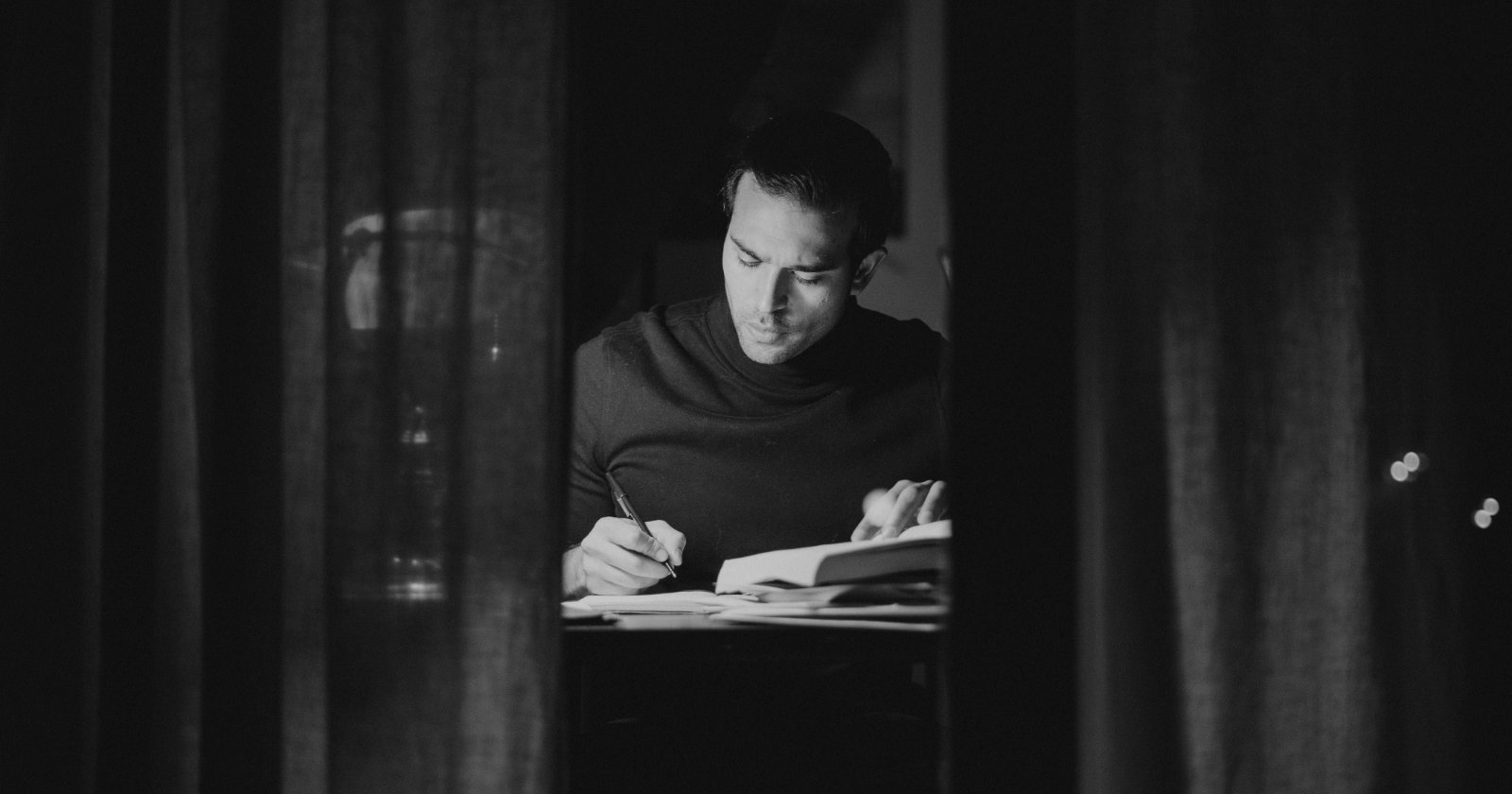
Seneca ended his days with a trial. Once the lamp had been taken away and his wife, who knew the habit, had stopped talking, he would go back over everything he had said and done since morning. He described it in his essay On Anger, and he was sure it was good for his sleep. "How sweet is the sleep which follows this self-examination?" he asked.
The Stoics put a lot of effort into mornings, but they paid just as much attention to how a day was closed. Here are five evening habits drawn from their writing, with a little modern research alongside.
1. Look back over the day with three plain questions
Seneca's review was simple. In the dark, he went through the day from start to finish, concealing nothing from himself and leaving nothing out. He didn't need a journal or a special room, just a few quiet minutes before sleep.
He borrowed the habit from the philosopher Sextius, who asked himself the same three things every night once he'd gone to bed: what bad habit had he cured that day, what fault had he resisted, and in what way was he better? The questions keep the review from turning into a vague replay. They push toward small, concrete answers, such as a sharp reply held back or a job finally finished, instead of a general verdict on what kind of person you are.
2. Go easy on yourself in the verdict
What stands out in Seneca's account is how mild his judgments are. He tells himself, in effect, that he's forgiven this time, as long as he doesn't do it again. He notes that he argued too hard with someone who wasn't willing to learn, and that he scolded another person so bluntly that he offended him instead of helping.
Seneca saw no reason to fear his own shortcomings when he could simply name them and set a better course for tomorrow. That's the tone to aim for. A nightly review that turns into a prosecution keeps you awake instead of settling the day.
3. Put tomorrow on paper so it can wait
Unfinished tasks tend to show up exactly when the lights go off.
A 2018 study at Baylor University tested what happens when people write them down. In a sleep lab, 57 students spent five minutes before bed writing either a to-do list for the coming days or a list of tasks they had already completed. The lead author, psychologist Michael Scullin, noted that most people just cycle through their to-do lists in their heads.
As noted by science journalist Lydia Denworth, writing in Psychology Today, the to-do group fell asleep about nine minutes faster on average, in roughly 16 minutes instead of 25.
We're not sleep scientists, and the researchers themselves pointed out that their volunteers were healthy young adults, so the results may not apply to people with insomnia. Anyone who regularly struggles to sleep should talk to a doctor.
However, the list pairs well with Seneca's review. Anything the review turns up that still needs doing goes on the page for tomorrow, and stops needing to be held in your head tonight.
4. Hand back what was never yours
The Enchiridion, the short handbook of Epictetus's teaching, opens with a split: "Of things some are in our power, and others are not." Our own opinions, desires and actions fall on one side. Our bodies, property and reputation fall on the other.
The evening is a good time to apply it. Some of what's still bothering you at bedtime, such as a colleague's mood or a decision someone else has to make, was never in your hands. A few chapters later, Epictetus adds that people are disturbed "not by the things which happen, but by the opinions about the things." What happened today is finished. How you think about it overnight is still open.
5. Close the day
Seneca offers one last practice in Letter 12. He suggests going to sleep with joy and saying, in the words of a line of verse he quotes, "I have lived; the course which Fortune set for me is finished." If another day comes, he writes, it should be welcomed as a bonus.
It sounds grim, but Seneca meant the opposite. A day treated as complete doesn't need to be replayed at 2 a.m. The review is done, tomorrow's jobs are on paper, and what belonged to other people has been handed back. All that's left is to sleep.