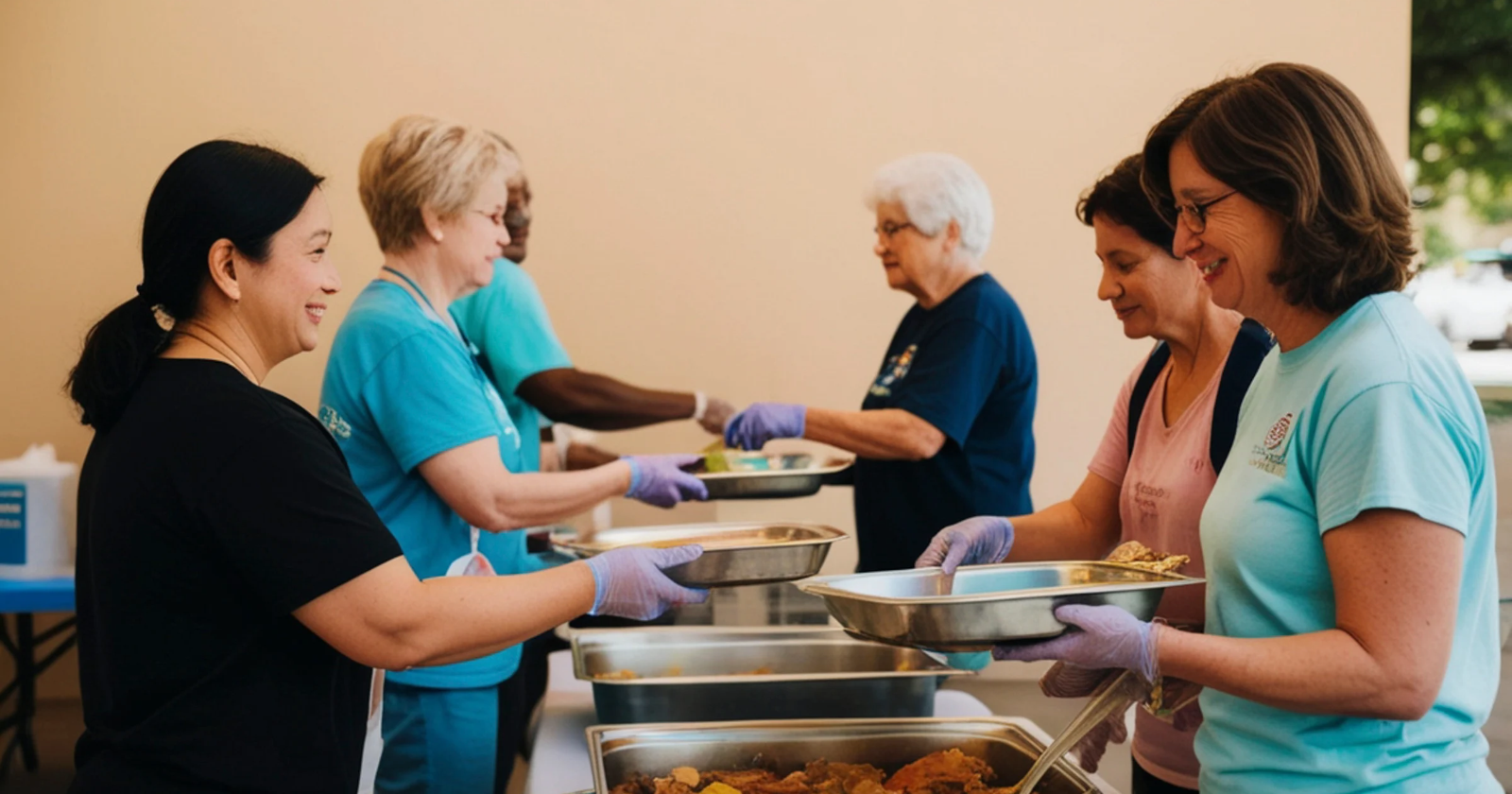
After 50, roughly a third of Americans are living for something beyond themselves, and a Stanford survey of nearly 1,200 older adults found it as often among those on lower incomes or in poor health as among the better-off or healthy

There’s an order to things that I think many of us take for granted. First you get your own life in shape: your health sorted, your money steady, your family settled.
Then you turn outward and give something back. Helping others is what you do with whatever is left over.
Abraham Maslow, the American psychologist and philosopher known for his self-actualization theory, described something close to it. In his 1967 paper “A Theory of Metamotivation,” he describes self-actualising people, his term for those who have grown into their fullest selves, as “devoted to some task ‘outside themselves,’ some vocation, or duty, or beloved job.” He also writes that “by definition, self-actualizing people are gratified in all their basic needs (of belongingness, affection, respect, and self-esteem).”
So in Maslow’s description, it could be argued that the two go together: the people devoted to tasks outside themselves are also people whose basic needs are met.
He doesn’t set out a timetable here, and the needs he lists are mostly psychological, not financial. But it’s not a huge jump from his picture to the everyday version: the basics first, then the cause.
How much of your life, then, has to be going well before you can live for something beyond it?
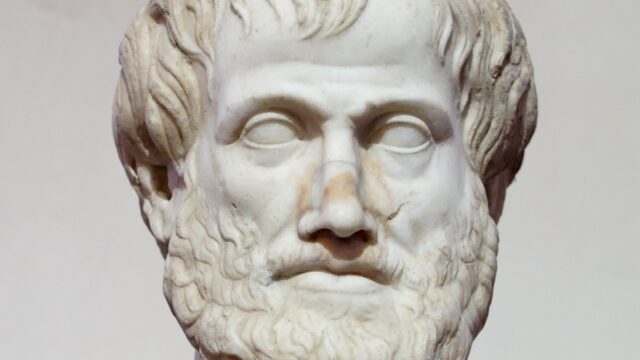
A Stanford survey of older Americans offers real data, and the ancient philosophers, Aristotle and Seneca among them, had their own answers, which line up with the numbers more closely than you might expect.
What did the Stanford researchers actually find?
The study comes from a team led by Anne Colby at Stanford, working with Encore.org. Their report, Purpose in the Encore Years, published in 2018, drew on a nationally representative survey of 1,198 American adults aged 50 to 92. Another 102 took part in hour-long phone interviews.
The bar for “purpose” was high. People ranked their top three goals from a list of ten, half of which looked beyond the self, such as “Contribute to building a good community.” To count as purposeful, a person had to rank one of those goals in their top three, rate it at least very important, and show strong commitment to pursuing it.
In a subsequent peer-reviewed paper drawing on the same survey, published in Applied Developmental Science, the researchers explain “a conservative approach, protecting strongly against false positives.” So the figures below count people who met a deliberately demanding threshold.
It’s also worth being clear about what was measured: one demanding form of purpose, purpose beyond the self, not every meaning of “having a purpose in life.”
By that measure, 31% qualified: 30% of those aged 50 to 64, and 33% of those 65 and over. The report states that purpose “does not vary significantly across age, income, health status or geography.”
In households earning under $50,000 a year, 33% were purposeful. In households earning $50,000 to $175,000, it was 28%. People who rated their own health as fair or poor came in at 29%, against 32% for those who rated it good or excellent. None of these gaps are significant.
One more detail cuts against the idea that purpose means self-denial. Purposeful people were more likely, not less, to see later life as a time for traveling or taking classes: 58%, against 43% of those who didn't meet the study's definition of purpose.
Aristotle on needing your house in order first
In the Nicomachean Ethics, in W. D. Ross’s translation, Aristotle writes that “it is impossible, or not easy, to do noble acts without the proper equipment.”
By external goods he means things like friends, money and political power, which he calls the instruments of many actions. You can’t be generous with money you don’t have. On a first reading, that puts Aristotle on the side of the everyday assumption: get the basics in place, then do good.
Read further, though, and Aristotle’s bar turns out to be lower than it initially seems. In Book IV he takes up generosity, or as Ross translates “liberality.” It resides, he says, “not in the multitude of the gifts but in the state of character of the giver, and this is relative to the giver’s substance.” So “there is therefore nothing to prevent the man who gives less from being the more liberal man, if he has less to give...”
Generosity, in other words, is measured against what you have, so a small gift from someone with little can outweigh a large one from someone with plenty.
In Book X he goes further. “We can do noble acts without ruling earth and sea,” he writes, “for even with moderate advantages one can act virtuously.” You need something to work with, but not a fortune. That sits comfortably with the Stanford numbers.
Seneca on giving when you have little
Seneca, a Roman Stoic philosopher and an adviser to the emperor Nero, also touches on the subject.
In On Benefits, he tells a story about Socrates, in Aubrey Stewart’s 1887 translation. His students gave him large presents, each according to his means. Aeschines, a poor pupil, said this: “I can find nothing to give you which is worthy of you; I feel my poverty in this respect alone. Therefore I present you with the only thing I possess, myself.”
Socrates replied, “Surely you have bestowed a great present upon me, unless perchance you set a small value upon yourself.”
Aeschines had no money to offer, so he offered the one thing he did have. Seneca’s comment follows: “You see how the mind even in the straitest circumstances finds the means of generosity.” Straitest here means narrowest, or hardest. It seems for Seneca, being short of money limits what you can give. It doesn’t decide whether you are generous or not.
What held back the interviewees who wanted to do more?
Among the interviewees who didn’t meet the bar for purpose, the report describes about half as showing interest in doing more beyond themselves, and it names some of the obstacles that had stopped them. These are a handful of individual stories, not survey statistics, so they can’t explain who becomes purposeful in the wider population. They only show what got in the way for these particular people. Two women said their husbands opposed their volunteering. Two people had recently moved and found it hard to connect with their new communities. Two more stepped back when the volunteer programmes they’d been part of closed. And several, mostly those still working, said they were too busy for now.
None of the obstacles in this passage is about money or health. They’re ordinary things: a spouse who objects, a new town, a programme that shuts down, a full calendar. With so few cases, there’s no telling how common any of them is. For these few people, though, what stood in the way was more everyday than a shortage of resources.
So how much has to be going well?
Within ordinary lives, Aristotle said modest means are enough to act well, and Seneca said even the narrowest circumstances leave room for generosity.
The Stanford findings don't prove that money and health make no difference. Having more of either can surely make it easier to give your time, help others, or commit to a cause. But the numbers suggest that neither is a prerequisite.
And perhaps just as importantly, living for something beyond yourself doesn't appear to mean putting your own interests aside. The people who met the study's definition of purpose were also more likely to look forward to travelling, learning, and enjoying later life.
Which brings us back to that familiar order of things: get your own life sorted, then turn your attention to others.
Maybe we don't need to wait until everything is in place. Maybe contributing to something beyond ourselves is something we can do alongside the ordinary business of living, with whatever time, resources, and opportunities we have.
Sources
- Colby, Anne, et al. (2018). Purpose in the Encore Years: Shaping Lives of Meaning and Contribution. Stanford University and Encore.org. Read the full research report (PDF).
- Bundick, Matthew J., Kathleen Remington, Emily Morton, and Anne Colby (2021). “The Contours of Purpose Beyond the Self in Midlife and Later Life.” Applied Developmental Science, 25(1), 62–82. Published online in 2019. Read the paper (PDF).
- Maslow, Abraham H. (1967). “A Theory of Metamotivation: The Biological Rooting of the Value-Life.” Journal of Humanistic Psychology, 7(2), 93–127. Read the original paper (PDF).
- Aristotle. Nicomachean Ethics, translated by W. D. Ross. Books I, IV and X, particularly Book I, Chapter 8; Book IV, Chapter 1; and Book X, Chapter 8. Read the complete translation — MIT Classics Archive.
- Seneca. On Benefits, translated by Aubrey Stewart (1887). Book I, Chapters 8–9, concerning Socrates, Aeschines and generosity under difficult circumstances. Read the original passage .
Mal James
Mal is a senior writer at Brown Brothers Media, the publisher of Philosophy Basics. He has a particular interest in philosophy, psychology, and the questions surrounding happiness, personal growth, and what makes for a meaningful life. When he's not writing, he's usually reading or working on his far-from-perfect golf swing.
More by Mal James →