
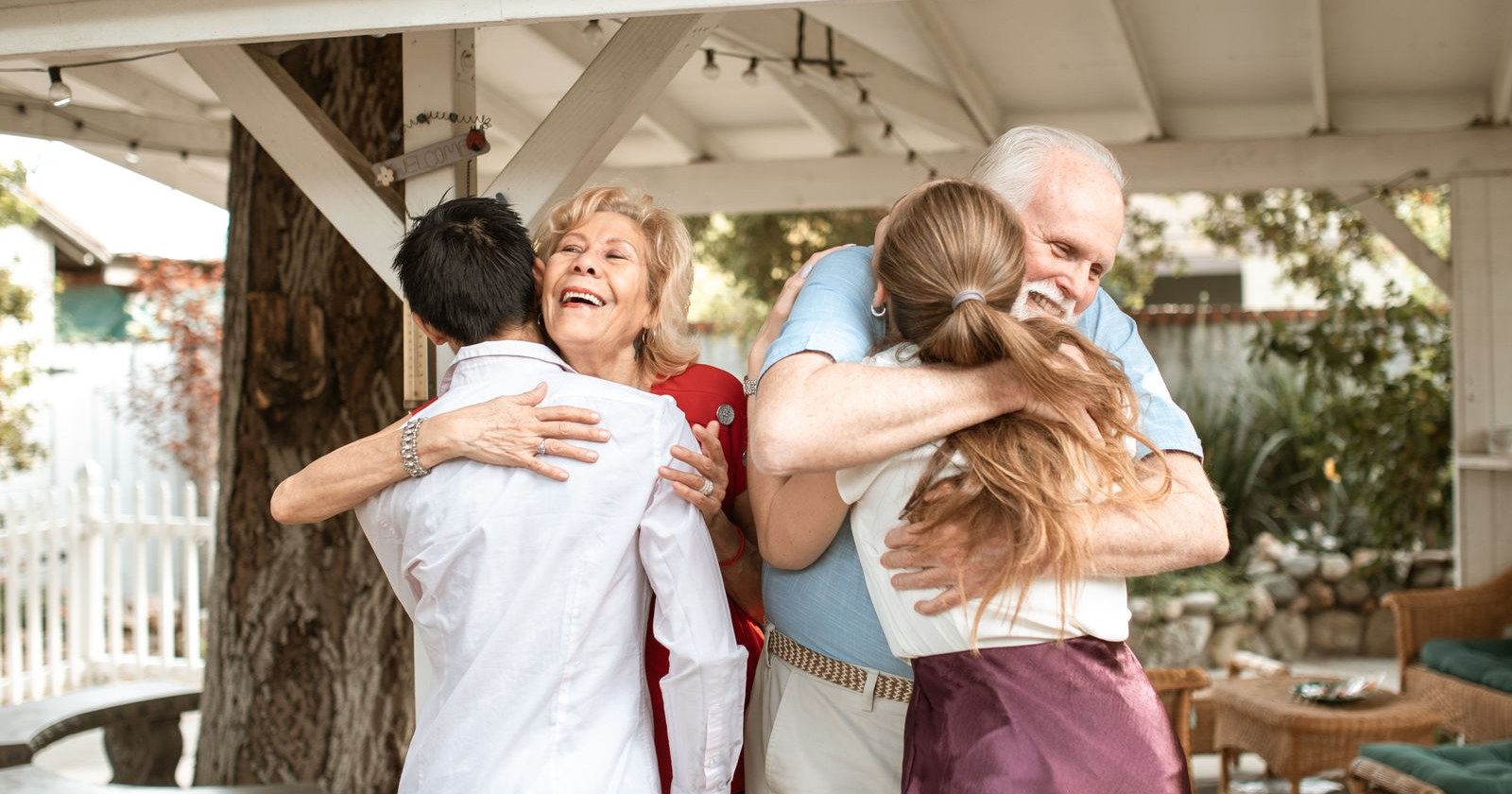
Imagine a mother hearing that her daughter has been offered a job in another city. She starts typing a long message: the cost of living, the distance from family, the questions she should ask before accepting. Halfway through, she stops. She deletes it and sends something shorter: "That's exciting. I'm proud of you. Happy to talk it through if you'd like."
It's a small moment, but it captures one of the hardest shifts in parenting. For years, caring for a child partly means making decisions for them. Then, gradually, it doesn't. The love stays the same. The role changes.
There's no single formula for staying close to adult children. One useful starting point is an ancient idea: you can love someone deeply without trying to direct their life.
The ancient idea
The Daodejing describes the Dao, the underlying way of things, in language that sounds strikingly like good parenting. In James Legge's translation, the Dao "produces (all things), nourishes them, brings them to their full growth, nurses them, completes them, matures them, maintains them, and overspreads them." Then comes the key line: "It produces them and makes no claim to the possession of them; it carries them through their processes and does not vaunt its ability in doing so; it brings them to maturity and exercises no control over them" (ch. 51).
The text is describing the Dao, not giving family advice. An earlier chapter, which also speaks of "loving the people and ruling the state," uses almost the same words: the Dao "produces them and does not claim them as its own" and "presides over all, and yet does not control them" (ch. 10). But the picture translates naturally. Nourish, support, help bring to maturity, and then step back from ownership.
Other traditions arrived at related ideas in their own ways. Here's how the principle can show up in practice.
Support isn't the problem
It's easy to assume that the answer is simply to do less. The research is more interesting than that.
In a study of nearly 600 grown children and their parents, Karen Fingerman and colleagues found that grown children who received intense support from parents, meaning several kinds of help, such as money, advice and emotional support, many times a week, "reported better psychological adjustment and life satisfaction" than those who didn't. That was true even though both generations tended to see that much support as too much.
But how support lands matters too. In a separate daily diary study of young adults aged 18 to 30, receiving advice from mothers was associated with better mood that day, while advice that felt unwanted, from either parent, was associated with worse mood. The researchers' summary: parental advice "is not 'the more the better,' especially when the advice is unsolicited."
Both studies found associations rather than proving causes. But together they suggest that the line isn't between helping and not helping. It's closer to the line between support that's welcome and involvement that feels like being managed.
Loving them as they are, not as you would be
The Daoist classic Zhuangzi tells a story about a sea-bird that landed near the capital of Lu. The prince welcomed it lavishly. He gave it wine in the temple, had ceremonial music played and slaughtered a bullock to feed it. "But the bird was dazed and too timid to eat or drink anything; and in three days it was dead" (ch. 18, Herbert Giles's translation).
The text's diagnosis: "This was treating the bird like oneself, and not as a bird would treat a bird." A little later it adds that creatures "being differently constituted, their likes and dislikes are different."
Parents can do a gentler version of the same thing: offering the kind of help they would want, steering toward the life they would choose. Sometimes the most loving question is simply, "What would actually be helpful to you right now?"
Knowing what's yours to hold
Epictetus could be blunt. "If you wish your children, and your wife, and your friends to live for ever, you are stupid," he wrote, "for you wish to be in control of things which you cannot, you wish for things that belong to others to be your own" (Enchiridion §14, Elizabeth Carter's translation).
His immediate subject is mortality, rather than adult children's independence. But his distinction between our own actions and what lies beyond our control offers a useful way to think about parenting too. Your love, your example, your honesty and your availability are yours. Your child's choices about work, partners, faith, money or where to live belong to them, even when you care deeply about the outcome.
That distinction doesn't stop the worry. It can make it clearer where your energy is likely to help, and where it may only add strain.
Loving without keeping score
Aristotle used mothers as his example of what loving looks like at its best. Friendship, he wrote, "seems to lie in loving rather than in being loved, as is indicated by the delight mothers take in loving." Some mothers who hand their children over to be raised by others, he observed, "love them and do not seek to be loved in return (if they cannot have both), but seem to be satisfied if they see them prospering" (Nicomachean Ethics 8.8, W. D. Ross's translation).
Wanting a reciprocal relationship with your child is natural. The useful distinction is between expressing that wish and treating affection as a debt. Love that is given freely can feel very different from love that seems to come with an expected return, and the first may be easier to come home to.
Wishing them well for their own sake
In another passage, Aristotle describes a friend as "one who wishes his friend to exist and live, for his sake; which mothers do to their children, and friends do who have come into conflict" (Nicomachean Ethics 9.4).
That last phrase is striking. Even when people disagree, he suggests, real goodwill can survive. A parent can dislike a choice and still want, above all, for their child to flourish on their own terms. Saying so out loud, especially after a disagreement, can matter a great deal: "I don't see it the same way, but I want this to go well for you."
Advising like a friend
As children grow up, the relationship often comes to resemble a friendship between adults, with all the respect that implies. Confucius had simple advice about friends. In Robert Eno's translation of the Analects: "Advise them loyally and guide them well. If this does not work, desist. Do not humiliate yourself" (12.23).
Applied to adult children, that might mean saying your piece honestly, once, and then letting it rest. Repeating the same concern often doesn't make it more persuasive, and it can make it harder for your child to come back to you if things don't work out.
What loving without controlling doesn't mean
Stepping back from control isn't the same as stepping back from the relationship. You can still offer advice when it's welcome, share concerns honestly and be closely involved in each other's lives.
It also doesn't mean giving up your own boundaries. Your home, your money and your time remain yours to decide about. Supporting an adult child doesn't require funding every choice or tolerating disrespect.
Some situations call for more involvement, not less. If an adult child is in danger, struggling with addiction or living with a disability or illness that affects their independence, support may need to be more hands-on. Even then, involving them in decisions as far as possible is still different from deciding for them.
And families differ. In many cultures, close involvement between generations is expected and valued, and interdependence is a strength rather than a problem. The aim isn't distance. It's care that leaves room for the other person to be fully themselves.
One place to start
The next time you feel the urge to steer, try asking a question first: "What are you thinking of doing?" or "What would help?" Listen to the answer before offering your view.
The Daodejing's image is worth returning to: something that nourishes, supports and helps bring to maturity, without claiming ownership. Your children may still come to you for advice, help and company. That may come more easily when your love feels like a place to rest, rather than a hand on the wheel.