Descartes said animals were machines. Scientists now say the question isn't whether they feel.

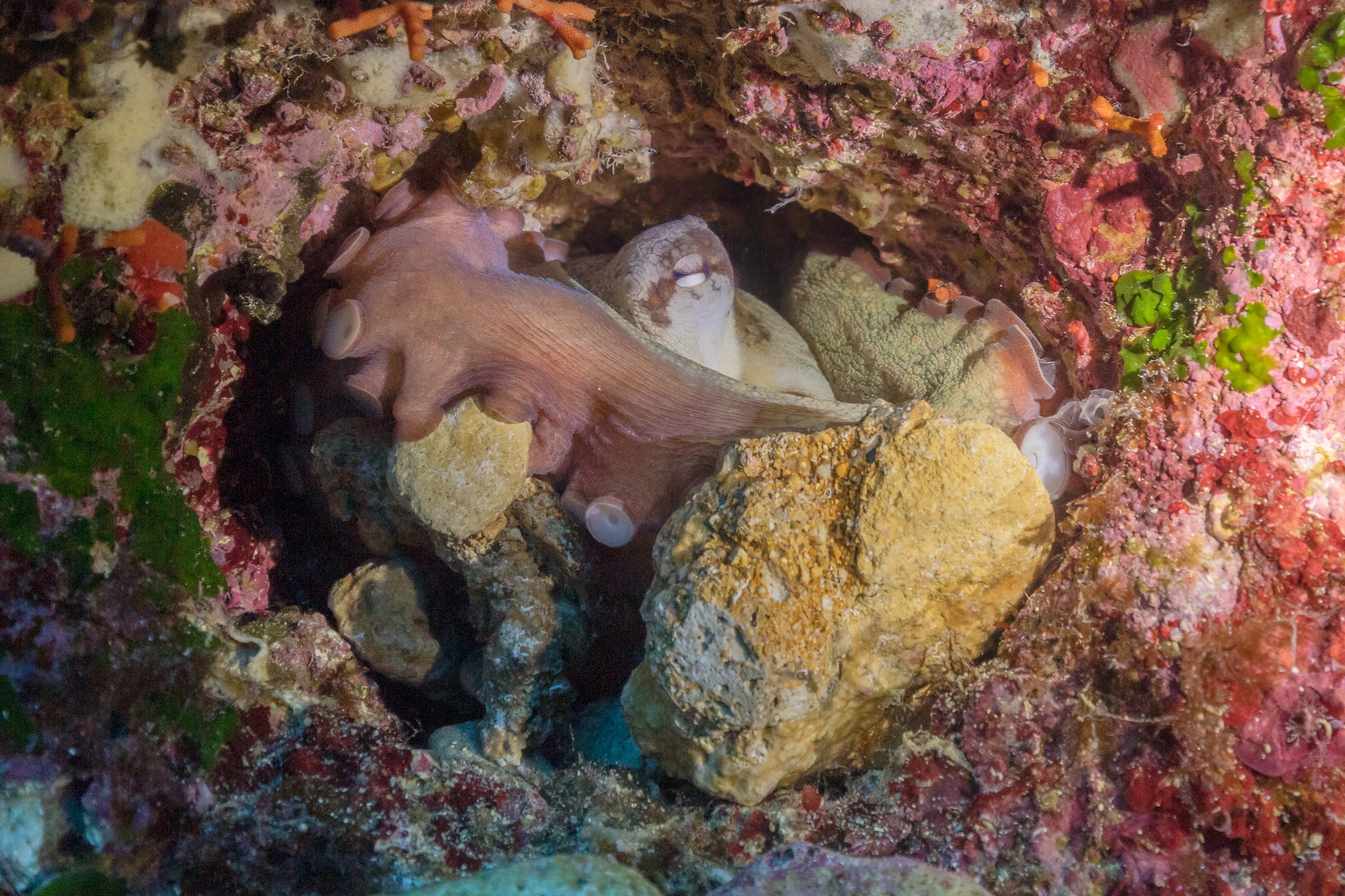
The Animal Welfare (Sentience) Act 2022 received Royal Assent on 28 April 2022 and, in its section 5, counts "any cephalopod mollusc" and "any decapod crustacean" as animals. Cephalopods include octopuses, squid and cuttlefish. Decapods include crabs, lobsters, crayfish and shrimps.
That places UK law a long way from René Descartes, the French philosopher who lived from 1596 to 1650 and is often called a founder of modern philosophy. He is best known for the line "I think, therefore I am". In 1637 he argued that animals were machines.
He did so in the Discourse on the Method, a book in which he set out the main rules of his method for reasoning. In Part V, according to Jonathan Bennett's modern translation, he concluded that animals "don't have minds at all, and ... it is nature that acts in them according to the disposition of their organs."
If animals do feel, what are their lives and their social worlds worth?
Kristin Andrews, a professor of philosophy and psychology at the CUNY Graduate Center in New York, said in an email: "Descartes was an outlier even in his own time. Popular opinion then and today holds that animals have feelings."
"What has changed since then is that the science of animal cognition is discovering how animals think," she said. "We are learning that the question isn't do they suffer, because we know they do. Rather, the new question is what value do they create through their social and cultural practices?"
Andrews is the first-named author of the New York Declaration on Animal Consciousness, a statement issued by researchers in April 2024. She also holds the York Research Chair in Animal Minds at York University in Toronto, where she is currently on leave. Her "we know they do" is her own judgment, and the scientific case is strongest for mammals and birds.
Descartes proposed two tests in the Discourse. A machine, he argued, could utter words but could not arrange them to give a meaningful answer, "which is something that the dullest of men can do". And reason is "a universal instrument", while organs need "some particular disposition for each particular action".
Magpies and parrots, he wrote, "can utter words as we do yet can't speak as we do". On this view animals fail both tests, and whatever they do is done by the arrangement of their organs.
The claim met with outcry. Henry More, an English philosopher, wrote to Descartes on 11 December 1648 of "that deadly and murderous sentiment which you professed in your Method, whereby you snatch away, or rather withhold, life and sense from all animals." The letter is quoted, citing a 1936 translation by L. D. Cohen, in a forthcoming book chapter by Andrews and Tyler Delmore, which says animal feeling was the default view for most of history.
Descartes replied on 5 February 1649, in a letter printed in Bennett's Selected Correspondence: "Please note that I'm speaking of thought, and not of life or sensation. I don't deny life to animals ... and I don't deny sensation, in so far as that depends on a part of the body." He added that the view clears humans "from even a suspicion of crime when they eat or kill animals."
More than two years earlier, in a letter to the Marquess of Newcastle dated 23 November 1646, he had said passions "might also occur in lower animals, even more violently than in human beings, without licensing the inference that those animals have thoughts".
Scholars still disagree about what he meant. Descartes denied animals thought, and he was widely taken to deny them feeling. Some read his French word for thought, pensée, as covering all awareness. On that reading, denying animals thought would mean denying them any awareness, feeling included.
John Cottingham, a philosopher, wrote in "'A Brute to the Brutes?'", a 1978 paper in the journal Philosophy, that "neither in calling animals machines or automata, nor in denying they have thought or language, does Descartes commit himself to the monstrous thesis that they have no feelings or sensations."
Sentience means the capacity to have feelings such as pain or pleasure. In November 2021 a team at the London School of Economics (LSE), led by Jonathan Birch, delivered a review of the evidence of sentience in cephalopods and decapods to the Department for Environment, Food and Rural Affairs (Defra), a UK government department.
The review drew "on over 300 scientific studies" and set eight criteria, including pain receptors, brain regions that integrate information, responses to anaesthetics or painkillers, trade-offs between threat and reward, and learning. Meeting at least seven counted as very strong evidence, five or more as strong, and three or more as substantial.
It found very strong evidence of sentience in octopuses, strong evidence in true crabs, and substantial evidence in squid, cuttlefish, astacid lobsters, crayfish and caridean shrimps. Where data were thin, the review said, "absence of evidence is not evidence of absence".
The Act came five months after the review was delivered. Its long title describes it as "An Act to make provision for an Animal Sentience Committee with functions relating to the effect of government policy on the welfare of animals as sentient beings." Section 5 defines "animal" as "any vertebrate other than homo sapiens", alongside the two invertebrate groups named above.
The Act bans no practice. It creates a committee to scrutinise government policy and widens the legal definition of animal to cover the two invertebrate groups.
The New York Declaration of 19 April 2024 states "strong scientific support" for conscious experience in mammals and birds, and "at least a realistic possibility" in all vertebrates and many invertebrates, naming cephalopod molluscs, decapod crustaceans and insects at minimum. It says it is "irresponsible to ignore that possibility".
For mammals and birds, the Declaration says the support is strong. For crabs and octopuses the review grades the evidence, and the Declaration calls it a realistic possibility.
The LSE review also recommended against practices such as declawing and selling live decapods to untrained handlers. Those recommendations were not made law.
Justin Brown
Justin Brown writes about philosophy as a way of understanding how societies change. He holds a Master of Arts in International Relations from the Australian National University and a Master of Science in Economic History from the London School of Economics. His studies have been grounded in social constructivism, the idea that much of what we treat as fixed is built and rebuilt by people together, and he has long been drawn to critical theory. He's also fascinated by human creativity and where new ideas come from. Justin co-founded The Vessel and helps run Brown Brothers Media, a Singapore-based media company he leads with his brothers. He also makes video essays on YouTube.
More by Justin Brown →