
So lately I’ve been eyeing an electric guitar: a Fender Stratocaster, to be exact. I’ve been checking stores and watching all the YouTube reviews. I’ve been imagining playing it and how it might feel to finish a day of work and dive into some jamming. I’ve been coming up with reasons to justify purchasing what is essentially an adult toy.
But the thing is, I already have a guitar, an acoustic guitar, and really it serves much of the purpose I imagine. I could jam on that, too.
I’ve also been in this situation before. A few years back, I became borderline obsessed with a motorbike. Same thing: I would look at all the reviews and imagine how good it would be to ride it.
I bought that bike. I still have it, and while it’s a great bike, it no longer gives me the same thrill it once did. The first few days of having it felt like winning the lottery. Now it’s normal. I sometimes wonder whether I would be just as happy on a small, basic scooter that would have cost a fraction of the price.
I am aware this is a pretty standard account of hedonic adaptation: that we get used to new things quickly, and what once felt exciting just becomes normal.
The question I have been asking myself in the last few days, though, is not really whether the guitar would live up to my expectations (it probably won’t) but whether wanting the guitar is taking away from my happiness. What if I didn’t desire it?
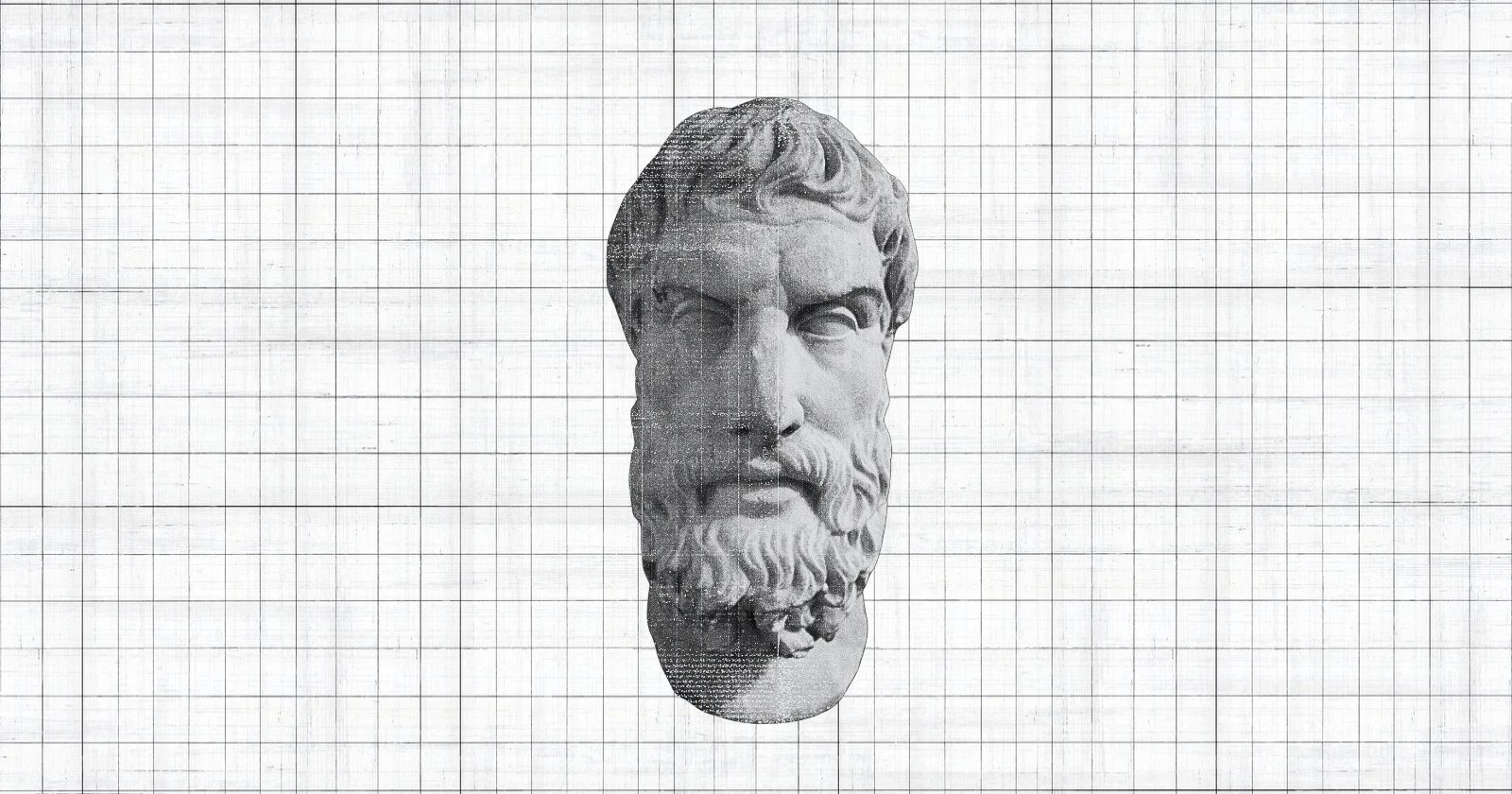
One philosopher, a Greek called Epicurus, had a lot to say about this.
These days the word epicurean mostly turns up on restaurant menus and food blogs. Call someone an epicure and you mean they like the finer things: good food, good wine, the expensive stuff. In English, the word has meant someone devoted to pleasure since the 1560s.
However, by most accounts, Epicurus lived a pretty simple life. According to his ancient biographer Diogenes Laertius, he and his followers mostly drank water, with a little thin wine now and then, and in his letters, he says he was happy enough with plain bread and water.
My favourite detail, though, is a line from one of those letters. “Send me a little pot of cheese,” he wrote, “that, when I like, I may fare sumptuously.” That was his idea of a feast: a pot of cheese.
In one letter, he puts it like this: “they have the sweetest enjoyment of luxury who stand least in need of it.” The logic is that if you live simply most of the time, the odd good meal is actually a big deal.
He even tested this on himself, apparently. According to Seneca (who was a Stoic but quoted Epicurus often), Epicurus would set aside days when he ate very little, just to see whether he was any less happy for it and, if so, by how much.
Researchers tested something similar a lot more recently. In a 2013 study, students who gave up chocolate for a week savoured it more when they got it back than students who were told to eat as much as they could, or who were given no instructions at all. It was a small study: 55 students, one week. But I think Epicurus would have liked it.
Epicurus split our desires into three kinds.
First, there are the natural and necessary ones: food, water, shelter, a decent night’s sleep. They’re easy enough to meet, and when they aren’t met, we suffer.
Then there are natural desires that aren’t necessary. In short, these are desires for nicer versions of the basics, but they can still be satisfied. An ancient commentator gives costly food as the example. I’d probably put the electric guitar in this category.
Finally, there are what he called the empty desires: things like fame and status, or wanting more money than you could ever use. The problem with this kind is that there is no finish line.
In Epicurus’s own words:
“Nature’s wealth at once has its bounds and is easy to procure; but the wealth of vain fancies recedes to an infinite distance.”
One of the clearest versions of this idea comes from Seneca. In one of his letters, he passes on some advice Epicurus gave to a friend: “If you wish to make Pythocles rich, do not add to his store of money, but subtract from his desires.”
It’s a nice line. But is it true? Do we become richer by having fewer desires? That’s essentially the question I have been pondering.
I dove into the research expecting it to back Epicurus but it’s a bit messier than that.
In a 2008 study, students went through a list of 52 things, saying which ones they owned and how much they wanted each. The happier students were the ones who wanted the things they already had, and who had the things they wanted.
Perhaps the trick isn't so much to stop wanting things as to keep wanting the things I already have.
It’s a different story for people who put money, possessions and status high on their list of goals. In 2014, a group of researchers pulled together the results of 259 different samples and found that those people tended to report lower wellbeing. The link isn’t huge, and most of those studies can’t tell us which causes which. It’s possible that unhappy people just chase more stuff, rather than the other way around.
Another 2014 paper adds some detail. Researchers followed people for anywhere between six months and 12 years, and found that as people became less materialistic, their wellbeing tended to go up; when they became more materialistic, it tended to go down.
Epicurus actually had a test for this kind of thing. As one of his sayings puts it:
“Every desire must be confronted with this question: what will happen to me, if the object of my desire is accomplished and what if it is not?”
If I buy the guitar, I’ll probably have a great week. If I am honest, I am excited about the idea of buying it as I write these lines. Maybe it will get me playing more, or playing differently, which would be a good thing. Or maybe, like the bike, it’ll just become normal.
If I don’t, I still have a guitar. I could pick it up tonight.
I don’t think Epicurus would tell me not to buy it; this was a man who asked for a pot of cheese so he could have a feast. As I said, I reckon the guitar falls into his middle category, natural but not necessary. Epicurus didn’t seem to have a problem with those, as long as you didn’t start needing them.
There’s another line of his I keep coming back to. In one translation, it reads:
“Don’t ruin the things you have by wanting what you don’t have, but realize that they too are things you once did wish for.”