
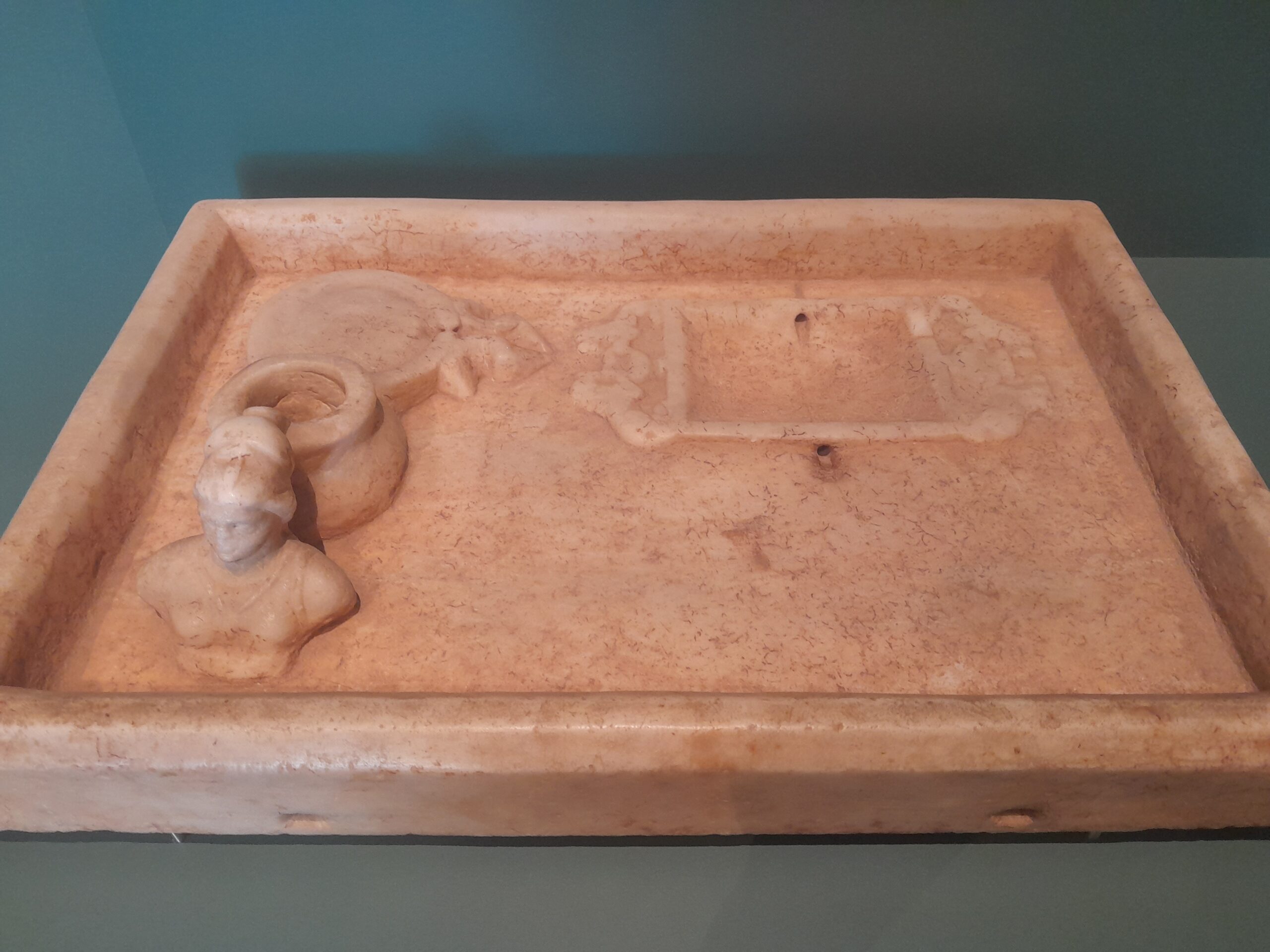
The olive press story sits in a stretch of Book 1 of the Politics about ways of getting wealth, and Aristotle calls the plan one of universal application before he tells the olive story. In Politics 1259a, in H. Rackham's Loeb translation, the plan is attributed to Thales because of his wisdom, but it is really of universal application.
The version that circulates is brighter than that. A philosopher is mocked for being poor, reads the sky, takes the presses, and comes back rich. Finance writers like to call it the first options trade.
It's told as proof philosophy pays. Aristotle actually tells it as a monopoly trick, and only as a story.
The hearsay marker is in the first clause of the anecdote. Thales, so the story goes, because of his poverty was taunted with the uselessness of philosophy. Aristotle is handling received material, and he says so before any olives are mentioned.
What follows is specific. From his knowledge of astronomy he had observed while it was still winter that there was going to be a large crop of olives, so he raised a small sum of money and paid round deposits for the whole of the olive-presses in Miletus and Chios, hiring them at a low rent as nobody was running him up.
Then the season arrived. There was a sudden demand for a number of presses at the same time, and by letting them out on what terms he liked he realized a large sum of money, so proving, in the story's own words, that it is easy for philosophers to be rich if they choose, but this is not what they care about.
The next sentence steps back from all of it. Thales then is reported to have thus displayed his wisdom, but as a matter of fact this device of taking an opportunity to secure a monopoly is a universal principle of business.
The monopoly is the part Aristotle asserts in his own voice, not the forecast. He adds that even some states have recourse to this plan as a method of raising revenue when short of funds, introducing a monopoly of marketable goods.
The second example in the same section has no philosopher in it. A man in Sicily used a sum of money deposited with him to buy up all the iron from the iron mines, and when the dealers came from the trading-centers, he was the only seller.
He did not greatly raise the price, and made a profit of a hundred talents on his capital of fifty. When Dionysius came to know of it, he ordered the man to take his money with him but clear out of Syracuse on the spot, for inventing means of profit detrimental to the tyrant's own affairs.
Aristotle sets the two cases side by side and says the device is the same as the discovery of Thales, because both men alike contrived to secure themselves a monopoly. The iron buyer brought no astronomy to it.
The two place names in the olive version are doing work. Miletus stood on the Ionian coast of Asia Minor, and Chios is an island to the north, across open water. Taking the whole of the presses in both is a wider operation than cornering one town's equipment.
A different version of the same episode survives in Diogenes Laertius. At Lives of Eminent Philosophers 1.26, in R. D. Hicks's translation, he credits Hieronymus of Rhodes, in the second book of his Scattered Notes.
In that telling, Thales acts in order to show how easy it is to grow rich. He foresees that it will be a good season for olives, rents all the oil-mills, and amasses a fortune. The mills and the money stay. The astronomy and the poverty taunt drop out, and neither city is named.
So the Politics version is flagged as hearsay by the writer reporting it, and the other one differs from it on motive and on detail. The texts do not settle whether anything like this happened, and they supply no year, no price, and no witness.
Thales is often called the first philosopher. Aristotle's own phrase, at Metaphysics 983b, is narrower. He calls Thales the founder of this school of philosophy, the school being the early inquiry into a single underlying material, which Thales said was water.
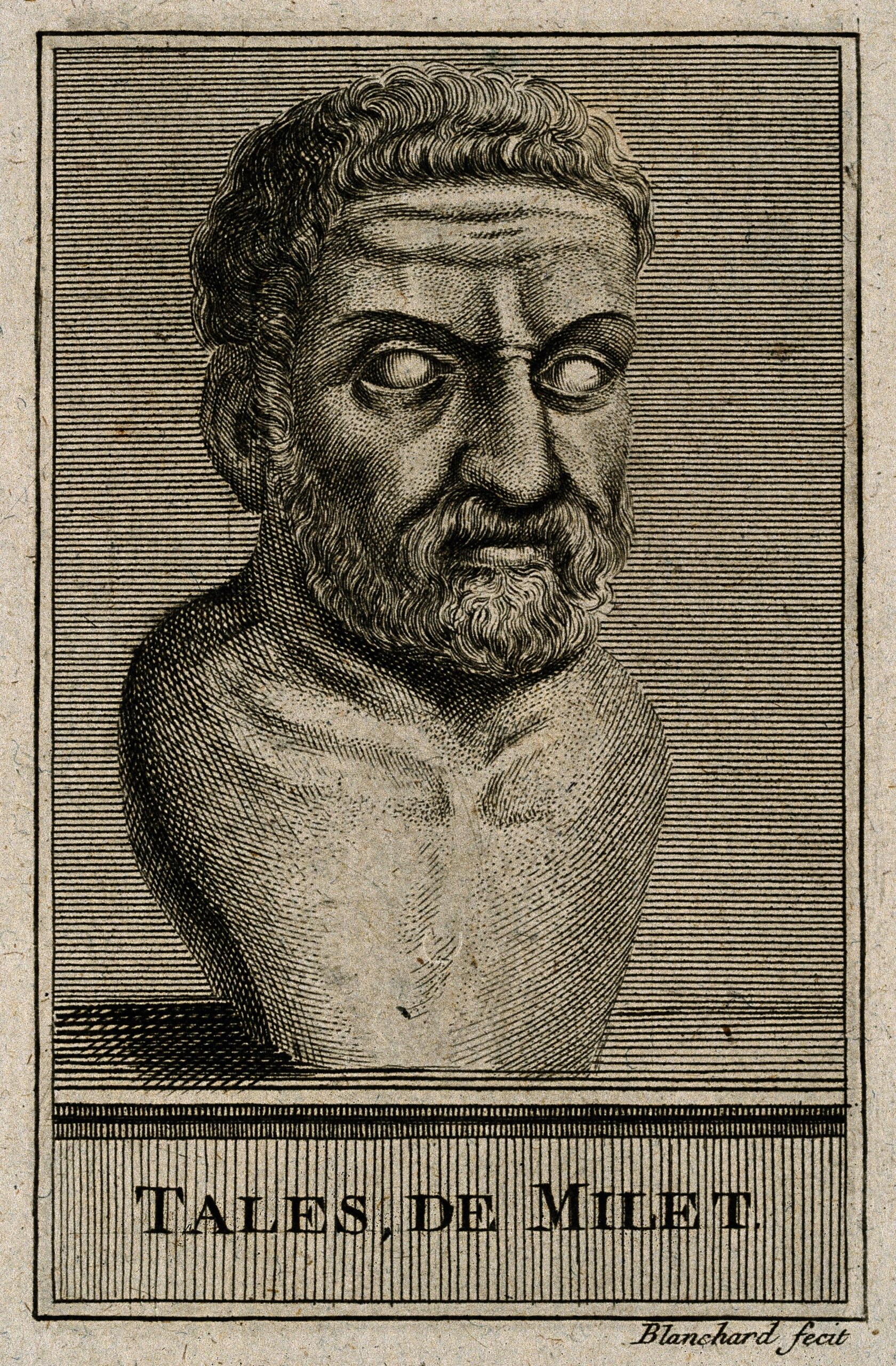
The uselessness taunt has a more famous scene of its own, and that scene is not a second source for the presses. In Plato's Theaetetus, at 174a, Thales is studying the stars, falls into a pit, and a Thracian servant girl jeers that he is so eager to know the things in the sky that he cannot see what lies at his feet.
The two scenes share a premise, that the philosopher's attention points away from what is underfoot. They do not share an outcome. Plato's pit has no harvest in it, no presses, and no money.
This site's entry on Thales carries the short form, that he bought up all the olive presses in Miletus after predicting a good harvest, either to make money or to show that he could. What the short form leaves out is the surrounding frame: the hearsay marker, Chios, the monopoly lesson, the iron buyer in Sicily, and the Hieronymus variant.
In the Politics the episode is filed with practical knowledge. Aristotle closes the section by noting that an acquaintance with these devices is also serviceable for statesmen, which leaves the olive presses sitting next to the iron mines and the state monopolies on marketable goods.