
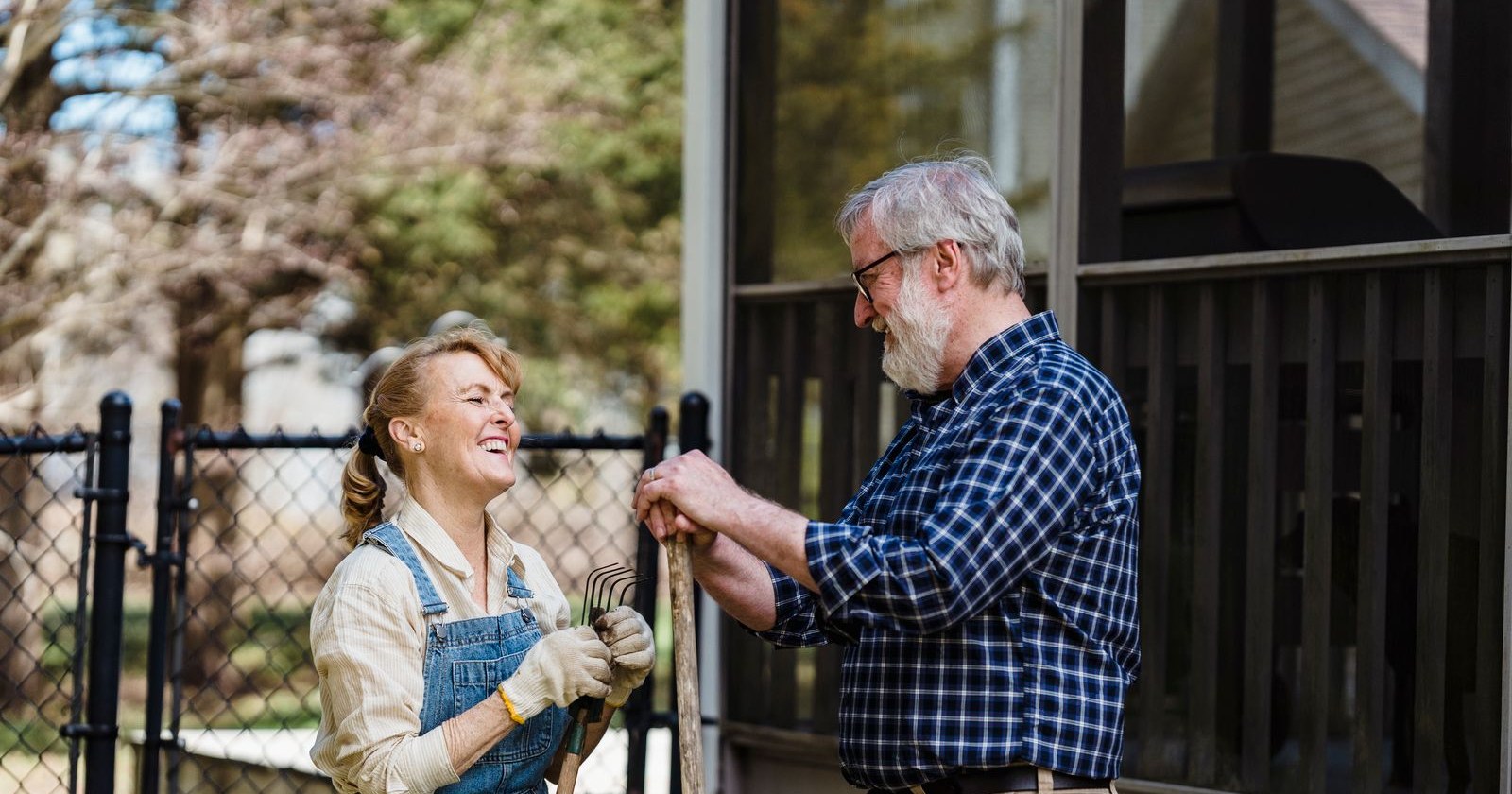
Seneca once visited his country house and lost his temper. The building was falling apart, and he scolded the man who looked after it. Then he complained that the plane trees were gnarled and leafless and obviously neglected. The caretaker swore he was doing everything he could, but the trees were simply old. "Between you and me," Seneca admits in the letter where he tells the story, "I had planted those trees myself, I had seen them in their first leaf" (Letter 12.2, Richard Gummere's translation).
It's a funny moment, and a familiar one. Getting older often sneaks up on us through other things: the house, the trees, the kids who are suddenly adults, the music that's now "classic." And our first reaction isn't always graceful.
But Seneca's letter doesn't end in complaint. A few lines later he writes: "Let us cherish and love old age; for it is full of pleasure if one knows how to use it" (12.4). Other ancient philosophers also explored what enjoying old age might look like. Here are eight simple ways, drawn from what they wrote, to enjoy getting older rather than just endure it.
1. Stop competing with your younger self
Cicero's short dialogue On Old Age puts its arguments in the mouth of Cato the Elder, a famous Roman statesman, who says he is in his eighty-fourth year. Answering the common complaint that old age takes away physical strength, Cato says in Evelyn Shuckburgh's translation that he doesn't miss it, "any more than as a young man I missed the strength of a bull or an elephant. You should use what you have, and whatever you may chance to be doing, do it with all your might" (ch. 9).
He contrasts this with the wrestler Milo of Croton, who in old age is said to have looked at his arms while watching young athletes train and wept that they were "now as good as dead."
Most of us know a little of Milo's feeling. The useful shift is to stop measuring today against your best year and start asking what you can do well now. That might be a different kind of exercise, a different pace at work or a different role in the family. It's still yours to do with all your might.
2. Keep learning something new
Cicero's Cato is a busy old man. He points to the Athenian lawmaker Solon, who boasted in his poems that he grew old "daily learning something new," and adds that he himself only got to know Greek literature as an old man, absorbing it "with such avidity" that it felt like quenching "a long-continued thirst" (ch. 8).
There's a quiet freedom in learning later in life. You're usually not doing it for a grade or a promotion. You're doing it because you want to. A language, an instrument, local history, a new kind of cooking: it doesn't have to be impressive to be worthwhile.
3. Enjoy what you no longer have to chase
At the start of Plato's Republic, Socrates asks an elderly man named Cephalus what old age is like. Cephalus remembers the poet Sophocles being asked how love suited his old age. "Most gladly have I escaped the thing of which you speak," Sophocles replied; "I feel as if I had escaped from a mad and furious master" (Book 1, Benjamin Jowett's translation).
Cephalus goes further: "old age has a great sense of calm and freedom; when the passions relax their hold," a person is freed "not of one mad master only, but of many."
You don't have to agree with Sophocles about romance to recognize the broader point. Many people find that some of the old drives loosen with age: the need to prove themselves, to keep up, to win every argument or be at every party. If something you used to chase no longer pulls at you, that can feel like loss. It can also feel like relief.
4. Put your energy into the relationships that matter most
As people get older, their social circles often get smaller. That can look like loneliness from the outside, but it isn't always. In a study that followed adults over a decade, with check-ins five and ten years after the first, psychologists Tammy English and Laura Carstensen found that the number of peripheral relationships fell with age, while the number of close relationships remained relatively stable. Philosophy Basics has covered the research before.
You don't need to aim for a smaller circle. The useful question is which relationships you want to make time for. A long lunch with an old friend, a regular call with a sibling or an afternoon with a grandchild can be worth more than a full calendar.
Of course, a smaller circle isn't always a chosen one. People move away or die, and loneliness in later life is real. If your circle has shrunk more than you'd like, the same principle applies in reverse: one new connection, tended well, can matter a great deal.
5. Plant trees for someone else
Cicero's Cato quotes a line from the Roman poet Caecilius Statius: "He plants his trees to serve a race to come." He adds that if you asked an old farmer who he was planting for, he would answer that it was for the gods, who meant him not only to receive things from his ancestors "but should also hand them on to the next generation" (ch. 7).
One of the real pleasures of getting older can be this kind of planting. It might be literal trees. It might be teaching someone a skill, recording family stories, mentoring a younger colleague or supporting something in your community that will outlast you. There's a particular satisfaction in doing something whose full benefit you may never see.
6. Keep a habit of reflection
Cato also describes a nightly habit. "After the manner of the Pythagoreans," he says, "to keep my memory in working order, I repeat in the evening whatever I have said, heard, or done in the course of each day" (ch. 11).
Cato described this as an exercise for his memory. You could borrow the habit for a different purpose: noticing what made the day meaningful. A few quiet minutes at the end of the day to look back on what happened can be valuable at any age. It's a way of noticing your life rather than letting the days blur together. You might simply ask: what did I enjoy today, and who did I talk to?
7. Savor the season you're in
Back to Seneca's letter. After his grumbling about the old trees, he finds something to like. "Fruits are most welcome when almost over; youth is most charming at its close," he writes. "Life is most delightful when it is on the downward slope, but has not yet reached the abrupt decline" (12.4–5).
You don't have to agree that later life is the best part to take his point. Each stage has its own pleasures. Later life may give you more room to appreciate certain ones: perspective earned through experience, familiar friendships, or time for an interest you once postponed. Savoring those things is a skill, and it's worth practicing.
8. Treat each new day as a gift
Seneca ends his letter with a thought about time. "When a man has said: 'I have lived!'," he writes, "every morning he arises he receives a bonus" (12.9).
It's a gentle way of thinking about a hard subject. A few lines earlier, Seneca suggests that "every day ought to be regulated as if it closed the series, as if it rounded out and completed our existence" (12.8). Then another morning, if it comes, is something added rather than something owed. You don't have to resolve every regret to borrow the practice: notice something worth valuing in today, then welcome tomorrow if it comes.
Gracefully doesn't mean easily
It's worth being honest about something. The people quoted here were mostly comfortable men. Cicero's Cato was a powerful statesman, and Seneca was very wealthy. Even Plato's Cephalus admits the point. When Socrates suggests that people might say Cephalus finds old age easy because he's rich, Cephalus replies that "there is something in what they say; not, however, so much as they imagine," and adds that "to the good poor man old age cannot be a light burden."
Getting older can bring real hardship: illness, money worries, grief, caregiving, the loss of independence. None of the ideas above makes those things go away, and growing older gracefully doesn't mean pretending they don't exist. It also has nothing to do with trying to look younger.
What these philosophers offer is something smaller and more durable: a way of meeting each stage with curiosity and some good humor, as Seneca eventually did with his old trees.
One place to start
Pick one of these this week. Learn something small. Call the friend you've been meaning to call. Plant something, literally or otherwise, for someone who'll come after you.
Getting older isn't something any of us can avoid. But, as Seneca put it, it can be "full of pleasure if one knows how to use it."