
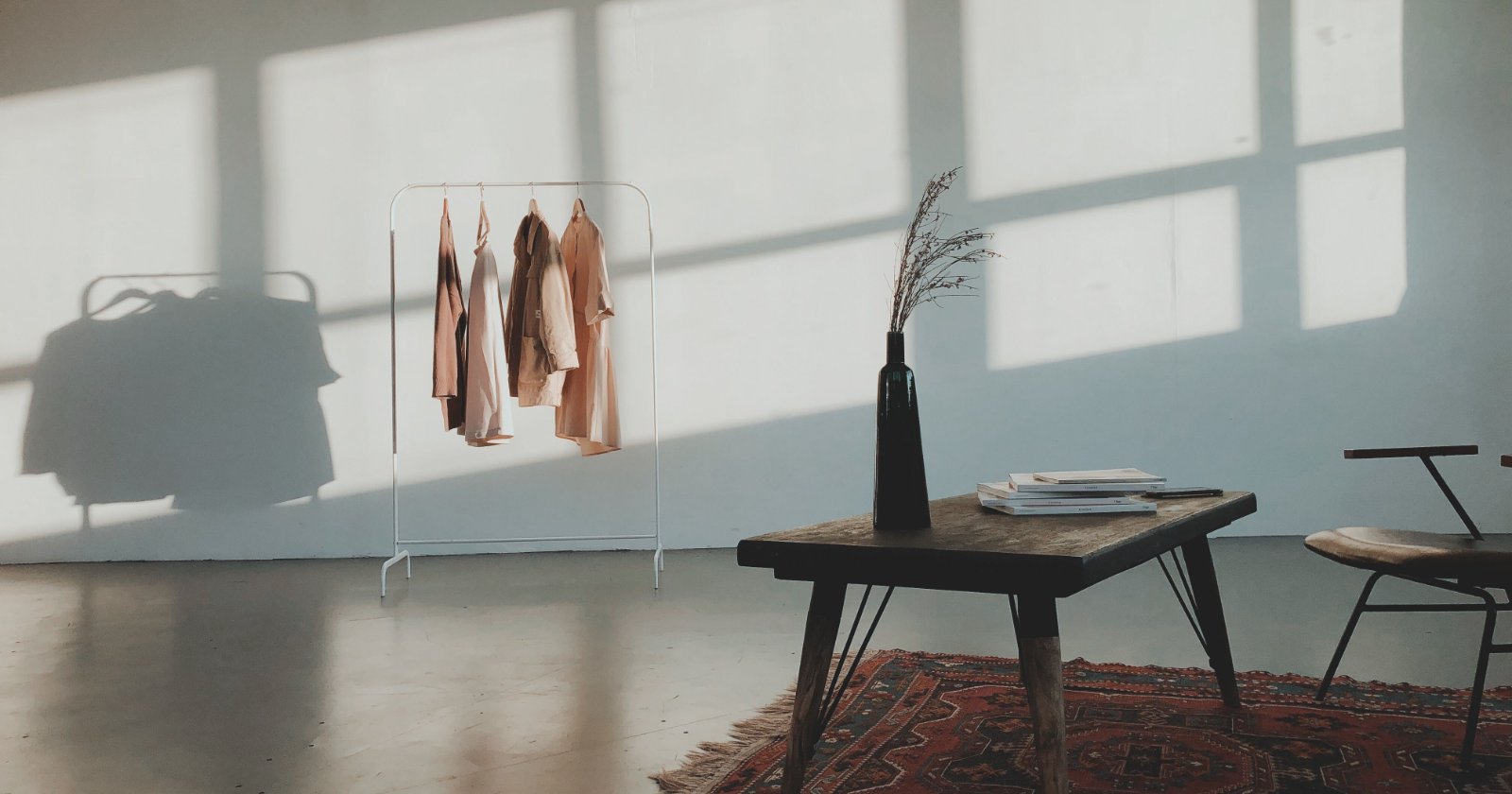
Most homes hold far more than anyone in them uses. There are clothes that haven't been worn in years, gadgets still in their boxes and drawers that won't quite close.
More of it rarely seems to make life feel better, and sometimes it makes it feel heavier.
Philosophers noticed this long before anyone had a storage unit. Here are eight ideas from thinkers across more than two thousand years on why owning and wanting less can make life feel bigger.
Seneca: rehearse having less
In his eighteenth letter to his friend Lucilius, Seneca suggests an exercise. Set aside a few days and live on the plainest, cheapest food in rough clothes, asking yourself the whole time, "Is this the condition that I feared?" He noted that some people did this every month, so they "might never recoil from what they had so often rehearsed."
The idea is to find out, while life is going well, how little you actually need. A week of simple meals or a month without buying anything new does the same job.
Socrates: count what you can do without
The ancient biographer Diogenes Laertius, citing the writer Pamphila, says Alcibiades once offered Socrates a large plot of land to build a house on. Socrates turned it down, comparing it to being offered a whole hide when all he needed was a pair of shoes.
The same source says that when Socrates looked over the goods laid out for sale in the market, he would say to himself, "How many things I can do without!" A trip to the store can be run the same way: notice how much there is, and count how little of it you'd miss.
Diogenes: let a child show you
Diogenes the Cynic kept very little, but he did have a cup. As Diogenes Laertius tells it, he saw a child drinking out of his hands and threw the cup away, saying, "A child has beaten me in plainness of living." He later got rid of his bowl too, after watching a child eat lentils out of a hollowed piece of bread.
Perhaps, watching someone manage happily without a thing is often what shows it was never needed.
Epicurus: need less, so you enjoy more
In his Letter to Menoeceus, Epicurus says the aim is not to always make do with little, but to be content with little when that's what there is. He believed "they have the sweetest enjoyment of luxury who stand least in need of it," and that plain food gives as much pleasure as a costly meal once real hunger is gone.
Seneca, in the letter mentioned above, reports that Epicurus kept set periods of eating sparingly to check whether his happiness suffered. The reward for wanting less was that a good meal, when it came, felt like a gift.
Lao Tzu: enough is a kind of wealth
The Tao Te Ching, traditionally credited to Lao Tzu, puts it in one line in chapter 33: "He who is satisfied with his lot is rich." Chapter 46 names the opposite: no calamity is greater than being discontented with one's lot, and no fault greater than "the wish to be getting."
Psychologists have tested a version of this. In a 2014 interview with the American Psychological Association, psychologist Tim Kasser described a meta-analysis he and colleagues at the University of Sussex had just published. The more strongly people held materialistic values, the less satisfied with their lives they tended to be, and the more unpleasant emotions they reported, a pattern that held across different measures, kinds of people and cultures.
Kasser's explanation was that a life built around money and possessions does a poor job of meeting the needs to "feel free, competent and connected to others". He even pointed out that religious thinkers, Lao Tzu among them, had long suggested materialism pulls against spiritual goals.
The Buddha: less isn't a punishment
In the Buddha's first sermon, recorded as the Dhammacakkappavattana Sutta, he warns against two extremes. One is a life devoted to sensual pleasure. The other is a life of self-affliction, which he calls "painful, ignoble, unprofitable." Between them sits the middle way, which leads to calm.
It's a useful check on anyone who turns minimalism into a competition. Getting rid of things helps only if it makes life easier, a point Epicurus made too.
Thoreau: count the price in hours
In the opening chapter of Walden, Henry David Thoreau offers a different way to price things: "the cost of a thing is the amount of what I will call life which is required to be exchanged for it, immediately or in the long run." He worked it through for a house in his neighborhood. An average one cost about $800, which at a laborer's dollar a day meant ten to fifteen years of work.
Turned into hours of your own working life, some purchases still look worth it. Others stop being tempting very quickly.
Thoreau: everything you own asks for upkeep
A few pages later, Thoreau admits he once kept three pieces of limestone on his desk, until he realized they needed dusting every day "when the furniture of my mind was all undusted still." He threw them out the window.
Every object needs a little something back, whether that's cleaning, storing, repairing or worrying about. In the same chapter he argues that most luxuries and many so-called comforts are "positive hindrances to the elevation of mankind." Clearing a shelf gives back the time and attention those objects were taking.
None of these thinkers asked anyone to live in a bare room. Their point was simpler: the things we own should serve our lives, not crowd them out. Next time you're about to buy something, try Seneca's question first and ask whether going without it is really the condition you feared.