In 1978, psychologists predicted lottery winners would be no happier than other local people. The 22 winners they interviewed weren’t significantly happier, and they rated ordinary pleasures lower


According to Gallup's latest poll, 31% of US adults surveyed by telephone bought a state lottery ticket in the past year. I don't play the lottery myself, but the appeal is easy to understand. For a couple of dollars, you get to spend a few days imagining a completely different life.
Many of us know, however, what happens when a dream comes true. The thrill fades. Whether it's a car, a house or a new job, the thing we wanted slowly becomes the thing we have. That part is familiar enough that it barely needs a study.
But there's another question. What happens to the smaller, everyday pleasures that have nothing to do with the dream we've achieved?
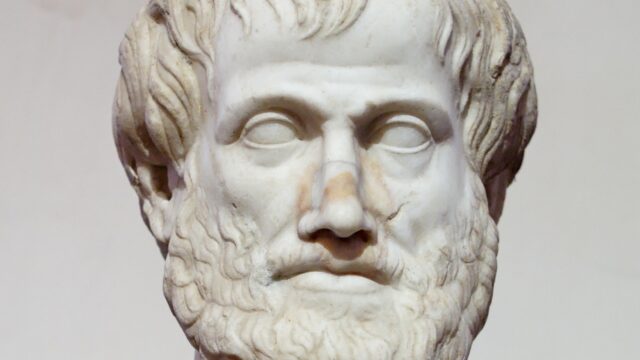
More than 2,000 years ago, Epicurus observed something interesting about such ordinary pleasures. In his Letter to Menoeceus, he argued that plain food could be just as satisfying as expensive food when we were hungry. “Bread and water confer the highest possible pleasure when they are brought to hungry lips,” he wrote.
This raises a question: if hunger can make something ordinary feel extraordinary, could extraordinary good fortune, like winning the lottery, make ordinary things feel less enjoyable?
Well, in 1978, three psychologists studied people who had won big on the lottery, and what they found was consistent with that possibility.
What the 1978 study found
Philip Brickman, Dan Coates and Ronnie Janoff-Bulman published the study in the Journal of Personality and Social Psychology, under the title “Lottery Winners and Accident Victims: Is Happiness Relative?” They set out to interview major winners of the Illinois State Lottery, with prizes from $50,000 to $1 million. Of the 42 winners they tried to reach, 22 took part. For comparison, they picked 22 people from the phone book who lived in roughly the same parts of the city. Most interviews were done by phone.
Everyone rated how happy they were on a scale from 0 to 5. Then, in the paper's words, they were asked “to rate how pleasant they found each of seven activities or events: talking with a friend, watching television, eating breakfast, hearing a funny joke, getting a compliment, reading a magazine, and buying clothes.”
On happiness, the difference was not statistically significant. Winners scored 4.00, against 3.82 for the comparison group.
The everyday pleasures were different. Winners rated them 3.33 on average, against 3.82. The paper reports only the average across all seven, so it doesn't say which pleasures slipped most.
“As predicted,” the authors write, “lottery winners were not happier than controls and took significantly less pleasure from a series of mundane events.”
The wins were also fairly recent. “Only one of the winners had been aware of his good fortune for less than a month,” the paper notes, “and none of them had passed more than a year and a half with their new wealth.” Also, each person was interviewed once, with no “before” measurement, so the study captures a moment rather than a story over time.
An obvious objection is that people who buy lottery tickets might be different from the start. The authors tested that in a second study of 86 more local residents. Ticket buyers and nonbuyers “were apparently quite similar in how happy they felt.” Mentioning the lottery at the start of the interview also “resulted in no significant differences on the scores of present happiness or the pleasure derived from the daily activities.”
How the authors explained it
Let me be clear here: the winners weren't miserable. They rated winning highly and described real improvements, like less worry and more free time.
The authors considered other explanations: that winning had brought stress, that winners were playing down their joy out of modesty, or that winning had simply changed the scale they used to rate ordinary pleasures. They found reasons to doubt each explanation, although they couldn't rule them out entirely.
Their preferred explanation was contrast. The winners' “peak experience with the lottery made more ordinary joys pale by comparison,” which they judged “the most plausible interpretation.”
The suggestion is striking because winning had nothing directly to do with talking to a friend, eating breakfast, hearing a joke or reading a magazine. Yet those ordinary pleasures were rated lower as a group.
In Epicurus's example, hunger makes plain bread unusually satisfying. The lottery researchers were proposing something like the reverse: an extraordinary experience might make ordinary pleasures seem weaker by comparison.
The bread doesn't change. What changes is what it has to compete with.
An older idea about pleasure
Epicurus wasn't the only philosopher to think in these terms.
The Roman Stoic Seneca later made a similar point. In one of his letters, Seneca describes reaching his country house late at night after an uncomfortable journey, with nothing ready for him. “My baker is out of bread; but the overseer, or the house-steward, or one of my tenants can supply me therewith.”
Then he adds, in Richard Mott Gummere's translation: “Hunger will make even such bread delicate and of the finest flavour.”
Epicurus and Seneca were making broader philosophical arguments, not predictions about lottery winners. But their examples turn on the same observation: the pleasure we get from something depends partly on the condition in which we encounter it. Plain bread after hunger is not experienced in quite the same way as plain bread after a feast.
Bertrand Russell came even closer to the psychologists' proposed explanation in The Conquest of Happiness, published in 1930.
“One of the essentials of boredom,” he writes, consists in the contrast between present circumstances and “some other more agreeable circumstances” that force themselves into the imagination.
A little later, he describes what can happen when excitement becomes ordinary. A life too full of it, he argues, creates a need for “continually stronger stimuli” to produce the same thrill. His analogy is someone who becomes so accustomed to pepper that an amount that would overwhelm somebody else barely registers.
“Too much excitement ... dulls the palate for every kind of pleasure,” he concludes.
Russell was describing a life filled with repeated excitement rather than one enormous stroke of luck, so the fit isn't exact. Nor do Epicurus, Seneca or Russell establish what happened psychologically to 22 lottery winners.
But all three circle the same possibility from different directions: our capacity to enjoy something may depend not only on what it is, but on the range of experience against which we encounter it.
Russell's answer was deliberately unfashionable. “A certain power of enduring boredom,” he wrote, “is therefore essential to a happy life.”
What later lottery research found
The story became more complicated when researchers eventually studied much larger groups of lottery winners.
In a 2020 paper in The Review of Economic Studies, Erik Lindqvist, Robert Östling and David Cesarini surveyed 3,362 Swedish lottery players between five and 22 years after a lottery event.
They found that greater lottery wealth produced sustained increases in people's satisfaction with their lives as a whole, with little evidence that the effect faded over the period they studied. The estimated effects on happiness and mental health, however, were substantially smaller.
That doesn't make the 1978 finding disappear. The Swedish researchers were measuring life satisfaction, happiness and mental health years after a win; they did not ask whether breakfast, television, jokes or magazines had become less enjoyable.
If anything, the later research makes an important distinction clearer. Winning a great deal of money may improve how people evaluate their lives without producing anything like the same increase in day-to-day happiness.
Money and savoring
More than three decades after the original lottery study, researchers came at the question from a different angle.
In a 2010 paper in Psychological Science, Jordi Quoidbach, Elizabeth Dunn and colleagues describe what they call “the first evidence that money impairs people's ability to savor everyday positive emotions and experiences.”
Their first study surveyed 374 employees of the University of Liège in Belgium, “from custodial staff to senior administrators.” Higher wealth, measured from income and savings, was associated with lower self-reported savoring ability.
On its own, that's a correlation. But in the same study, people who were simply shown a reminder of money before answering also reported lower savoring.
The second study, with 40 volunteers at the University of British Columbia, moved beyond questionnaires. People shown a picture of money before a chocolate taste test “spent significantly less time eating the chocolate” and “displayed significantly less enjoyment.”
The authors' conclusion sits remarkably close to the 1978 finding: “having access to the best things in life may actually undercut people's ability to reap enjoyment from life's small pleasures.”
None of this establishes a simple rule that wealth makes ordinary life less enjoyable. The original lottery study involved only 22 winners and had no measure of how happy they had been before they won. The later Swedish research gives good reason to reject the stronger idea that lottery wealth simply fails to improve people's lives. And the savoring experiments investigated a related mechanism rather than recreating the experience of suddenly becoming rich.
The narrower idea is perhaps more interesting anyway.
It seems pleasure is not produced by an object or experience in isolation. It is partly comparative. What came before, what we have grown accustomed to and what we now expect can all affect how strongly something registers.
Hunger can make something ordinary taste extraordinary; abundance may sometimes push in the opposite direction.
The lesson is not that deprivation is good or wealth is bad. It is that continually raising the intensity of our experiences may carry a cost that is easy to miss: the mild pleasures have to compete on a stronger and stronger scale.
Sources
- Gallup (2026). Jeffrey M. Jones. “Fewer U.S. Adults Say They Gamble.” Published August 17, 2026. Reports lottery participation among US adults.
- Brickman, P., Coates, D., & Janoff-Bulman, R. (1978). “Lottery Winners and Accident Victims: Is Happiness Relative?” Journal of Personality and Social Psychology, 36(8), 917–927. The original study comparing lottery winners, accident victims and a control group.
- Epicurus. Letter to Menoeceus. Internet Classics Archive, MIT. Source for the discussion of simple food, luxury and bread and water.
- Seneca. Moral Letters to Lucilius, Letter 123: “On the Conflict Between Pleasure and Virtue.” Translated by Richard Mott Gummere. Source for Seneca's discussion of hunger and ordinary bread.
- Russell, B. (1930). The Conquest of Happiness. Chapter 4, “Boredom and Excitement.” Source for Russell's analysis of excitement, boredom, contrast and the diminishing enjoyment of ordinary pleasures.
- Lindqvist, E., Östling, R., & Cesarini, D. (2020). “Long-Run Effects of Lottery Wealth on Psychological Well-Being.” The Review of Economic Studies. Large-scale Swedish lottery study examining life satisfaction, happiness and mental health.
- Quoidbach, J., Dunn, E. W., Petrides, K. V., & Mikolajczak, M. (2010). “Money Giveth, Money Taketh Away: The Dual Effect of Wealth on Happiness.” Psychological Science, 21(6), 759–763. Research examining wealth, reminders of money and the ability to savor everyday pleasures.
Mal James
Mal is a senior writer at Brown Brothers Media, the publisher of Philosophy Basics. He has a particular interest in philosophy, psychology, and the questions surrounding happiness, personal growth, and what makes for a meaningful life. When he's not writing, he's usually reading or working on his far-from-perfect golf swing.
More by Mal James →