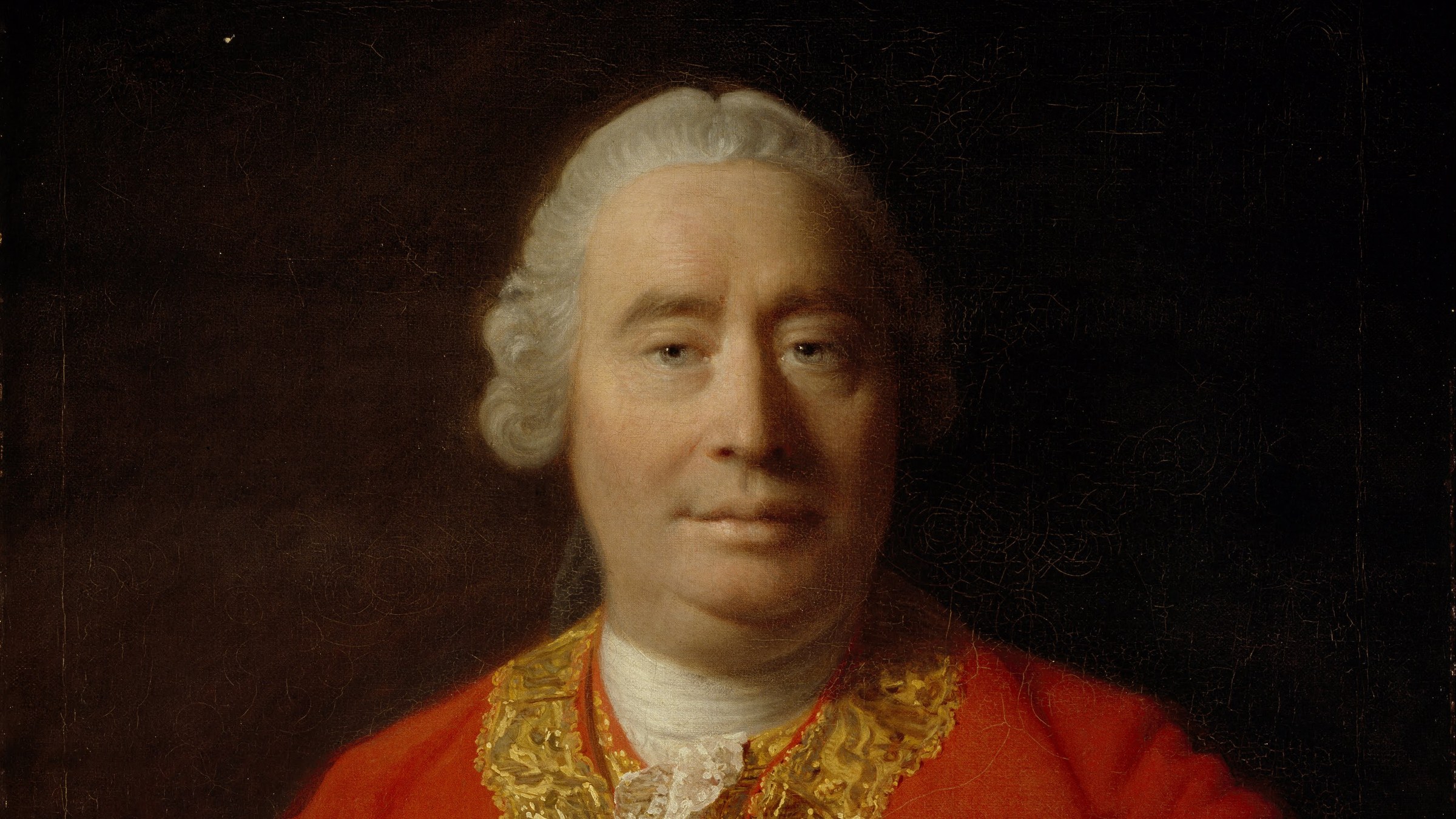
David Hume's answer, in Of the Standard of Taste (1757), was the practised reader, the person who has compared a lot of work and cleared out their own prejudices before judging. He got there from a starting point that sounds like it rules out judging altogether. A live test case ran through X on 8 October 2026, the day Anne Carson, the Canadian writer, won the Nobel Prize in Literature for an oeuvre in "playful dialogue with the classical tradition".
That day The New Yorker posted her poem "Stanzas, Sexes, Seductions" on X. The magazine first published it back in 2001. Andy Grewal, a law professor at the University of Iowa, quote-posted it: "I honestly just don't get poetry. Why is this good?"
By 20 October that post had been viewed more than a million times and had drawn around 1,180 replies.
A sample of the replies went two ways. Some called it word salad and emperor's new clothes. Others said art is subjective and you should enjoy what you like. One reply answered with Kipling's "If-" from 1910.
So is anyone's verdict on that poem worth more than anyone else's?
What Hume actually argues
He opens on the subjective side. "Beauty is no quality in things themselves: It exists merely in the mind which contemplates them", he writes in paragraph 7. He also writes, in the same paragraph, that "All sentiment is right", because sentiment "has a reference to nothing beyond itself, and is always real, wherever a man is conscious of it". On that footing every reaction to the Carson poem is a real one.
Paragraph 8 pulls it back. Anyone claiming Ogilby was Milton's equal would be treated as ridiculous, and we'd say so without scruple. We hold both of these ideas at once, and the rest of the essay is Hume trying to fix that.
The fix arrives in paragraph 23. Most people are not qualified to judge, he says, because they lack delicacy, or practice, or comparison, or good sense, or they're working under prejudice. The qualified ones have "Strong sense, united to delicate sentiment, improved by practice, perfected by comparison, and cleared of all prejudice". The final say goes to them collectively: "the joint verdict of such, wherever they are to be found, is the true standard of taste and beauty". The standard sits in what a group of those critics agree on together.
He has a second test, and it's slow. Time. In paragraph 11 he writes "The same Homer, who pleased at Athens and Rome two thousand years ago, is still admired at Paris and at London". Fashion can prop a bad poet up for a while, and then posterity and foreigners get hold of the work and "the enchantment is dissipated". What survives all the caprices of mode and fashion earns durable admiration.
Then Hume turns on himself in paragraph 24. "But where are such critics to be found? By what marks are they to be known?" He calls those questions embarrassing. His answer is that they're questions of fact, so you argue them out and put up with the people who land somewhere else.
Why a standard is worth keeping
"The truth is that opinions are not always well-informed or well-supported." That's Peter Lamarque, Emeritus Professor of Philosophy at the University of York, whose book Playing With Words: On Form and Thought in the Philosophy of Poetry is out from Oxford in December 2026. He wrote that readers can disagree about a poem's merits or meanings, and that it's never enough to tell someone who disagrees with you that it's just their opinion. Before you disagree, he wrote, "you should ask how well the judgment is defended and whether it rings true about the poem itself".
That's the strongest thing going for Hume. Once "art is subjective" is accepted as a conversation-ender, every reply thread about a poem dies a second after it starts and nobody comes away knowing more about the poem.
Lamarque also grounds the whole business in experience. "Ultimately the value of a poem lies in the experiences it elicits in readers", he wrote, and those experiences might involve emotion or thought or a delight in linguistic artifice. That's Humean in shape, because the value shows up in the mind doing the reading.
Where I think Hume runs out
I think Hume is partly right. We need impartial people who can rise above groupthink, and his equipment for that job (practice, comparison, dropping your prejudices) is the right equipment. The part he misses is that deference to elites and to the classics is a form of groupthink too.
Look at what his freedom from prejudice covers. In paragraph 21 it's about the critic's personal position: friendship or enmity with the author, interest as a rival or commentator, the manners of your own age and country. He asks the critic to forget "my individual being and my peculiar circumstances". That's a demand on one person's head.
The question he leaves alone is whether the qualified critics could be wrong as a group. His long test assumes the sorting happens on its own, because a real genius spreads and the admiration gets more sincere as the circle widens. That holds up if the readers across those centuries are independent of each other. Where the same institutions teach the same lists, survival tells you something about the institutions as well as the poem.
He half concedes the point in paragraph 28, where he allows two sources of variation he can't resolve: the humours of particular men, and "the particular manners and opinions of our age and country". Our age's opinions include which writers end up on a university syllabus.
So today's judges have to go further than Hume did. That means comparing across work from outside the canon, and taking a prize or a magazine byline as a fact about the poem's history.
It also means the untrained reader's response is worth collecting. "Poetry is difficult. But it is just an apparent difficulty since non-poetry readers are not used to literary works being organised by feeling", said Karen Simecek, a philosopher at the University of Warwick and author of Philosophy of Lyric Voice. She described readers getting frustrated when a poem resists narrative understanding, the "this, then that, then that" shape, and when attempts to reduce it to a message don't account for the experience of the work.
If a poem is organised by feeling, then someone with no training still has something to report, which is what the poem did to them when they met it cold.
Which leaves the practical question. What should a person do when they hit a poem and get nothing? Lamarque's advice is to break it into parts and see whether you can make sense of individual phrases or sentences, and to let it play in your mind, because "a full appreciative experience takes time". Take the Carson poem at that speed and you reach a flat sentence like "My personal poetry is a failure", which anyone can argue about. He also accepts the possibility that it never lands for you, and says there's no serious fault in that.
Hume's fast test was a small group of trained judges converging on a verdict. His slow test was centuries of readers in other countries picking the work up anyway. A million views in twelve days measures reach.
For the Carson poem, the judging I'd trust would come from people who read widely outside the classical tradition she's playing with, going line by line and saying what the poem does to them as they go. That's years of work on a poem that has been sitting in The New Yorker's archive since 2001, and the Nobel announcement is as good a reason as any to start it.
Sources
- David Hume, "Of the Standard of Taste" (1757), Hume Texts Online
- The Nobel Prize in Literature 2026, press release, 8 October 2026
- Anne Carson, "Stanzas, Sexes, Seductions", The New Yorker, 3 December 2001
- The New Yorker's post on X and Andy Grewal's quote-post, 8 October 2026 (view count from X, 20 October 2026)
- Karen Simecek, Philosophy of Lyric Voice (Bloomsbury) and "Your life is not a story", Psyche