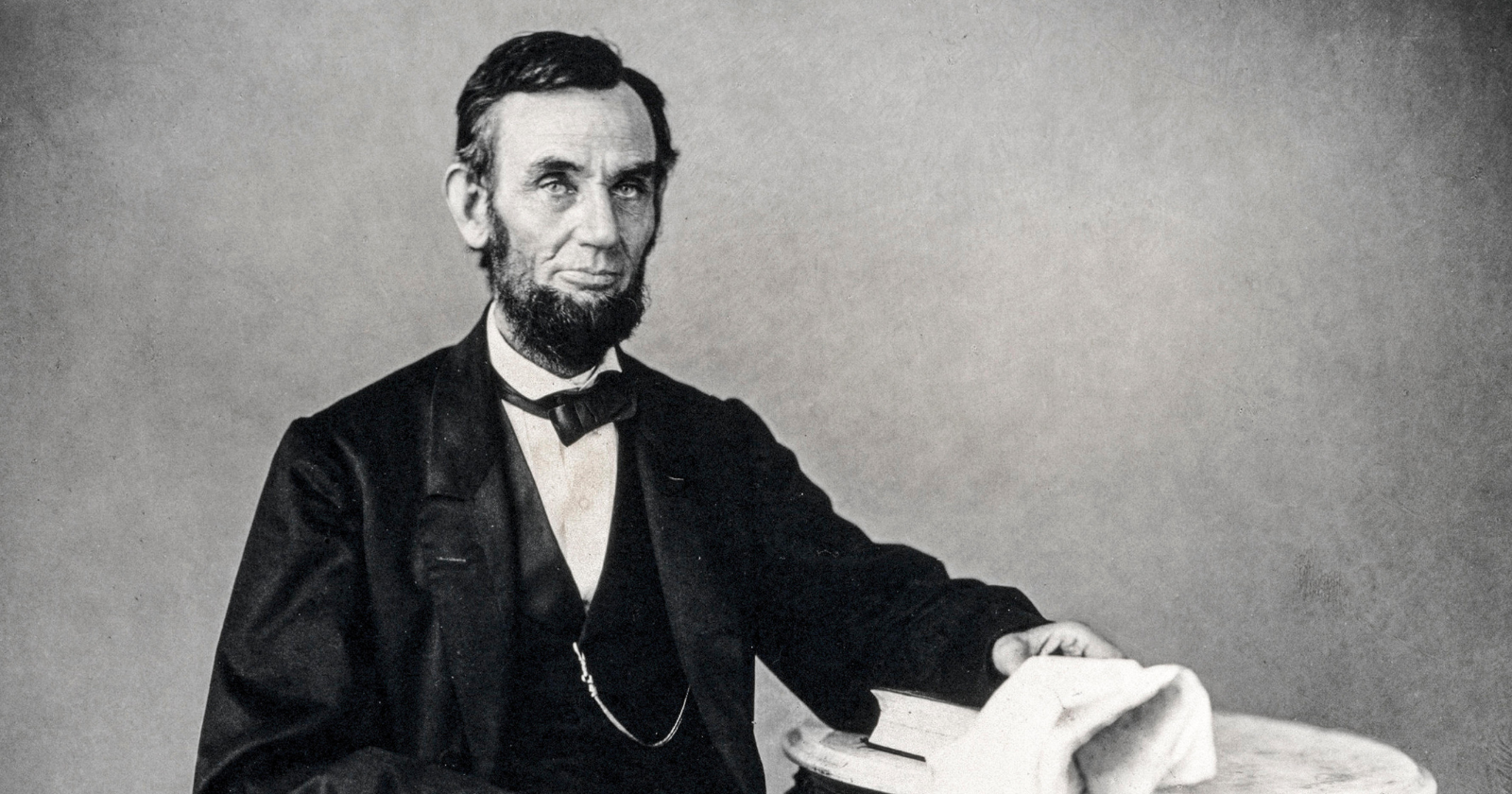
On September 30, 1859, Abraham Lincoln gave an address to the Wisconsin State Agricultural Society in Milwaukee. At the end of his speech, he told a story about an Eastern king who asked his wise men for a sentence that would be true in every situation. They gave him: “And this, too, shall pass away.”
It was a well chosen sentence. It could console someone in distress and temper the pride of someone enjoying success. But he immediately raised an objection: “And yet let us hope it is not quite true.”
To understand why, it helps to read what came before the story. Lincoln had been talking about the winners and losers at the agricultural fair. He told them that while the fair brought "sober and durable benefits," its "exultations and mortifications" were "but temporary," and that "the victor shall soon be the vanquished if he relax in his exertion." His broader hope was that people could work towards lasting improvements in their material, intellectual and political lives.
Lincoln's speech touches on a question that runs through several philosophical traditions. Impermanence is central to Buddhist philosophy, while the Stoic philosopher Marcus Aurelius repeatedly reflected on the changing nature of everything around him.
But recognising that things change is one thing. Knowing how to respond to that knowledge is another. We want painful experiences to pass and good ones to last. But does remembering that nothing lasts actually help us? Can it make us appreciate what we have, or take away from our enjoyment? And what happens when a loss stays with us, or when a difficult situation requires more than simply waiting for things to change? Psychological research offers some interesting takes, and it also reveals the limits of what the saying can promise.
In a 2015 paper published in the Journal of Personality and Social Psychology, Berkeley researchers Emma Bruehlman-Senecal and Özlem Ayduk investigated an idea inspired partly by the proverb itself. They wanted to know whether imagining a problem from a more distant point in the future could reduce the distress it caused in the present. In two experiments, university students reflected on problems that were bothering them. Some imagined their lives a week later, while others pictured themselves ten years into the future. Those taking the ten-year perspective reported less distress.
Across studies, the researchers found evidence that taking a longer view can reduce distress. In their words, the benefit came at least partly from “directing individuals' attention to the impermanent aspects of these events.”
Of course, the research has limits. Much of it involved university students, and the experiments primarily measured their immediate emotional reactions. Also, feeling less distressed about a problem doesn't mean the problem has disappeared. But perhaps that's part of the proverb's usefulness. It can remind us that the way we feel about something now may not be how we'll feel about it forever.
There's another side to impermanence. Remembering that something painful won't last may bring relief, but what happens when we apply the same thought to something we're enjoying? In another experiment reported in their 2015 paper, Emma Bruehlman-Senecal and Özlem Ayduk examined how students felt about their exam results.
Taking a distant-future perspective reduced negative feelings among students who had performed poorly. Among students who had performed well, taking a distant-future perspective produced no significant overall improvement in mood. However, the researchers found that “high performers experienced greater negative affect to the extent that they adopted an impermanence focus.” It's understandable. Being reminded that a happy experience is fleeting isn't always pleasant.
Another experiment suggests that recognising an approaching ending can sometimes make an experience more enjoyable, however. In a 2008 study published in Psychological Science, Jaime L. Kurtz asked college seniors to write about their university lives over two weeks. Some were encouraged to think of graduation as very close, while others were prompted to see it as further away. Students who saw graduation as imminent increased their participation in college-related activities and reported greater well-being over the study period. Kurtz concluded that “thinking about an experience's ending can enhance one's present enjoyment of it.”
I find the contrast between these findings interesting. Thinking about how little a successful exam result will matter in ten years may diminish the satisfaction it brings. But realising you have only a few weeks left with your university friends might encourage you to spend more time with them. In one case, you're stepping away from an enjoyable feeling. In the other, you're paying closer attention to an opportunity that's still available. The studies don't establish that this distinction applies everywhere. But they suggest that awareness of impermanence can affect us differently depending on what it makes us notice.
There is, of course, a more difficult limit to the proverb. Some experiences change people's lives permanently. Some situations don’t materially change no matter how far ahead you imagine. In a 2002 study, George Bonanno and his colleagues touched on this by following 205 people whose spouses had died. Unlike many bereavement studies, the researchers had information about the participants from before their loss. They assessed them again six and eighteen months afterwards.
The results showed strikingly different patterns. Some people showed relatively little depression following bereavement. Others continued to experience high levels of depressive symptoms eighteen months after their spouses died.
The Berkeley experiments suggest that taking a longer view can reduce immediate distress. But does making ourselves feel better about a problem also make us less likely to do something about it? The Berkeley researchers raised this worry themselves. In two of their studies, they tracked students' final exam scores and found no sign that taking the long view of a midterm result hurt them. But they noted this covered only academic performance, and that problem-solving needed testing more directly.
Imagine being in an unhappy job. Reminding yourself that your present feelings won't last might help you get through a difficult day. But it wouldn't tell you whether you should accept the situation, try to improve your working conditions or find another job. Emotional relief and practical improvement are different things.
And this is where Lincoln's original speech becomes particularly interesting. He recognised that failure could be temporary, but he didn't suggest that people should simply wait for their fortunes to change. He urged the unsuccessful competitors at the agricultural fair to keep trying. “Let them adopt the maxim, ‘Better luck next time;’ and then, by renewed exertion, make that better luck for themselves.” His hope was that people could create improvements that endured.
Sometimes, taking a longer view helps us recognise that the feelings overwhelming us today may eventually change. At other times, the circumstances causing those feelings deserve our attention, and there may be something we can do about them. “This too shall pass” can offer perspective. But it cannot tell us what will change on its own, or what requires action.