
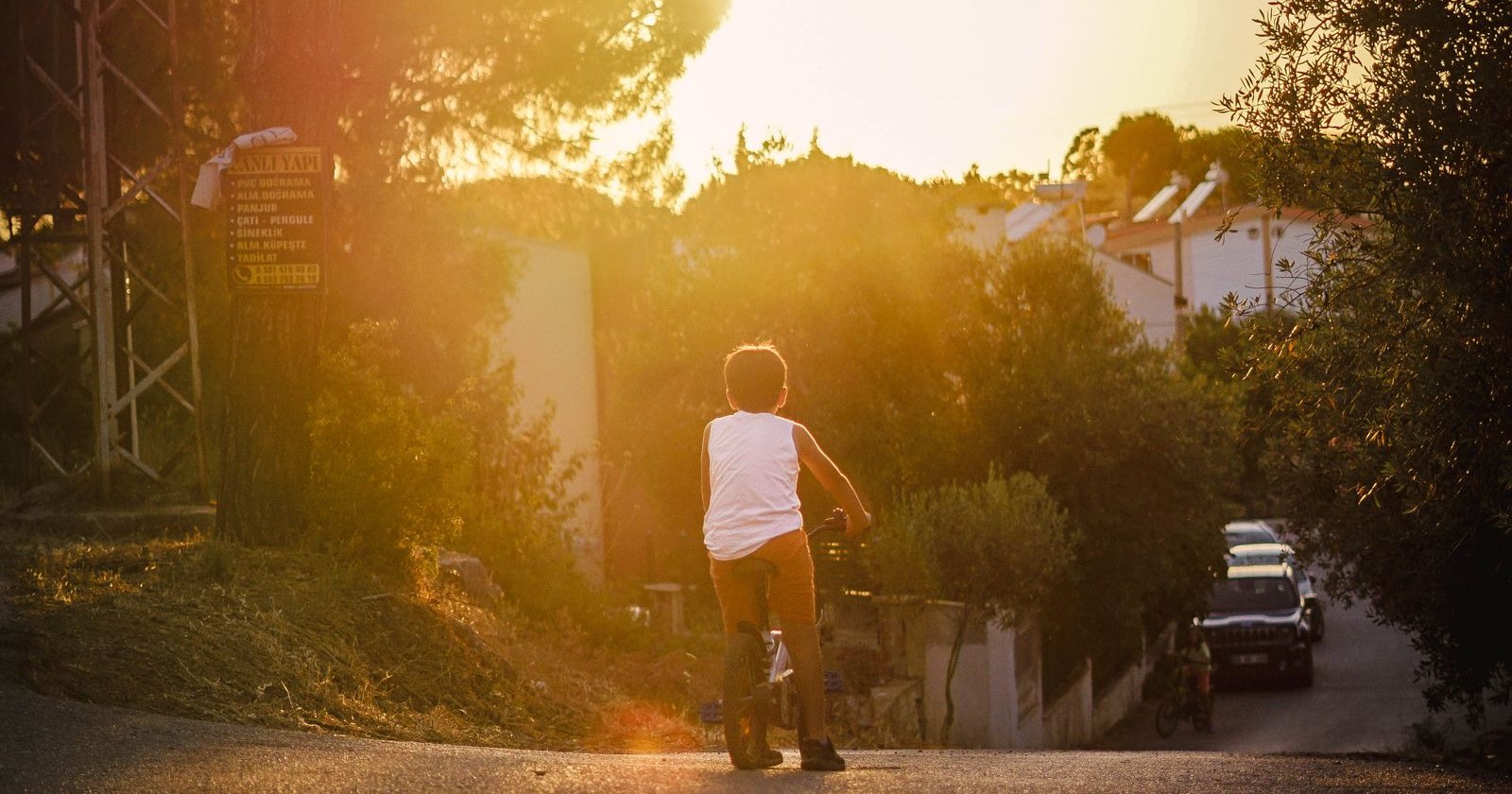
Picture a summer afternoon in 1974. There are three or four TV channels, and none of them is showing anything for kids. A ten-year-old lies on the living room carpet and announces that there's nothing to do. A parent looks up from the kitchen and says, "Then go outside and find something." And that's the end of the help.
If you grew up in the 1960s or 70s, you may remember afternoons like that: free time nobody planned, and boredom nobody rushed in to fix. Seneca, the Roman philosopher, never saw an afternoon like that. But he did recommend something that sounds a lot like it: deliberately putting up with a little discomfort now, so that bigger discomforts frighten you less later.
"Set aside a certain number of days," Seneca wrote to his friend Lucilius, "during which you shall be content with the scantiest and cheapest fare, with coarse and rough dress, saying to yourself the while: 'Is this the condition that I feared?'" His reasoning was simple: "If you would not have a man flinch when the crisis comes, train him before it comes" (Letter 18.5-6, Richard Gummere's translation).
Childhoods have changed in at least one measurable way. Among seven- and eight-year-olds surveyed in five areas of England, 80 percent were allowed to go to school without an adult in 1971. By 1990, the figure was 9 percent (Hillman, Adams and Whitelegg, One False Move). That study measured how much freedom children were given, not how patient or resilient they became. Still, the long, unsupervised afternoons many people remember are a useful way into Seneca's advice. Linking the two is an analogy, not a research finding. Here are seven mental strengths worth practicing today, whatever decade you grew up in.
1. Sitting with boredom
Seneca described a restless kind of person who keeps changing scenery to escape a feeling of dissatisfaction. "Now let us make for Campania," this person says, then grows tired of it and heads somewhere else. Seneca quotes the poet Lucretius: "Thus every mortal from himself doth flee." But it doesn't work, he adds, because such a person "follows himself and weighs himself down by his own most burdensome companionship" (Of Tranquillity of Mind 2, Aubrey Stewart's translation).
Modern research suggests that many people find their own company surprisingly hard. In a 2014 study, Timothy Wilson and colleagues asked participants to sit alone with their thoughts for up to 15 minutes. Many found it unpleasant. In one experiment, 12 of 18 men and 6 of 24 women gave themselves at least one mild electric shock during the thinking period, even though they had earlier said they would pay to avoid being shocked again (Science). The study didn't compare generations. But it suggests that sitting with your own thoughts is a skill many people find hard.
Many people remember that, as children with no screen to reach for, they had little choice but to wait boredom out, and that it often turned into something else: a daydream, a game, a plan. A simple way to practice now is to leave the phone in your pocket the next time you're in a line or a waiting room, and see what your mind does with the space.
2. Making do with what's at hand
Seneca once arrived late at his country house to find that nothing was ready. Rather than fume, he reflected: "To have whatsoever he wishes is in no man's power; it is in his power not to wish for what he has not, but cheerfully to employ what comes to him" (Letter 123.3).
Many people remember afternoons spent turning whatever was lying around into entertainment: a cardboard box became a fort, a tennis ball and a wall became a whole sport. Nobody would claim every afternoon was creative. But the habit of starting from what's available, rather than from what's missing, is useful at any age.
In adult life, it might mean cooking from what's already in the fridge, fixing something before replacing it, or starting a project with the tools you have. A good question to ask is: "What can I do with what's here?"
3. Waiting
In the same letter, Seneca's baker had run out of bread, and the replacement wasn't very good. "'Bad bread!' you say. But just wait for it; it will become good. Hunger will make even such bread delicate and of the finest flavour" (123.2).
Many people remember a lot of waiting as kids: a week for the next episode of a favorite show, weeks for a mail-order package, months for a birthday present. Seneca's point was narrower: hunger makes plain bread taste good. But a similar idea can apply elsewhere. Wanting something for a while often makes it more satisfying when it arrives.
Today, almost everything can arrive quickly, and waiting can feel like a failure of the system. One way to rebuild the habit is to add a deliberate delay before small purchases: put the item in the basket and wait 24 hours. Often the wanting fades. When it doesn't, the thing tends to feel more earned.
4. Hearing "no" without falling apart
Seneca had firm views about how children's tempers are formed. "Nothing makes children more prone to anger than a soft and fond bringing-up," he wrote. "He to whom nothing is ever denied, will not be able to endure a rebuff" (Of Anger 2.21).
Many people who grew up in the 1960s and 70s remember "no" as a common answer, often without much explanation. That wasn't always kind or fair. But hearing it often may have made it feel ordinary rather than catastrophic.
Adults face plenty of refusals: a job that goes to someone else, a request turned down, a plan that falls through. A useful habit is to notice your first reaction to a small "no" and give it a minute before responding. "That's disappointing. What's my next move?" is usually more useful than the first thing that comes to mind.
5. Sorting out disagreements without a referee
In the same passage, Seneca gave advice about children's games. When a boy competes with his friends, "let us see that he be on friendly terms with those whom he contends with, so that in the struggle itself he may learn to wish not to hurt his antagonist but to conquer him" (2.21).
Many people remember street games with no adults involved. Kids made up the rules, argued over whether a ball was in or out, and settled it themselves, because the alternative was ending the game. Those arguments weren't always fair, and some kids got pushed around. But many children got regular practice at negotiating, compromising and playing on with someone they'd just argued with.
The adult version is trying to resolve a disagreement directly before escalating it. A calm opener helps: "I think we see this differently. Can we work out something that works for both of us?"
6. Going without comfort
Seneca contrasted two kinds of parental love, in the gendered terms of his time. One kind pushes children to start their tasks early and work until they sweat. The other wants to "keep them out of the sun, and never wish them to be vexed, or to cry, or to work." He thought the first kind built strength: "Unbroken prosperity cannot bear a single blow" (Of Providence 2).
Many people remember walking to school in the rain, sitting in hot cars without air conditioning and patching their own scraped knees. Nobody would call that a philosophy. But it made small discomforts familiar, which is close to what Seneca's practice aims at. After a few days of plain living, he told Lucilius, "you will leap for joy when filled with a pennyworth of food" (Letter 18.7).
Seneca's version was short and voluntary: "three or four days at a time," he suggested. A modern equivalent might be walking instead of driving for a week, or going a weekend without takeout. The aim isn't hardship for its own sake. It's finding out, as Seneca put it, whether this is really "the condition that I feared."
7. Switching off and playing
Seneca didn't think a good life meant constant effort. "Neither ought we always to keep the mind strained to the same pitch, but it ought sometimes to be relaxed by amusement," he wrote. He pointed out that "Socrates did not blush to play with little boys." He also recommended mixing solitude with company: "solitude will cure us when we are sick of crowds, and crowds will cure us when we are sick of solitude" (Of Tranquillity of Mind 17).
Many people remember plenty of both from their childhood afternoons: hours alone in a bedroom or backyard, followed by a crowd of neighborhood kids at dusk. Many adults now find it hard to do either. Free time fills up with tasks, and rest often means a screen.
One way to practice is to plan something purely for fun with no goal attached, like a card game, a walk with no destination or an afternoon with a hobby you're not trying to get good at.
Not every childhood was a golden age
It's easy to romanticize the past. Plenty of children in the 1960s and 70s had difficult, unsafe or neglected childhoods, and freedom from supervision sometimes meant real danger. Parents had real reasons to change course, too. The One False Move researchers noted that between 1971 and 1990, traffic in Britain nearly doubled. Many families now also face pressures their parents didn't, from longer commutes to two working parents.
It also isn't fair to suggest that younger people lack strength. Many of them handle pressures earlier generations never faced. And these strengths aren't fixed by the decade you grew up in. They're habits, and habits can be built at any age.
Seneca offers a way to practice deliberately, whatever childhood you had.
One place to start
Choose one small comfort to go without for a weekend. It might be your phone for an afternoon, takeout food or the car for short trips.
When you notice the urge to reach for it, ask Seneca's question: "Is this the condition that I feared?" The answer is often more reassuring than you'd expect.