
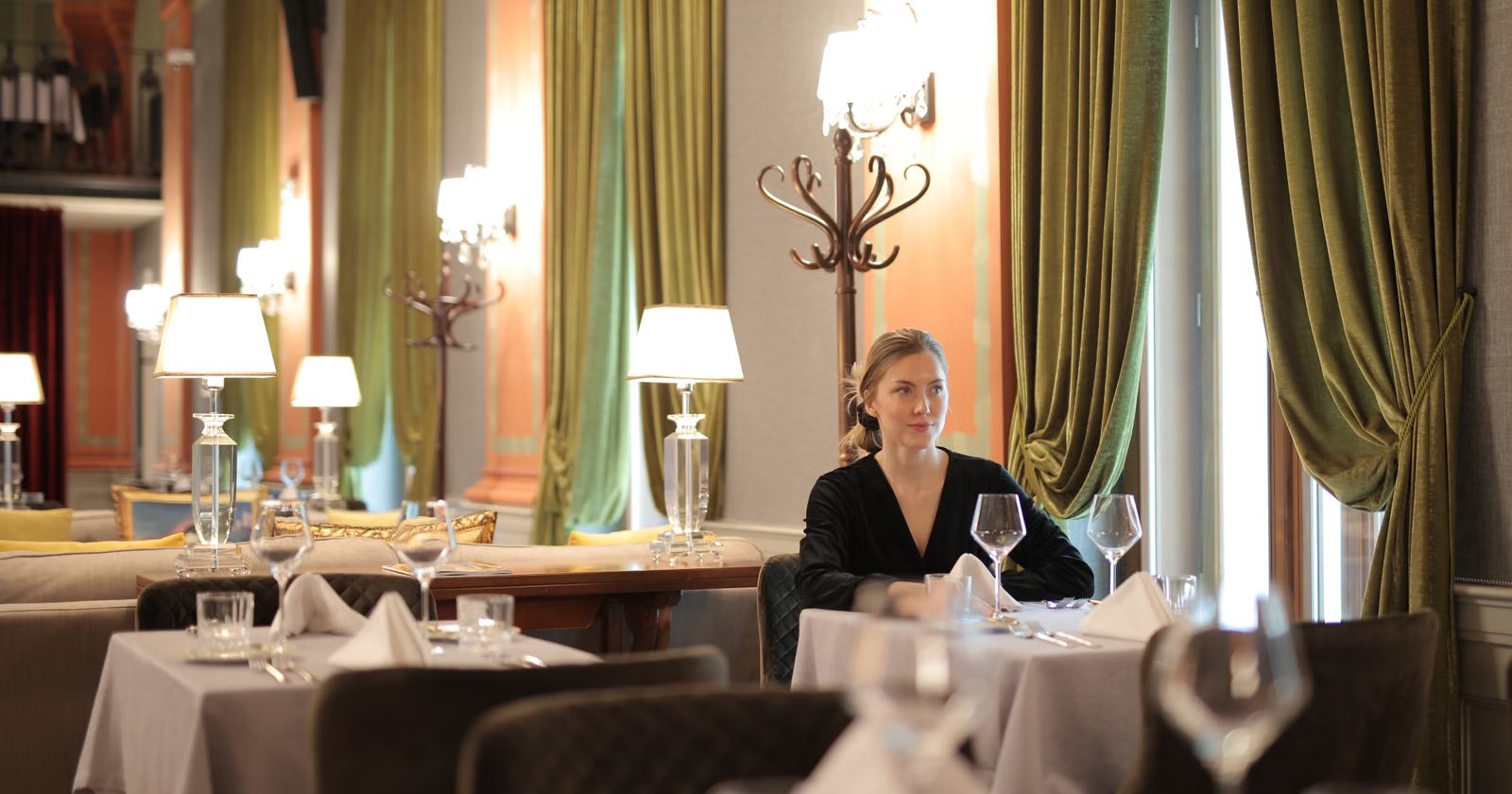
Plenty of people are happy to spend an evening alone at home. Going out alone is different. A table for one, a single ticket at the box office or a trip with nobody to turn to and say "Look at that" can feel exposed, as if everyone can see that you've come by yourself.
Some people put off the restaurant, the concert or the trip until someone can come with them, and sometimes that day never comes. Research suggests the worry is usually bigger than the experience. The Stoics, who spent a lot of time thinking about other people's opinions and about travel, had practical advice too.
Here are eight lessons for eating out, traveling and going places by yourself.
1. Expect to feel self-conscious, then go anyway
Even Seneca knew the feeling of worrying about how he looked. On one journey with his friend Maximus, traveling cheaply in a farmer's cart pulled by slow mules, he admitted he was embarrassed by the shabby vehicle: "whenever we meet a more sumptuous party I blush in spite of myself." He scolded himself for it: "Even yet I am bothered by what other travellers think of me" (Letter 87.4-5, Richard M. Gummere's translation).
Research suggests that this kind of worry keeps many people at home. In a series of studies, people were less interested in public, enjoyable activities such as going to a movie or a restaurant alone, partly because they expected others to think they had no friends. Yet they tended to overestimate how much their enjoyment depended on having company. In one field study at an art gallery, people who visited alone enjoyed it about as much as those who came with someone (Journal of Consumer Research, 2015).
The researchers also found that people felt more comfortable when an outing seemed to have a purpose, or when fewer people were likely to be watching. That suggests two simple tricks: bring a book or a sketchbook, and try a quieter time of day first.
2. Eat when and where you're hungry
Diogenes the Cynic, whom the Stoics admired as a model of independence, ignored the convention that respectable people didn't eat out in the open. "Being reproached for eating in the market-place, 'Well, it was in the market-place,' he said, 'that I felt hungry'" (Diogenes Laertius 6.58, R. D. Hicks's translation).
Nobody needs to go as far as Diogenes did. But his answer is a reminder that eating is a perfectly ordinary reason to be somewhere.
If dinner alone feels like too big a step, start with breakfast or lunch, when solo diners are common. Counter seats, cafés and bistros with a bar are often easier than a formal dining room. Then order what you want and take your time over it.
3. Choose a better imaginary audience
When people feel watched, the audience they imagine is usually a critical one. Seneca recommended picking a different audience. He passed on advice from Epicurus: "Cherish some man of high character, and keep him ever before your eyes, living as if he were watching you, and ordering all your actions as if he beheld them" (Letter 11.8). If his first suggestion, the stern Cato, seemed "too severe a model," Seneca added, choose someone gentler (11.10).
Seneca meant this as a guide to good conduct. A modern adaptation might help when you feel conspicuous: picture someone whose judgment you trust, and consider whether they would see anything shameful in enjoying a meal alone. The point is to question the harsh standard you're imagining, rather than win an audience's approval.
4. Travel for what's there, not to escape
Seneca was skeptical of restless travel, the kind people undertake to get away from their own moods. But he was clear about what a journey can offer. "What travel will give is familiarity with other nations: it will reveal to you mountains of strange shape, or unfamiliar tracts of plain, or valleys that are watered by ever-flowing springs" (Letter 104.15). What it won't do, he added, is "make better or sounder men of us."
That's a useful way to approach a solo trip. If you're going to see a cathedral, a coastline or a city you've always wondered about, traveling alone lets you linger as long as you like. If you're hoping the trip will fix loneliness or a low mood, it may disappoint, because your mood comes with you.
Choose a trip built around something you want to see or do. A walking tour, a cooking class or a guided day trip can also give a solo journey some structure and a little company along the way.
5. Go somewhere that means something to you
One of Seneca's letters was written from the country house that had once belonged to the Roman general Scipio Africanus. "I am resting at the country-house which once belonged to Scipio Africanus himself," he wrote, "and I write to you after doing reverence to his spirit" (Letter 86.1). He went on to describe Scipio's small, dark bath at length, and to compare it with the luxurious bathhouses of his own day.
Visiting a place with personal or historical meaning is one of the easiest things to do alone. A battlefield, a writer's home, the town a grandparent came from or a garden you once visited with someone you loved all reward quiet attention. Nobody else's schedule needs to fit around yours.
6. Bring absent people with you in your mind
On a trip along the Bay of Naples, Seneca found that the landscape brought his friend Lucilius vividly to mind. "Campania, and especially Naples and your beloved Pompeii," he wrote, "struck me, when I viewed them, with a wonderfully fresh sense of longing for you. You stand in full view before my eyes" (Letter 49.1).
Fond memories may do more than make us wistful. In a set of four studies in China, loneliness was linked to feeling less supported by others, but it also prompted nostalgia, and nostalgia in turn was linked to feeling more supported (Psychological Science, 2008). The effect was strongest among more resilient people, and nostalgia didn't erase the effect of loneliness.
Going somewhere alone doesn't have to mean leaving everyone behind. Send a photo to someone who would enjoy it, or order the dish a late partner always chose. A little remembered company can sit at the table too.
7. Laugh at the mishaps
Seneca's travel stories weren't all dignified. He once set out by boat on what should have been a short crossing near Naples. The sea turned rough, he grew miserably seasick and the pilot was reluctant to risk the rocky coast. So Seneca, "a veteran devotee of cold water," let himself down into the sea, "clad as I was in my cloak," and scrambled ashore over the rocks (Letter 53.1-4).
He clearly enjoyed telling the story afterward. Things go wrong on solo outings too: the wrong train, a restaurant that's closed, rain on the one day you planned to walk. Without a companion to share the frustration, small setbacks can feel bigger.
It helps to treat them as material. A missed connection is tomorrow's story, and it's yours to tell however you like.
8. The place matters less than your frame of mind
Seneca once described the villa of a wealthy man named Vatia, who had retired to a beautiful seaside property. The setting impressed him, but he wasn't convinced it made anyone content. "The place where one lives, however, can contribute little towards tranquillity; it is the mind which must make everything agreeable to itself," he wrote. "I have seen men despondent in a gay and lovely villa" (Letter 55.8).
Curiosity can help you notice what's enjoyable without monitoring how you look to everyone else. But you don't have to enjoy every outing. If the café is unpleasant or the museum doesn't interest you, try somewhere different next time. One disappointing afternoon tells you little about whether doing things alone suits you.
When going out alone is harder than it sounds
For some people, the obstacle isn't embarrassment. Mobility problems, hearing loss, money worries or safety concerns can all make solo outings harder, and those deserve practical solutions: accessible venues, daytime trips, organized tours or a friend who knows your plans.
And if the thought of going out alone fills you with dread rather than mild nerves, or you've stopped leaving the house much at all, that's worth talking about with a doctor or someone you trust.
One place to start
This week, take yourself somewhere small that actually interests you: a café for breakfast, a matinee or an hour at a museum. Bring a book if it helps, and give yourself time to settle in.
Afterward, compare what you expected with what happened. What did you enjoy? What would you change? Next time, repeat what suited you or try something new.