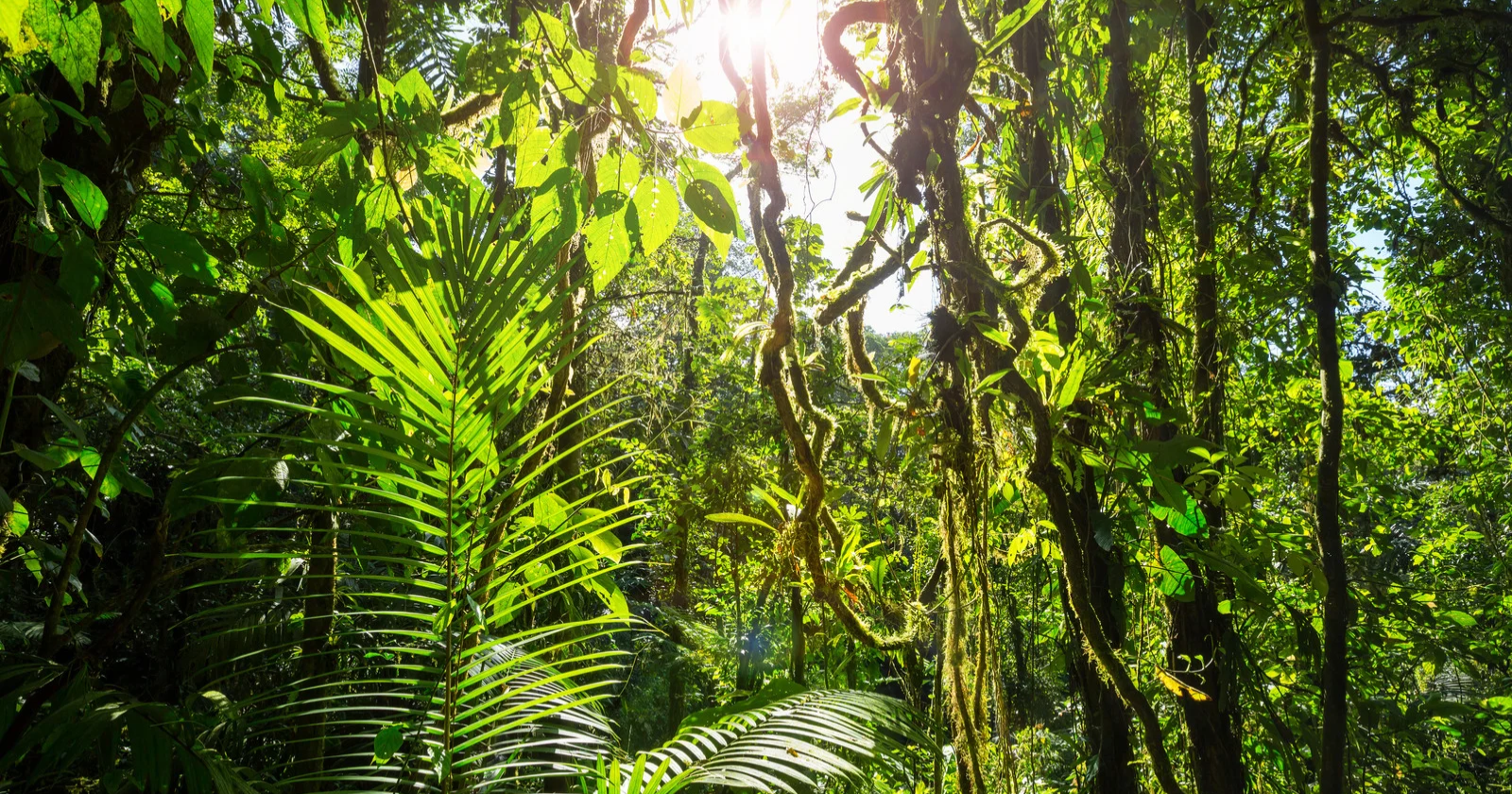
Newspapers kept turning up in the jungle on Lubang, a small island in the Philippines. They had been left there on purpose, for one man to find. He found them, and he read them. Then he decided it was all propaganda.
His name was Hiroo Onoda, and he had been posted to Lubang in late 1944, in his early twenties. His orders, as USNI News listed them when he died in 2014, were simple. Never surrender, never launch a suicide attack, and hold out until reinforcements arrived. American and Philippine forces retook the island on 28 February 1945, and the reinforcements never came. Paper did. A 2022 SBS News report lists leaflets, search parties and broadcast announcements, and Onoda dismissed them all. The searches, Al Jazeera notes, were run by Japan and the Philippines.
What finally ended his war was, fittingly, a visit from a former superior. In March 1974 the US embassy in Tokyo described Yoshimi Taniguchi to Washington as the officer who had ordered Onoda to stay behind and “spy on enemy even after Japanese army defeated”. His place in Onoda’s chain of command is murkier than the popular story allows, but he brought the one thing Onoda would accept, a written order to stop. By then, USNI News noted, Taniguchi was selling books for a living.
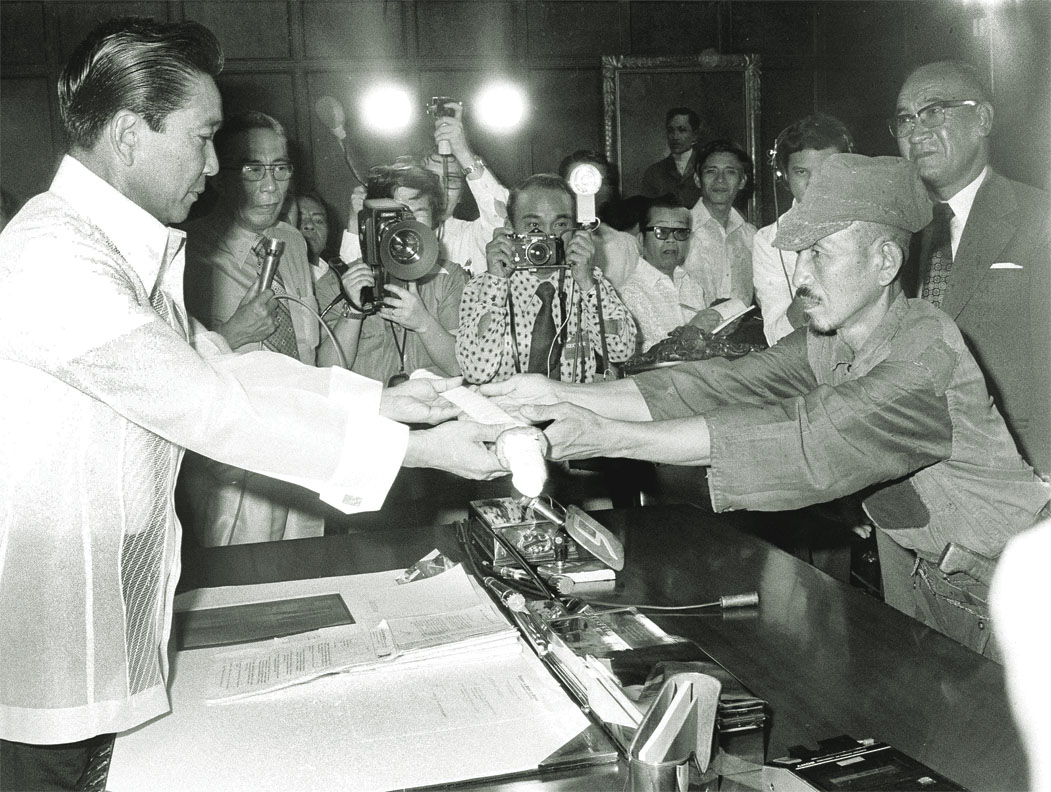
Taniguchi met him in the jungle on 9 March 1974. Japanese press reports, passed on by the embassy, said the two men talked for eleven hours. Only then did Onoda accept an order to give up, “drafted in old army style”. On 11 March he offered his sword to President Ferdinand Marcos. At a press conference back in Japan, someone asked what he had been thinking about for thirty years. “Carrying out my orders,” he said, as Al Jazeera records.
It may be the most admirable sentence in the saga. It is almost certainly the most chilling.
How long the war really lasted
Every headline says 29 years, and so did the embassy, which wrote of “29 years of hiding in jungle”. That’s fair if you start the clock when Onoda landed in late 1944. Start it instead at Japan’s formal surrender on 2 September 1945. By 10 March 1974, the day the embassy said he agreed to come home, he had held out for 28 years, 6 months and 8 days, or 10,416 days. His memoir rounds up to No Surrender: My Thirty-Year War, and a 2021 film rounds down to Onoda: 10,000 Nights in the Jungle. Nobody buys a ticket for 10,416 nights. I prefer the exact number. Thirty years sounds like one grand act of loyalty. Counted in days, that’s 10,416 separate mornings on which Onoda woke up and decided the war was still on.
Quine’s web of belief
The American philosopher W.V.O. Quine wasn’t writing about anyone’s psychology in his dense 1951 paper “Two Dogmas of Empiricism”, but it makes a useful lens for what Onoda did. People tend to think beliefs get tested one at a time, like a quiz: a fact turns up and the belief passes or fails. Quine said it doesn’t work like that. Beliefs hang together like a web. When the world contradicts one of them, something in the web has to give, but nothing tells you which part. Some beliefs sit out at the edge and are cheap to swap. Others sit near the centre, so tangled up with everything else that you’ll rearrange the rest before you give them up.
Think of stepping on the bathroom scales after a fortnight of vigilant dieting and seeing a number you don’t like. Maybe you’ve put on weight. Or the scale is broken, or the batteries are going. Nothing about the number forces the first answer on you. Quine put it bluntly: “Any statement can be held true come what may, if we make drastic enough adjustments elsewhere in the system.” You can even overrule your own eyes, he added, “by pleading hallucination”.
Onoda pleaded propaganda, which is basically the same move with better paperwork. A leaflet said the war was over, so the leaflet had to be forged. The newspapers in the jungle were propaganda too. In Al Jazeera’s account, he blamed the whole effort to coax him out on a puppet regime the Americans had installed in Tokyo. American planes flying overhead during the Vietnam War were, to him, definitive proof that the fighting was still going on across Asia. Every fix was drastic, and every one kept the order safe at the centre. When he finally came out, he told reporters he would have stayed faithful to that order for the rest of his life, the embassy cabled.
So did he know? I find the argument over that messier than either side would like. Beatrice Trefalt, an associate professor of Japanese studies at Monash University, wrote Japanese Army Stragglers and Memories of the War in Japan, and she is sceptical of the innocent version. “Onoda later claimed that he didn’t know the war was over, yet [during his years on Lubang Island] he had access to newspapers,” she told SBS. “He was carrying a transistor radio.” When I emailed her, she was careful to say that her book is about how the media discussed the stragglers’ return, not about what went on in Onoda’s mind. Still, she offered her view: “I think he knew, but didn’t want to believe it.”
I can’t prove that, and neither can she, but it rings truer to me than either the innocent-dupe story or the cynical-liar one. You’ve probably felt a smaller version of it. You knew the relationship was beyond repair, or the old Honda wasn’t worth fixing, long before you were ready to say so out loud. Onoda went further, explaining away every leaflet, newspaper and passing plane for decades, which looks less like ignorance than like work.
She also made a point that changed how I see Onoda. “We forget that until 1972 he was not alone. Until 1954 there were three of them. So admitting he was wrong was not just about him.” The other two were killed by Filipino police, she added, “making it even more crucial for him to suggest that it was ignorance rather than arrogance or stupidity that led to their death.” Accepting that the war was over would also have meant considering the possibility that the two men who held out with him had died for, well, nothing.
That’s the centre of the web. By 1972 the order was holding up his whole war and the meaning of two deaths.
What the US embassy saw
The embassy’s cables from March 1974, now online at the National Archives, are my favourite part of the record, because the diplomats had no idea what to make of Onoda. “His insistence at this late date on written order releasing him from mission is well nigh incomprehensible,” the embassy reported on 11 March. That’s about as close as a diplomatic telegram gets to throwing up its hands.
Japan was split by age, and the cable reads like a family argument over Christmas lunch. The chairman of the Japan PEN Club, then in his seventies, was deeply moved. An 18-year-old bestselling author blamed the indoctrination in pre-war schools for shaping men like Onoda. Meanwhile, the embassy’s summary was that the “younger generation seems puzzled by Onoda fidelity to military order long forgotten by others”.
Then he came home, and predictably, it became a spectacle. And rightfully so. He landed on a JAL charter on the afternoon of 12 March, with his elderly parents waiting by the plane, and NHK carried the whole arrival live. To do it, the broadcaster suspended its coverage of a hijacking, a JAL jet at Naha, for an hour. A hijacking in progress, set aside for a man coming home from a war that ended in 1945.
Three politicians from the ruling Liberal Democratic Party turned up unannounced, got to the foot of the ramp ahead of his mum and dad, and handed over their name cards. One of them, Zenko Suzuki, evidently a skilled politician, would be prime minister six years later. The embassy’s 13 March telegram called it an “incongruous scene”. All those years refusing to believe in post-war Japan, and post-war Japan’s first act was to hand him a business card.
Trefalt sees all of it as a bit of a show. It opened in February 1974, when a young adventurer named Norio Suzuki, a different Suzuki entirely, tracked Onoda down. From then on, she wrote, “everything becomes theatre. Everything. His memoir is carefully managed as part of this theatre. So whether Taniguchi was his actual superior is irrelevant.” Once you see it that way, the business cards stop looking odd. So do the eleven hours in the jungle and the order drafted in old army style. Not everyone enjoyed the show. On 13 March, the embassy noted that “Onoda’s extreme subservience to long-forgotten order has shocked many and raised other disturbing questions.”
Who paid for it
Quine’s point cuts both ways, and the other edge gets quoted less: “Conversely, by the same token, no statement is immune to revision.” Experience, Quine argued, leaves “much latitude of choice” about which beliefs to rethink, and he called the rational way of choosing “pragmatic”. A pragmatic test asks what keeps the whole system working. It says nothing about which beliefs deserve protecting. Onoda revised his beliefs about almost everything: the newspapers, his own government, every plane in the sky. He never revised the order. That’s where this stops being a puzzle about knowledge, or epistemology if you like the long word, and turns into a question of right and wrong. Other people paid for what he chose to protect.
On 8 March 1951, Emilio Viaña was out farming sweet potatoes with his sons on Lubang and had stopped for lunch when a shot came from the jungle. The bullet hit him in the leg and severed an artery. His sons did what they could, and he bled to death at 42. SBS reports that the shot was allegedly fired by Onoda, and that his band is accused of killing up to 30 Filipino civilians over three decades. Viaña was the great-uncle of the filmmaker Mia Stewart, whose documentary Searching for Onoda grew out of years of interviews with victims’ families. Stewart says the sons had to give up their education in Manila to support their mother and younger siblings. “We will never really know if Onoda knew the war was over or not,” she told SBS. “Regardless, he killed civilians.”
Quine’s paper had been out for about two months when Viaña died. In a philosophy class, the web of belief is a tidy puzzle about scientists and awkward data. On Lubang, that same year, it had a farmer’s name on it. Whatever was in Onoda’s head, Trefalt won’t let it explain the violence. “Even so, it is very hard to imagine, in the face of all other evidence, how [Onoda and the others] could not just hide, but actually attack local people, steal their belongings, kill their cattle, and ultimately kill people.” Marcos pardoned him anyway, and his memoir barely mentions the deaths.
So I can’t quite buy the loyal-samurai hero Japan welcomed home. Loyalty is admirable when the loyal person is the only one who pays for it. Onoda paid with his twenties, thirties and forties. Lubang’s farming families paid with their relatives and their cattle, and none of them had ever given him an order. Stewart’s line is the one that stays with me: “Onoda was a hero that post-war Japan needed. But he is not the hero in the stories of my uncles and cousins, my grandparents and my mother”.
The uncomfortable part is that what Onoda did isn’t exotic. It’s the bathroom-scale move, the one you make when the evidence turns awkward and a fresh excuse feels more comfortable than changing your mind. Usually it costs nobody but you. The question worth taking away from Lubang is who pays for the adjustments, and whether they ever agreed to.