In the past couple of months, I have started brainstorming my posts like this one while walking, but I’m not on my own. I use Claude’s conversation feature.
Here’s how it goes. I plug a pair of cheap headphones into my phone. I open a specific project that I have created for this task. I give Claude my title and I begin a back-and-forth with it, bouncing ideas off it, forming a logical outline (hopefully), and even exploring research.
I’m not always a fan of new tech and I was slow to start using this voice feature, but it has genuinely changed how I work as a writer. Instead of sitting at a desk, I take brainstorming walks. I walk in shopping malls. I walk along a lake. I walk and the ideas just seem to flow, and I can record them all without ever looking at a screen or taking out a notebook. Hell, I don’t even have to take my phone out of my pocket.
Once I have a rough outline that I am happy with, I sit down to check sources, sometimes do a little extra research, and begin writing.
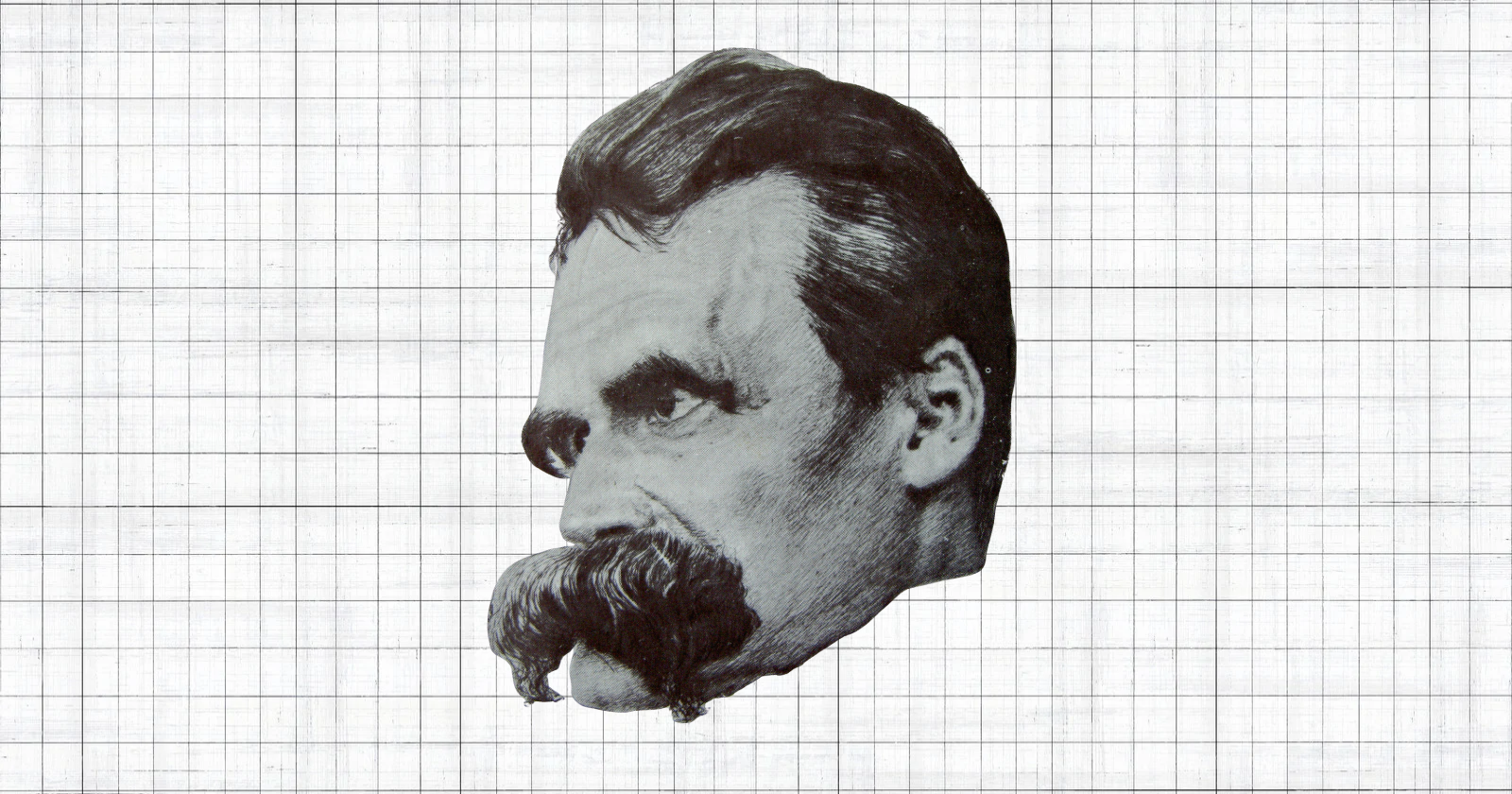
To me, the AI conversation part feels a bit like living in the future, but the idea behind my new process is actually very old. German philosopher Friedrich Nietzsche, among others, was a big fan of walking to get ideas. Gustave Flaubert, the French novelist, however, did not agree.
According to his protégé Guy de Maupassant, Flaubert used to say that "one cannot think and write except when seated." Nietzsche mocked him for it. In Twilight of the Idols (1889), he quoted Flaubert’s line and fired back: “Here I have got you, you nihilist! A sedentary life is the real sin against the Holy Spirit. Only those thoughts that come by walking have any value.”
And Nietzsche practised what he preached. In Ecce Homo, his autobiography, he says the whole first part of Thus Spoke Zarathustra came to him on two walking routes he took during the winter of 1882-83 near Rapallo, on the Italian coast. “It was on these two roads that all Zarathustra came to me,” he wrote. He claimed that he sometimes could “walk for seven or eight hours on end over the hills without a suggestion of fatigue.”
Nietzsche wasn’t alone either. There has been a long list of famous walkers throughout history. Kierkegaard wrote that he had walked himself into his best thoughts. Thoreau made walking the subject of an 1862 essay, Dickens wandered London’s streets at night to cure his insomnia, and Beethoven sketched music on long walks.
But look a little closer at some of these walkers and the story gets more interesting.
Take another German Philosopher, Immanuel Kant. The famous story is that his neighbours in Königsberg set their watches by his afternoon walk. But one account of his life claims Kant actually disapproved of thinking while walking, worried that working his brain and his legs at the same time would press too hard on his stomach. His real reflecting came later, at six o’clock, sitting at his library table as the light faded.
Darwin had a routine too. He walked laps of the Sandwalk, a gravel path at the edge of his property in Kent. It's often called his “thinking path,” though there’s no record of Darwin calling it that himself. And according to his son Francis, the walk came after the work. Darwin considered 8 to 9:30 in the morning, at his desk, one of his best working times, and saved his main walk for after he’d done, in his words, “a good day’s work.”
So the great walkers didn’t just walk. They walked and they sat. As it turns out, that matters.
For a long time, all of this was anecdote, but in 2014 two Stanford researchers, Marily Oppezzo and Daniel Schwartz, actually tested it. Across four experiments with 176 people, mostly college students, they had participants come up with new uses for everyday objects while either sitting or walking. A button, for example, might become a doorknob for a dollhouse.
The results were striking. In one experiment, 81% of people were more creative while walking, and their creative output jumped by around 60% on average. It didn’t matter where they walked, either. Walking on a treadmill facing a blank wall worked almost as well as strolling outside. It was the walking that did it, not the view. Better still, the boost lingered. People who walked and then sat down to brainstorm stayed more creative than people who sat the whole time.
A larger 2022 review of 28 studies has since backed up the general idea that physical activity boosts creative thinking.
So Nietzsche wins, right? Well, not quite.
The same Stanford study tested a second kind of thinking, and this is the part most people skip. Participants were given three words, like cottage, Swiss and cake, and had to find the one word that links them (cheese). There’s only one right answer, and you have to zero in on it.
Here, walking didn’t help. In fact, walkers did slightly worse. Only 23% improved while walking, compared with 81% on the ideas test. Walking seems to loosen the mind. That’s great when you want lots of possibilities, and a little less great when you need to lock onto the right one.
That sounds a lot like Flaubert. According to Maupassant, once Flaubert had built a sentence with so much pain and torture, he refused to let anyone change a single word of it. That isn’t idea generation. That’s narrowing down, testing and polishing until you’ve found the one right way to say something, the work Flaubert did in his chair. Nietzsche was describing one kind of thinking. Flaubert was describing the other.
To be fair, this was one test, using quick word puzzles. But it fits how the walkers actually worked. Kant walked, then sat at his table to think. Darwin sat at his desk, then walked. Beethoven carried notebooks on his walks. Wordsworth would pace his garden path murmuring lines, then “set down and git a bit o’ paper out and write a bit,” before getting up and pacing again.
Which leaves one problem, and it’s the one my cheap headphones solved. If ideas come on foot and get finished at a desk, how do you get them from one to the other?
I'd guess walkers have always struggled with this.
Wordsworth, perhaps, had the best solution, though it relied on his sister. It has been said that he went “bumming and booing about” while Dorothy followed close behind and “picked up the bits as he let ’em fall” and put them on paper for him.
I don’t have a Dorothy. I have a phone.
I’ll admit there’s a catch. If the AI starts suggesting ideas and judging them, I’m doing Flaubert’s job while I’m still on Nietzsche’s path. I try to use it to catch my ideas, not to have them for me. Whether that line holds, I’m still figuring out.
So who was right? Perhaps both of them. Nietzsche was right about where ideas come from. Flaubert was right about where they get finished.
The sin isn’t sitting down. Maybe it’s trying to do one kind of thinking in the place meant for the other.