In 2014, customers at a Florida Starbucks paid for the next person's coffee in at least 378 consecutive transactions, but when the chain started again the next day, a local blogger deliberately ended it, saying it was guilt, not generosity

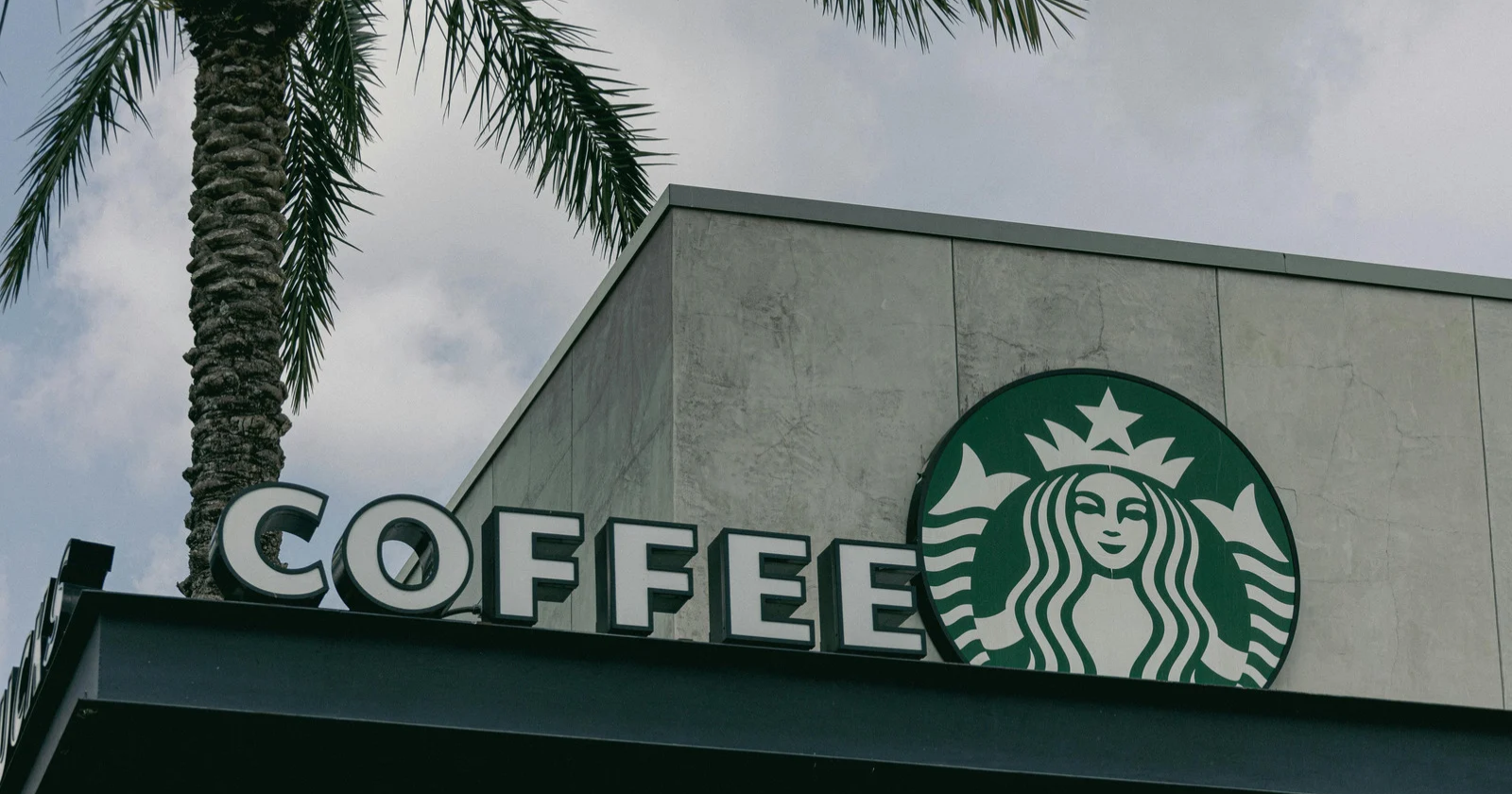
In August 2014, something odd happened at a Starbucks drive-through in St. Petersburg, Florida. A customer paid for the drink of the car behind her. That driver, told what had happened, paid for the next one. And so it went, for most of a day, through hundreds of cars.
That first chain ended on its own that evening, when a customer apparently didn't understand what was happening. The next morning, with TV cameras now parked outside, a new one started up. Then, a local blogger pulled in, accepted his free coffee, and refused to pay for the car behind. He tipped the barista $100.
He wasn't opposed to giving. He was opposed to this. Writing about it afterwards, he put it in one line: "That's not generosity, that's guilt." Drivers only knew what was going on because the baristas told them, and that had been true from the first morning. His complaint was that by day two the telling had become the engine: a running tally, cameras outside, and a question at the window. Once that happens, he told ABC News, "it is no longer spontaneous."
When I first read this story I assumed I'd end up picking a side. Either the chain was a small, lovely thing and the blogger was a spoilsport, or he'd seen through a performance everyone else was too polite to question. I still don't know which.
Somewhere in the middle of trying to decide, it struck me that the story was more useful as something else: an illustration of an idea philosophers have argued about for centuries.
The idea is called psychological egoism, and it's simple to state. Underneath every human action, however kind it looks, is the person's own interest. The Stanford Encyclopedia of Philosophy puts it in one line: "each person has but one ultimate aim: her own welfare."
It's worth being clear about what the theory isn't. It's not the claim that people should look after themselves first. That's a different view, called ethical egoism, and it has its own arguments. Psychological egoism is a claim about fact, not about how to live. It basically says that, whether we like it or not, this is how people are already wired.
Applying it to the Starbucks story above, the theory doesn't say the drivers failed to help anyone. Plainly they did; the next car got a free drink. It says that helping wasn't the ultimate point.
An egoist might say each driver was buying their way out of an awkward moment. Or chasing the small glow of being seen to do a good thing. Or just enjoying it.
What makes the theory so hard to shake off is that it does not deny that kind acts happen. It just supplies a different reason for them.
Take the case the philosopher Robert Shaver uses in his Stanford Encyclopedia entry on the subject. Imagine a soldier who throws himself on a grenade to save the men around him. Surely that's as unselfish as it gets? An egoist might simply say he did it because he couldn't have lived with himself otherwise. As Shaver puts it, an egoist might argue that "He has a better life, in terms of welfare, by avoiding years of guilt." What looks like sacrifice was, might be a way of sparing himself a lifetime of guilt.
In the 1600s, a French aristocrat named La Rochefoucauld put a similar idea quite memorably. He placed it at the front of his Maxims as the book’s epigraph: “Our virtues are most frequently but vices disguised.”
Now apply this to the drive-through. Every driver who paid for the car behind could have been someone managing their own discomfort. The barista's question created a small social pressure, and a few dollars made it go away. Which is more or less what the blogger said, without reaching for a technical term.
Of course, a theory that can explain anything may not be explaining much. Think about what the egoist has to do to keep the theory alive. Two things, really, and they're worth keeping apart.
First, every time you offer a kind act, they supply a hidden benefit to the person who did it. Guilt avoided, approval gained, a good opinion of oneself kept intact. Since none of us can inspect another person's motives directly, the move is very hard to challenge. An explanation that can never be caught out should make you nervous.
Second, and more quietly, "self-interest" gets stretched to cover whatever a person happened to want. Once you've done that, the theory becomes true by definition. The Stanford entry concedes exactly this: on that reading, psychological egoism "turns out to be trivially true."
This isn't a modern objection. Joseph Butler, a bishop, made it in a sermon in 1726. If every feeling we have counts as self-love, he said, then nobody can act from anything else. But, in his words, "this is not the language of mankind."
Butler had a second objection too. You can't get pleasure from something unless you wanted the thing itself first. There'd be no more delight, he wrote, "from eating food more than from swallowing a stone," unless you already had an appetite for one over the other.
Apply that to kindness. The warm feeling you get from helping someone shows up because you wanted something, and the wanting has to come before the feeling. That doesn't, however, prove the something was the other person's good.
Psychological egoism hands us a vocabulary for explaining the actions of those drivers. It doesn't hand us any evidence about them.
To be fair to the blogger, he never claimed to read every driver's mind. His objection was to the set-up: a barista telling you the car ahead had paid and asking whether you'd like to carry on. That is real pressure, and it's a reasonable thing to dislike.
What he couldn't know was how much of the chain it explained. He told ABC News he thought people were taking part out of guilt rather than generosity. How many, and which ones, nobody could say.
His own tip makes the same point from the other side. He'd stopped at a cash machine for the $100 before he set off, and afterwards wrote on Facebook that he'd done it "just so you can't call me a grinch." So we know one thing that was on his mind: how it would look.
Motives can be studied. Psychologists have ways of getting at them that don't depend on one act seen from the outside. But at that drive-through, the outside of the act was most of what anyone had to go on, and on its own it settles very little about why it was done.
The next time someone holds a door for you, you're free to wonder what was going on. Perhaps, just don't mistake the wondering for knowing.
Sources
- Laine Doss, "Florida Blogger on Killing Starbucks Pay-It-Forward Chain," Miami New Times, August 2014
- Yazhou Sun, "Florida Man Deliberately Scuttles Pay-It-Forward Starbucks Line," ABC News, 22 August 2014
- Holly Henry, "'I'm not a grinch!': Man intentionally ends 'Pay it Forward' chain at Starbucks," WTKR / CNN, 25 August 2014
- "Pay It Forward," Snopes, 22 August 2014
- Robert Shaver, "Egoism," Stanford Encyclopedia of Philosophy, revised January 2023
- Thomas Hobbes, Leviathan, Chapter VI (1651)
- François de La Rochefoucauld, Maxims (epigraph from the 1675 edition), trans. Willis Bund and Friswell (1871)
- Joseph Butler, Fifteen Sermons, Sermon XI (1726), Project Canterbury
Mal James
Mal is a senior writer at Brown Brothers Media, the publisher of Philosophy Basics. He has a particular interest in philosophy, psychology, and the questions surrounding happiness, personal growth, and what makes for a meaningful life. When he's not writing, he's usually reading or working on his far-from-perfect golf swing.
More by Mal James →