
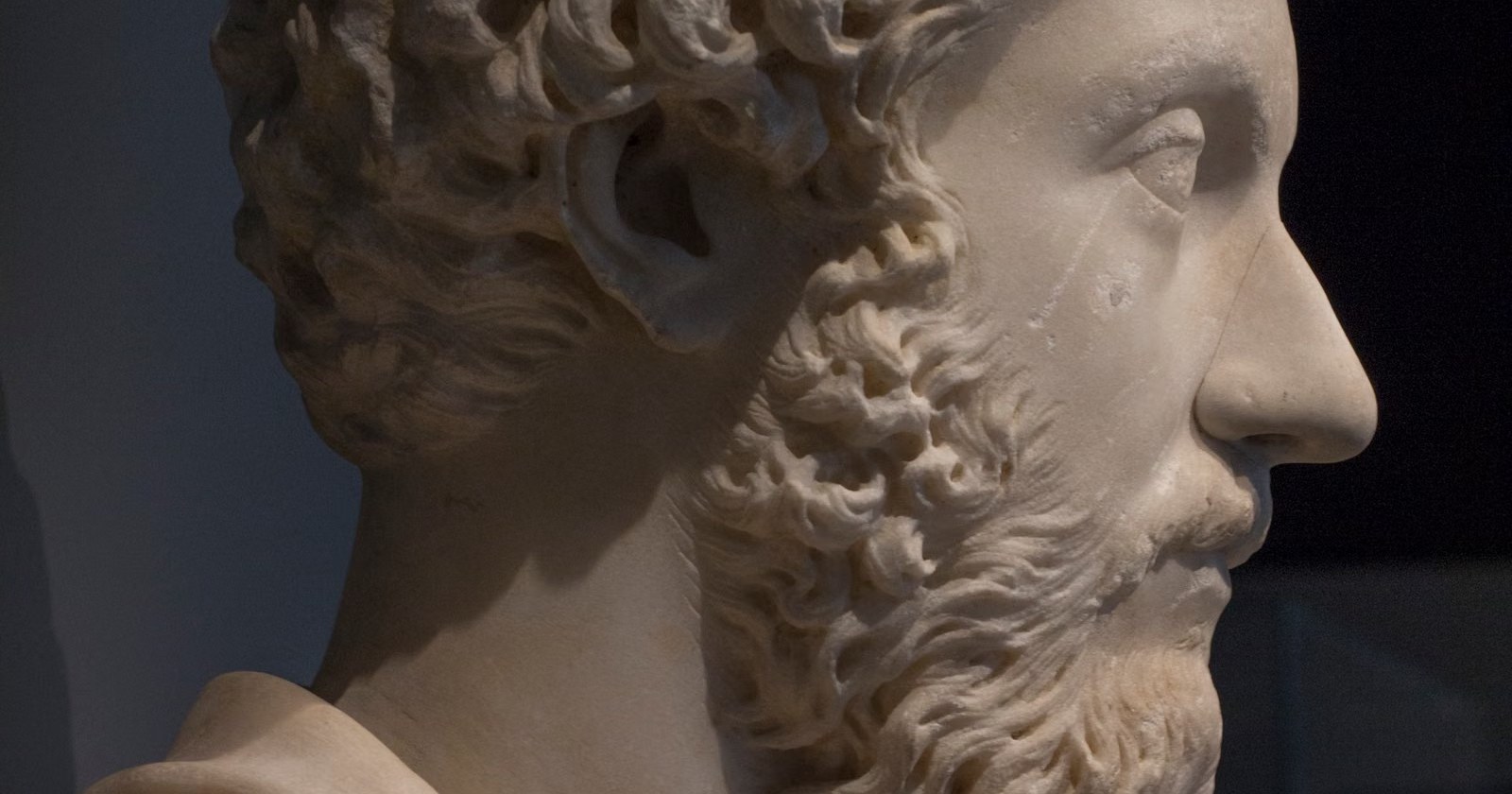
For much of the 170s AD, Marcus Aurelius ran the Roman Empire from military camps on its northern frontier, while a devastating plague spread through his territories. He was, by any measure, the most powerful man in the Roman world.
He also kept a private notebook, now known as the Meditations (George Long's translation), which seems never to have been meant for publication. It's full of reminders an emperor wrote to himself, and a surprising number of them are about the same problem: not getting angry with the people around him. I find it reassuring that one of history's most powerful men needed the same reminders the rest of us do.
We don't know exactly how Marcus spent each day, but his notes show the habits he kept coming back to. Here are eight of them.
1. He talked to himself as "you"
Marcus often addresses himself directly. The first book of the Meditations is a first-person list of what he learned from others, but in much of the rest, instead of writing "I should be patient," he tells himself what "thou" should do.
Modern research suggests this may be more than a quirk of style. In a series of studies, people who reflected on a stressful situation using "you" or their own name, rather than "I," felt less distressed and performed better when giving a speech or trying to make a good first impression (Journal of Personality and Social Psychology, 2014). Those studies looked at social stress, not anger, but the technique is easy to try when your temper rises.
Next time, address yourself the way Marcus did: "You don't need to answer this email tonight." It puts a little distance between you and the feeling, as if you were advising a friend.
2. He kept his principles within reach
Marcus compared his principles to a doctor's tools: "As physicians have always their instruments and knives ready for cases which suddenly require their skill, so do thou have principles ready" (Meditations 3.13).
A principle you have to go looking for in the middle of an argument usually arrives too late. Part of the point of writing his down, and rereading them, was to have them ready before he needed them.
Keep two or three short lines of your own somewhere you'll see them, such as a sticky note or the first page of a notebook: "Ask before assuming." "Answer tomorrow, not tonight."
3. He noticed his own face
Marcus paid attention to what anger looks like from the outside. "A scowling look is altogether unnatural," he wrote, and when it's often worn, "the result is that all comeliness dies away" (Meditations 7.24).
A scowl is often the first sign of irritation, and other people can see it and react to it before you've said a word.
The next time a meeting or conversation starts to grate, check your brow and jaw. Relaxing them won't solve the problem, but it can stop your face from making it worse.
4. He asked what the other person was trying to do
One of Marcus's instructions to himself was a simple question: "Accustom thyself as much as possible on the occasion of anything being done by any person to inquire with thyself, For what object is this man doing this? But begin with thyself, and examine thyself first" (Meditations 10.37).
Notice the order. Marcus wants to know why the other person is acting, but he starts with himself. Before asking why your colleague rewrote the draft, ask what you want from the conversation. If you want to understand the change, start with "What were you trying to fix?"
The answer is often less personal than it felt. Your colleague may have been protecting a client relationship, not undermining you.
5. He worked on his own faults first
Marcus was blunt about where effort is best spent: "It is a ridiculous thing for a man not to fly from his own badness, which is indeed possible, but to fly from other men's badness, which is impossible" (Meditations 7.71).
You can address a coworker's behavior, but you can't guarantee their response. Your own conduct is the part you can work on directly.
When someone's behavior gets under your skin, ask: "Which part of this is mine to change?" There's usually at least one.
6. He didn't expect a perfect world
Even as emperor, Marcus couldn't make people behave the way he wanted. "For who can change men's opinions?" he asked. So he reminded himself not to "expect Plato's Republic: but be content if the smallest thing goes on well, and consider such an event to be no small matter" (Meditations 9.29). Plato's Republic describes an ideal city run by philosopher rulers.
A lot of anger comes from the gap between how things should go and how they actually go. Expecting a team, a family or a city council to run perfectly guarantees a steady supply of irritation.
Marcus wasn't telling himself to give up. In the same note he urges, "Set thyself in motion, if it is in thy power." The point is to act where you can and to count modest progress.
If the same deadline keeps slipping, agree on one checkpoint before the next handoff. Getting that one step right counts.
7. He made time for patience, even when he had no time
Marcus reminded himself that even when reading wasn't possible, practising his principles still was. "Thou hast not leisure or ability to read. But thou hast leisure or ability to check arrogance," he wrote, and leisure "not to be vexed at stupid and ungrateful people, nay even to care for them" (Meditations 8.8).
Being busy is one of the most common reasons people give for being short with others. You may not have time for a long conversation, but you can still choose a considerate response: "I want to give this proper attention. Can we talk after lunch?"
When you catch yourself thinking "I don't have time for this," try adding a second sentence: "But I do have time to be decent about it."
8. He kept going without turning against the people in his way
Marcus knew he would meet resistance, and his advice to himself covered two things at once. People who try to stand in your way shouldn't be able to turn you from what you're doing, "so neither let them drive thee from thy benevolent feelings towards them." Being "vexed at them," he wrote, is as much a weakness as giving way through fear. Both are "deserters from their post" (Meditations 11.9).
His advice assumes the course is sound, that you are "proceeding according to right reason." So the first step is to check. When someone pushes back on a plan, give the objection a real chance to change it: "I still think Monday works. Is there a risk we haven't accounted for?"
If the answer reveals a real problem, adjust the plan. If it doesn't, keep the project moving, and keep treating that person decently while you do.
He kept returning to the same lesson
Marcus's repeated reminders show how much importance he placed on managing anger. They don't tell us how often he lost his temper, but they make clear that patience was something to practise. The goal isn't to never feel irritated. It's to notice sooner and recover faster.
His approach also has limits. Staying patient with a difficult colleague is one thing. Staying patient with someone who is mistreating you or others is another, and some situations call for firm action, not just a calmer mind.
One place to start
Write one short reminder to yourself in the second person, the way Marcus did. Something like: "You don't have to reply right away."
Put it where you'll see it tomorrow morning, and read it before your first meeting or message of the day.