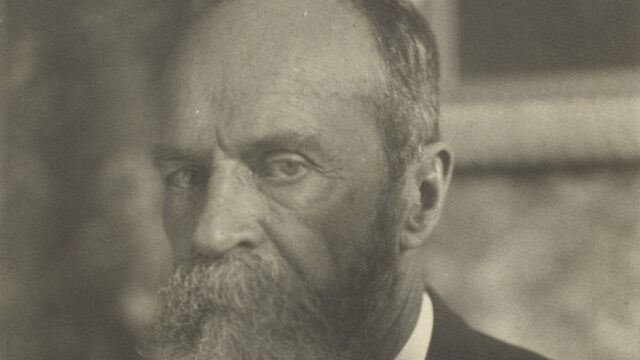
Montaigne argued that humans are far too sure of their superiority over animals, and he admitted that when he played with his cat, he couldn’t tell whether he was amusing her or she was amusing herself with him


Somewhere in a stone tower in southwest France, in the late 1500s, a retired magistrate dangled something in front of his cat and watched her bat at it. Then he started to wonder who was actually playing with whom.
The magistrate was Michel de Montaigne, the man who more or less invented the essay. He wrote the thought down in one of his longest and strangest pieces, and the line has outlived almost everything else in it. In an 1877 translation, it reads: “When I play with my cat who knows whether I do not make her more sport than she makes me?”
A small question inside a very big essay
The line comes from the “Apology for Raymond Sebond,” which runs to well over a hundred pages in most editions. Sebond was a 15th-century theologian who claimed that human reason could prove the truths of religion, and Montaigne had translated his book for his father. The “apology” was supposed to defend Sebond. Instead, Montaigne spends most of it questioning whether human reason can prove much of anything.
The section on animals is where he presses hardest. “Presumption is our natural and original disease,” he writes, and he goes on to describe man as the most wretched and frail of all creatures, and also the proudest. We hand out abilities to other creatures as we see fit, he says, keeping the best ones for ourselves, without any real way of knowing what goes on inside them.
That’s what the cat is doing in the essay. Montaigne isn’t just sharing a cute moment. He’s asking how a human could ever be confident that animals are as dim as we assume, when we can’t even be sure what a cat thinks of a game.
“We mutually divert one another”
Right after the famous question, Montaigne adds a detail that’s easy to miss. In the same translation, he says the two of them amuse each other, and that if he has his moods for starting or refusing a game, “she also has hers.”
It’s a simple observation, but it shifts the whole relationship. The usual picture is of a person deciding when play happens and a pet responding. Montaigne describes something closer to two parties, each with their own moods and preferences, who happen to enjoy the same game. Anyone who has tried to play with a cat that wasn’t in the mood will recognize the point.
He then piles up example after example, some from his own life and many from ancient writers. He describes animals that seem to communicate, cooperate, build and plan. Not all of his stories would survive a modern fact-check. The argument underneath them still holds up, though: we judge animals from the outside and then treat our guesses as facts.
Doubt as a way of life
The cat passage makes more sense once you know how central doubt was to Montaigne’s thinking. He took his motto from the ancient skeptics, “Que sais-je?” or “What do I know?” He had a medal struck with the phrase on it.
For Montaigne, skepticism wasn’t about refusing to believe anything. It was about holding beliefs loosely and noticing how often our confidence outruns our evidence. Human superiority over animals was, for him, one of the clearest examples of that. We are sure of it largely because we’re the ones doing the judging.
That’s a humbling kind of philosophy, and it was unusual for its time. Many Renaissance thinkers celebrated humanity as the crown of creation. Montaigne looked at his cat and suggested we might be overrating ourselves.
Descartes takes the opposite side
The next generation of French philosophy went sharply the other way. René Descartes, writing in the 1630s and 1640s, argued that animals were essentially machines: complex mechanisms of flesh with no thoughts or feelings in any real sense. Only humans, with their reasoning souls, had a mind.
Scholars often read Descartes as answering Montaigne directly, and the philosopher Nigel Warburton has noted how far apart the two Frenchmen ended up on animals. For Montaigne, the cat had her own point of view. For Descartes, there was no point of view there to have. Descartes’ clean, confident picture won out in philosophy and science for a long time.
Then, in 1974, the American philosopher Thomas Nagel published a famous essay called “What Is It Like to Be a Bat?” He argued that even if we learned everything about a bat’s brain, we still couldn’t know what its experience feels like from the inside. It’s a modern, more technical version of Montaigne’s shrug: we can watch the cat, but we can’t be the cat.
Science comes back around
In recent decades, the scientific mood has shifted much closer to Montaigne’s. In April 2024, a group of researchers and philosophers released the New York Declaration on Animal Consciousness. It states that there is strong scientific support for conscious experience in mammals and birds, and at least a realistic possibility of it in all vertebrates and many invertebrates, including octopuses, crabs and even insects. It also argues that when that possibility is realistic, it’s irresponsible to ignore it in decisions that affect those animals.
That isn’t proof that cats think about us the way we think about them. Montaigne would be the first to say we still don’t really know. But it does suggest his instinct was sound. The confident line between thinking humans and unthinking beasts looks a lot blurrier than Descartes believed.
So the next time a cat decides the game is over and walks away mid-swing, it might be worth remembering Montaigne. You may not have been the one in charge of the game at all.

Brendan Brown
Brendan Brown is a co-founder of Brown Brothers Media, the publisher of Philosophy Basics. Originally from Australia, he has lived in Krabi, Thailand, for many years. He writes about how ideas from the history of philosophy show up in everyday life, and he is responsible for the site’s editorial direction.
More by Brendan Brown →