
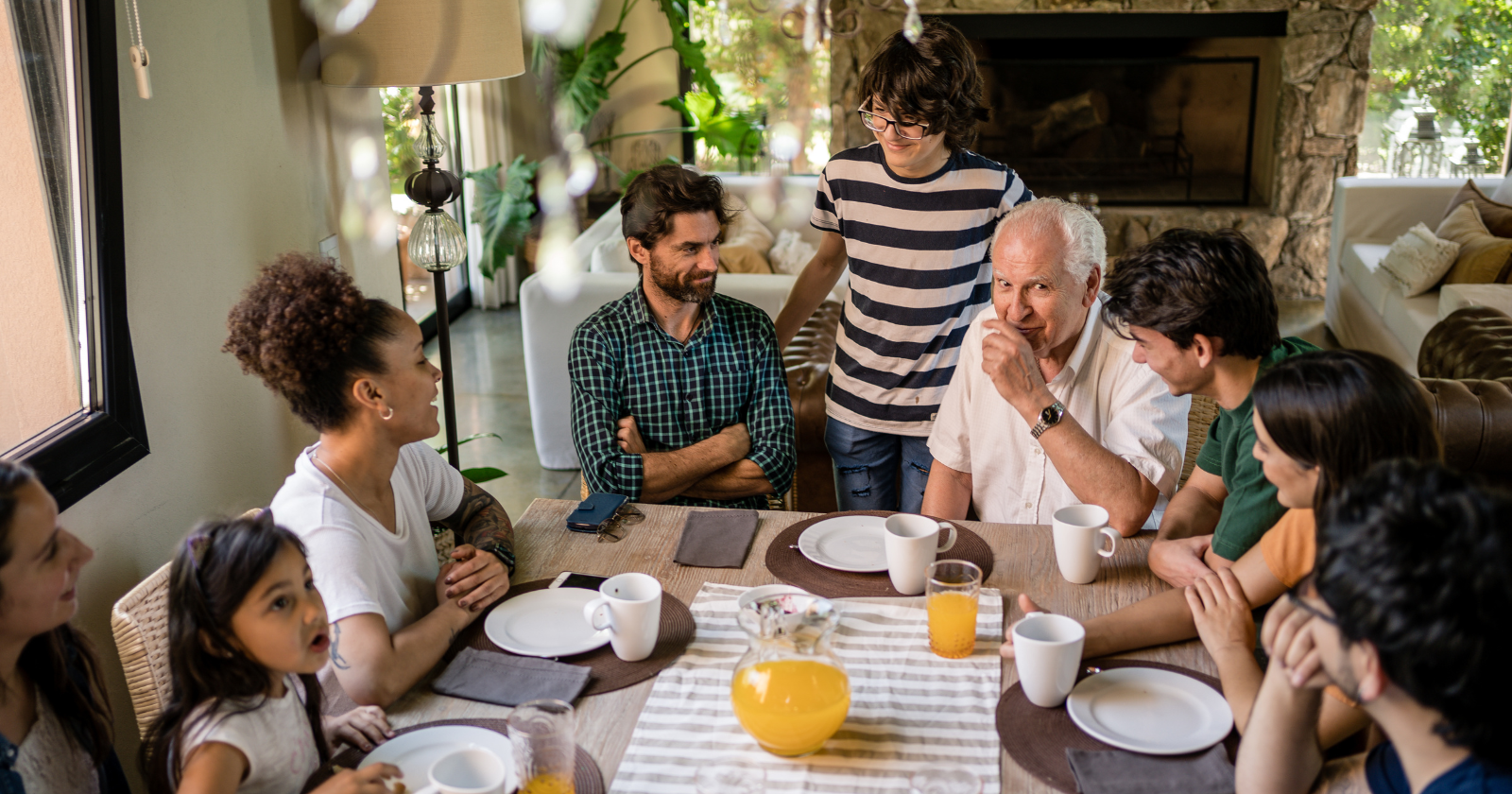
The roast is on the table, the wine is poured, and someone mentions the election. Across the table, a nephew leans forward, ready for a fight. Twenty years ago, his uncle would have taken the bait and argued until dessert.
Now he just smiles, asks what his nephew thinks and passes the potatoes. He still has strong opinions. He’s simply decided this isn’t the hill he wants to stand on tonight.
Picking our battles
Psychologists have found that people often handle conflict differently as they age. In a 2005 study published in the Journal of Gerontology, Kira Birditt and Karen Fingerman asked adults of different ages how they responded to tension in their relationships.
Older adults were more likely to avoid confrontation or respond calmly than younger adults, who more often reported arguing or yelling. The authors framed the question in the title of their paper: do we get better at picking our battles as we age?
Their answer was, in many cases, yes. Older adults seemed more selective about which disagreements were worth having and more focused on protecting the relationship.
Getting wiser about conflict
Another line of research suggests something more than avoidance is going on. In a 2010 study published in PNAS, psychologist Igor Grossmann and colleagues asked people of different ages to read stories about conflicts, both between groups in society and between individuals, and explain how they thought things would unfold.
Researchers then scored the answers for qualities often linked to wisdom, such as recognizing the limits of one’s own knowledge, considering other people’s viewpoints and looking for compromise. Older participants showed more of this wise reasoning than younger and middle-aged participants.
In other words, many older people don’t just stay quiet during disagreements. They’re more likely to see the situation from several sides and look for a way through.
A shifting sense of what matters
Why might this happen? Stanford psychologist Laura Carstensen’s research offers one explanation. As people sense that their time is more limited, they tend to put more weight on emotionally meaningful relationships and less on winning or proving themselves.
From that perspective, an argument with a family member carries a different cost at 65 than at 25. Winning a point might feel satisfying for a moment, but damaging a relationship with a sibling or grandchild could last much longer.
It’s important to note that this doesn’t mean older people care less about politics. In many countries, older adults are among the most likely to vote and follow the news. They may simply choose different places to express their views.
Benjamin Franklin’s lesson
Benjamin Franklin learned something similar, though much earlier in life. In his autobiography, he admitted that as a young man he loved winning arguments and would contradict people bluntly.
Over time, he noticed that this habit made people defensive and rarely changed their minds. He decided to stop using phrases like “certainly” and “undoubtedly” and instead to say things like “I imagine” or “it appears to me.” He found that conversations became more pleasant, and people became more open to his ideas.
Franklin’s insight was that being right is only part of the goal. The way we disagree shapes whether anyone is willing to listen.
Aristotle and practical wisdom
Aristotle would have recognized this shift as a form of practical wisdom, what he called phronesis. In the Nicomachean Ethics, he argued that practical wisdom comes largely from experience, from years of seeing how situations actually play out.
Part of that wisdom is knowing which battles are worth fighting, when to speak and when to let something go. A person with practical wisdom doesn’t abandon their principles. They understand that relationships are also a source of value, and that preserving them can be the wiser choice.
Disagreeing without losing each other
None of this means avoiding all disagreement. Healthy families and friendships can handle different views, and some issues are worth discussing seriously.
The lesson from research and philosophy alike is about balance. It helps to ask questions rather than lecture, acknowledge what you might not know and remember why you’re sitting at the table in the first place.
Many people in their 60s and beyond seem to have learned this. Their opinions may be as strong as ever. But they’ve come to see that the people around the table are worth more than winning any one argument.