
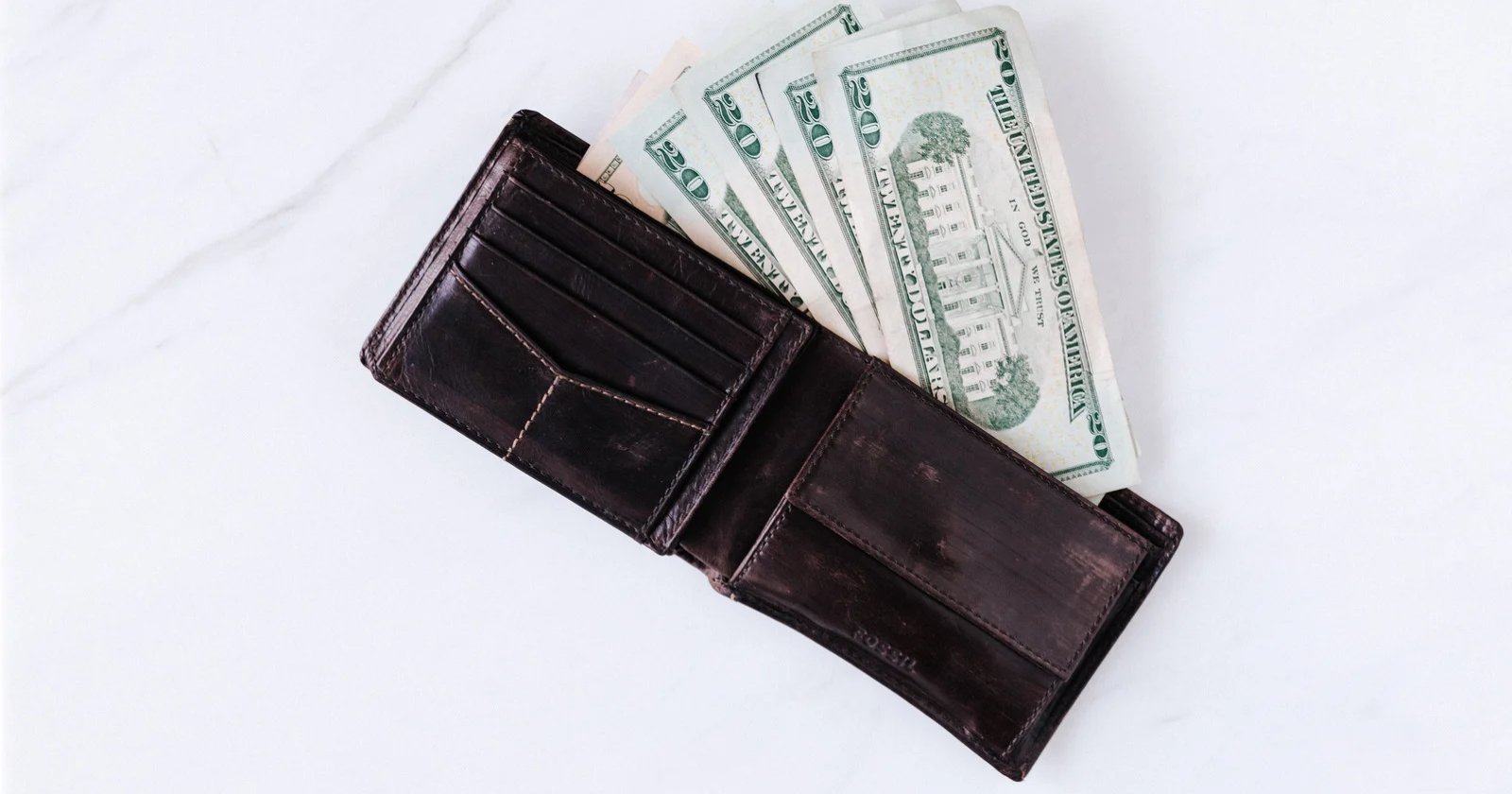
Imagine you're working the front desk at a hotel and a stranger arrives to give you a wallet they found. They found it on the street around the corner, they say. They're in a hurry, so they ask you to take care of it. Then they leave, without giving a name or asking for a receipt.
What would you do with it? What do you reckon most people in your place would do?
Researchers recreated this scene more than 17,000 times, changing what was inside the wallet to see whether people behaved differently.
Yes, 17,000 times.
The results surprised not only the public but many economists. And subsequent research has made the findings more interesting, revealing how difficult it can be to distinguish honest behaviour from the way we measure it.
17,303 wallets, 40 countries, one surprise
Alain Cohn, Michel Maréchal, David Tannenbaum and Christian Zünd published the results in Science in 2019. Their team handed in 17,303 wallets in 355 cities across 40 countries, at banks, post offices, hotels, cultural venues such as museums and theatres, and public offices including police stations and courts.
The wallets were actually transparent business-card cases. In the main experimental conditions, each contained three business cards, a grocery list and a key. For a separate test, the researchers removed the key from some wallets. The cards generally carried a fictitious owner's name and email address, although real names were used for the recovery audits in the Czech Republic and Switzerland. The names were commonplace in the country concerned, and the cards and grocery list were in the local language, so the owner appeared to be a local resident.
Before the numbers, it's important to know what "returned" means. Each wallet had its own email address on its cards. If someone emailed the supposed owner within 100 days, the wallet counted as reported. If not, it didn't. The researchers were measuring whether someone took the trouble to contact a stranger, not whether the wallet physically made its way back to its owner.
Among wallets containing no money, 40% were reported. With US$13.45 inside, converted to local currency and adjusted for purchasing power, the rate rose to 51%. That's an increase of 11 percentage points. Reporting went up with cash in 38 of the 40 countries, and no country showed a significant drop.
Perhaps $13.45 simply wasn't enough to tempt people to keep the wallet? The researchers tested this too.
In the US, the UK and Poland, the team added a third condition: wallets containing $94.15, seven times as much. Pooled across those countries, reporting climbed from 46% with no money to 61% with the modest sum and 72% with the larger one.
The more money people could have kept, the more likely they were to contact its owner.
But contacting an owner doesn't prove the finder intended to return everything. Someone could have emailed while keeping the cash.
In most countries, the researchers never collected the wallets. Anyone who emailed received an automatic reply saying the owner had left town and that they could keep the contents or give them to charity. But in the Czech Republic and Switzerland, the researchers went back for 172 wallets that had been reported.
According to the supplementary materials, 98% of the money in the Czech wallets was still there, as was 99% in the Swiss ones. In those two countries, at least, there was little evidence that people were reporting the wallets while pocketing the cash.
Also, it should be noted that an unreported wallet wasn't necessarily stolen. It might have been placed in a lost-property drawer or passed to another employee.
Most surveyed Americans and about half the economists predicted the opposite
The researchers also asked people to predict the US results. A sample of 299 Americans expected 73% of wallets to be reported with no money, 65% with the modest sum and 55% with the large one.
In all, 64% predicted that reporting would fall as the cash increased. Only 18% predicted a rise.
The team then asked 279 leading academic economists. Their average predictions were nearly flat: 69%, 69% and 66%. Just under half, 49%, predicted a drop, and 29% a rise.
So basically, the economists were less wrong than the public, but they, too, failed to predict the overall increase.
The authors' follow-up questions suggested that people relied on "a mental model of human behavior that exaggerates the role of narrow self-interest." They expected a larger financial temptation to outweigh concern for the owner.
In "Of the Independency of Parliament," a 1741 essay, the Scottish philosopher David Hume discussed a similar assumption.
He described a maxim established by political writers: when designing a government, suppose that everyone in it is motivated by private interest. A constitution should not depend on those entrusted with power being unusually virtuous. Its safeguards should work even when they are selfish.
Hume accepted the principle as a rule for political design, but he saw a problem with treating it as a description of human nature:
"It is, therefore, a just political maxim, that every man must be supposed a knave: Though at the same time, it appears somewhat strange, that a maxim should be true in politics, which is false in fact."
He went on to argue that people were generally more honest in private than in public capacities, where loyalty to a party could encourage conduct they would not otherwise accept.
The wallet forecasts resemble that assumption carried into a prediction about ordinary conduct. Faced with a choice between doing the right thing and keeping someone else's money, many respondents expected the financial incentive to win.
Yet the experiment produced the reverse pattern. Why did increasing the financial temptation apparently make employees more likely to contact the owner?
Why more money meant more emails
The researchers examined several possible explanations before settling on their preferred account.
One was the prospect of a reward. Someone returning a wallet containing more cash might expect a bigger finder's fee. But in national surveys in the US, the UK and Poland, people did not expect rewards to increase consistently with the amount of money inside.
Another was fear of punishment. Perhaps a larger sum made employees more worried about being caught keeping the wallet.
The researchers examined whether the cash effect changed with visible security cameras, differences in US lost-property laws, and the presence of other people during the handover.
None of these factors explained the increase in reporting. The cash effect was much the same whether or not other people were present during the handover.
Those findings weaken the obvious punishment explanation, although they can't exclude every concern about later accountability or an employee's professional reputation.
The authors argued that two other motives provided a better explanation.
The first was concern for the owner, and this is where the key earns its place. A key is worthless to whoever finds it but may matter considerably to the person who lost it. In the US, the UK and Poland, the researchers compared money wallets containing a key with otherwise identical wallets without one. Those containing the key were reported 9.2 percentage points more often.
That suggests employees were taking account of the inconvenience or harm the owner might suffer, even though the key had no financial value to them.
The second proposed motive was what the researchers call theft aversion: the psychological cost of seeing yourself as a thief. In national surveys, people were asked to imagine receiving the wallets and rate how much failing to return them would feel like stealing. They said it would feel more like stealing when the wallet contained a modest sum than when it contained none, and more again when it contained the large sum.
Unlike money, the presence of a key made no reliable difference to that feeling. A key increased the practical harm to the owner if the wallet was lost, but it didn't make keeping the wallet feel more like theft.
The distinction suggests that two concerns can operate together. The owner stands to lose something, and the finder has to reckon with what keeping it would say about their own conduct.
There is an important limit to this explanation. The "feels like stealing" ratings came from members of the public answering a hypothetical question, not from the employees who received real wallets. The study measured their reporting behaviour, but it did not directly measure their private motives.
The email measure has a second limit. As noted earlier, a wallet that never prompted an email wasn't necessarily stolen, and a replication in China set out to find what had happened to those wallets.
What the email measure misses
In 2023, a team led by Qian Yang published an extended replication in PNAS. They handed in 496 wallets across 10 Chinese cities, again comparing wallets with and without money.
Their first finding resembled the original. Cash raised the email reporting rate from 22.2% to 32.7%.
But a week after each drop-off, another group of researchers returned, posing as associates of the owner, and tried to retrieve the wallets. They recovered 77.0% of wallets without money and 78.6% of those with it.
Email reporting had risen with cash, but physical wallet recovery had not changed measurably. Overall, 77.8% of wallets were recovered, against 27.4% that prompted an email. The two measures ask different things, though: emailing requires the recipient to take the initiative, while handing a wallet over requires only a response to someone who turns up asking for it.
The researchers also examined whether the recovered wallets still contained everything they originally held. On that measure, the money condition performed worse: 75.0% of wallets without cash were recovered intact, compared with 65.7% of those containing cash.
Three of the original researchers, Tannenbaum, Maréchal and Cohn, argued that the comparison was distorted by the design. A wallet containing money could be counted as incomplete if its cash was missing, whereas a wallet that never contained money could not lose cash. They argued that this asymmetry could produce an apparent negative effect even without a genuine difference in honesty.
The Chinese researchers disputed the criticism, challenging the assumptions behind the simulations used to support it.
The intact-contents result therefore remains contested. It should neither be ignored nor treated as proof that people were more likely to steal when wallets contained money.
There was another finding in the Chinese researchers' published response that complicates the interpretation of individual honesty.
They reported that 81% of wallet handling in their study involved multiple employees. In some cases, the person who received the wallet wasn't the one who eventually emailed its owner.
This matters because the original experiment's psychological explanation largely concerns an individual weighing the temptation to keep money against the cost of feeling dishonest. But when a wallet passes between employees, the eventual email may reflect several decisions, workplace procedures or shared responsibilities.
The Chinese finding doesn't tell us how often the same thing happened in the original 40-country experiment. It does show why an email cannot always be interpreted as the direct expression of the first recipient's motives.
Taken together, the replication findings reveal different aspects of what happens to lost property. An email is evidence of an attempt to contact the owner. Physical recovery shows that the wallet was still available when someone came looking for it. Neither measure captures every part of honest conduct.
Why the method of contact matters
A further study published in Scientific Reports in January 2025 raised another difficulty with using email as the sole measure.
Iris Hung and colleagues examined local communication habits in China and found that participants were substantially more likely to use WeChat than email as contact information for lost belongings.
They also found evidence that the decision to report a wallet could involve motives beyond concern for the owner and theft aversion.
In an online experiment involving 1,052 Chinese participants, people expressed a stronger sense of civic responsibility when imagining a wallet containing a large sum of money than one containing none. They were also more suspicious that a wallet might be part of a scam when it contained no money than when it contained a large amount.
The researchers suggested that some people might hesitate to report a lost wallet because they feared being drawn into a fraudulent claim. Someone posing as the owner, for example, could accuse the finder of having taken money that was never there.
These were responses to hypothetical situations, not measurements of the employees' motives in the field. But the scam finding suggests a way the cash effect could arise that has little to do with honesty: an empty wallet handed over by a stranger may simply look more like a set-up than one with money in it.
The team then conducted a field experiment involving 660 wallets handed in at institutions in Beijing and Shanghai. Instead of relying on an email address, they placed QR codes on the wallets. Scanning one opened a WeChat-linked interface through which someone could call or message the supposed owner.
Across the study's conditions, recipients initiated phone calls in 59.3% of cases.
Its contribution is to show why the method of contact matters. Someone accustomed to dealing with lost property through a familiar messaging service may behave differently when the only available contact is an email address.
This doesn't invalidate the original cash effect, which was observed across many countries under the same basic experimental design. It does, however, make national reporting rates harder to interpret as straightforward comparisons of honesty.
A wallet on the pavement is different from one handed across a counter
Every initial recipient was an employee at work. None simply came upon a wallet lying on a street. A stranger had already picked it up, entered a building and asked them to take care of it.
Robert Prentice of Ethics Unwrapped, at the University of Texas at Austin, suggests the stranger's action may have "cued (or inspired)" the honesty that followed.
The employee wasn't choosing whether to pick up an unattended wallet. They were being entrusted with something by a person who had already declined the opportunity to keep it.
Even without a camera or anyone else watching, that could affect how they understood their responsibility.
Asked whether the same people might behave differently with a wallet they found themselves, Maréchal told the Associated Press in June 2019, "We don't know." He added that other analyses suggested the findings reflected people's overall honesty, but the experiment itself did not test the sidewalk situation.
Hume, who had called the knave maxim false as a general description of people, offered a less optimistic example in his Enquiry concerning Human Understanding , first published in 1748 as Philosophical Essays concerning Human Understanding.
He wrote that a man who left his purse full of gold on the pavement at Charing Cross at noon might just as well expect it to "fly away like a feather" as expect to find it untouched an hour later.
Hume was discussing how we use experience of human behaviour to make predictions. He argued that such inferences depend on what we have observed people doing in particular situations.
A purse left on a busy pavement and a transparent card case handed to a hotel employee are different situations. The wallet study tells us about the second, not the first.
What it establishes is more specific. Across 40 countries, employees entrusted with lost wallets were more likely to contact their supposed owners when the wallets contained cash. In the three countries where larger sums were tested, reporting increased again.
It doesn't establish that people are generally honest, that self-image always outweighs money, or that institutions should abandon precautions against theft. Subsequent research has shown that contacting an owner, keeping a wallet safe and returning its contents are different behaviours.
Hume's advice to design institutions with self-interest in mind may still be sensible. The experiment gives us reason to be less certain that self-interest will always govern what people actually do.
The cash made keeping the wallet more profitable. It also made employees more likely to contact its owner. That result is striking enough without assuming we know exactly why they did it.