In 2009, off Antarctica, a biologist watched a humpback whale roll onto its back and lift a Weddell seal onto its chest, out of reach of the orcas hunting it; researchers have since gathered 115 accounts of humpbacks interfering with orca attacks

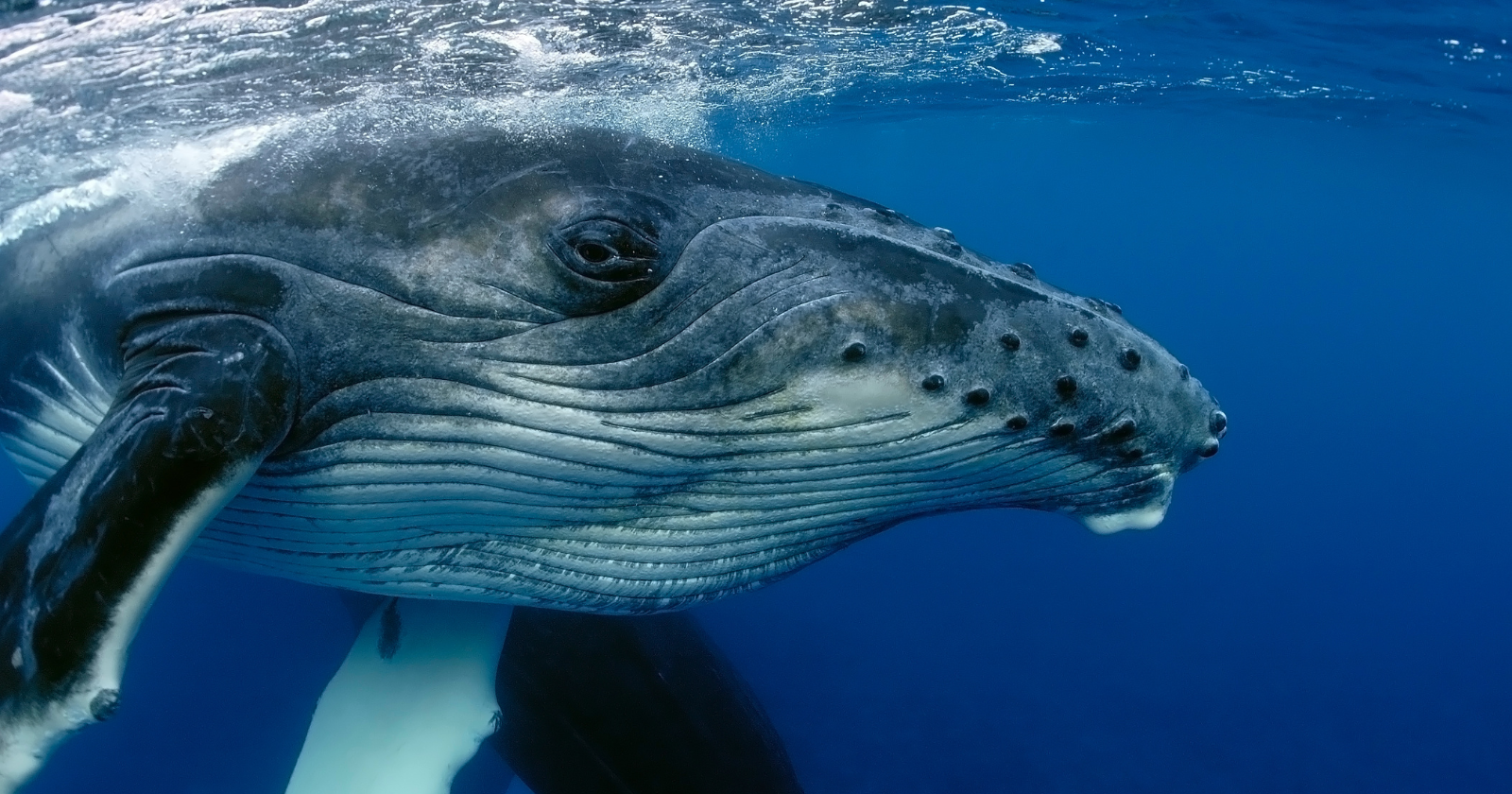
The seal had been resting on a slab of ice near the Antarctic Peninsula when a pod of killer whales found it. Working together, they made a wave that washed it into the water. That should have been the end of the seal.
Instead, a humpback whale surged up from below, rolled onto its back and lifted the seal clear of the water on its chest. Robert Pitman, a marine ecologist with the US National Oceanic and Atmospheric Administration, was watching from a boat. When the seal started to slide off, he later said, the humpback used its huge flipper to nudge it back to the middle of its chest. The seal eventually swam to safety.
Not a one-off
A single strange encounter can be a fluke. But Pitman saw similar behavior twice more on the same trip, and he started looking for other accounts. He and his colleagues ended up collecting reports of 115 interactions between humpbacks and killer whales, recorded by dozens of observers between 1951 and 2012.
Their study, published in Marine Mammal Science in 2016, found a clear pattern. The orcas involved were almost all the mammal-eating kind, and humpbacks started most of the encounters themselves. The humpbacks charged in, slapped their tails and flippers, and generally made a hunt very difficult to finish. Sometimes the prey got away, including seals, sea lions, an ocean sunfish and the calves of other whale species.
In one case off California in 2012, humpbacks arrived as orcas killed a gray whale calf. One humpback stayed beside the carcass for hours, bellowing and lashing its tail whenever an orca came in to feed.
The less romantic explanation
Pitman’s own explanation is quite modest. Killer whales prey on humpback calves. So humpbacks may have evolved a simple rule, which he summed up as “When you hear killer whales attacking, go break it up.”
On this view, the humpback doesn’t check who the victim is before charging in. It responds to the noise of a hunt, and if the victim happens to be a seal rather than its own calf, the seal benefits anyway. Pitman calls this “inadvertent altruism.” The paper itself ends on a careful note: it describes the behavior as mobbing, the way small birds gang up on a hawk, but says interspecies altruism, even if unintentional, can’t be ruled out.
That leaves the philosophically interesting question hanging. If a humpback saves a seal without meaning to, has it done something good?
Two meanings of altruism
Part of the confusion is that biologists and philosophers use the word “altruism” differently. In biology, an act is altruistic if it costs the actor something, such as time, energy or risk, and benefits someone else. Motive doesn’t come into it. By that definition, a humpback that takes on a pod of orcas for a seal’s sake is clearly altruistic.
In everyday moral language, though, altruism usually means wanting to help. We don’t praise a person for helping by accident, or for doing it purely out of habit. We praise them because they cared about the other person. Whether the humpback “cared” about the seal is exactly what nobody can see from a boat.
As one NOAA whale scientist pointed out, settling the question would mean getting inside the mind of a humpback, which nobody can do yet.
What Kant and Aristotle would say
Immanuel Kant set a very high bar for moral worth. In his view, a good action only has true moral value if it’s done because it’s right, not because you feel like it or because it benefits you. His famous example is a shopkeeper who never cheats customers, but only because honesty is good for business. The shopkeeper does the right thing, Kant says, but doesn’t deserve moral credit for it. A humpback following an instinct would fall well short of Kant’s standard.
Aristotle offers a gentler picture. For him, virtue is largely a matter of habit and character. People become brave by doing brave things, and kind by doing kind things, until the behavior becomes second nature. A good person, on this view, doesn’t calculate before helping. They just reliably act well. That sounds less like Kant’s careful shopkeeper and more like a whale that charges in whenever it hears trouble.
David Hume, in the 18th century, pushed further still. He argued that morality starts with feelings, especially our natural sympathy for others, rather than with reasoning. If that’s right, the line between human kindness and animal instinct may be thinner than we like to think.
Mutual aid in nature
In 1902, the Russian thinker Peter Kropotkin published Mutual Aid, arguing that cooperation was as important to survival as competition. Many readers of Darwin had pictured nature as a constant war of each against all. Kropotkin collected example after example of animals helping one another and suggested that this tendency was the root of human ethics too.
Humpbacks breaking up orca hunts fit his picture surprisingly well. A behavior that probably evolved to protect their own young ends up spreading protection to other species. Evolution doesn’t care about motives. It only cares about what works, and in this case what works also happens to save seals.
Does the motive matter?
Ask the seal, and the answer is probably no. It was saved either way. That’s roughly the view of consequentialist philosophers, who judge actions mainly by their results.
But most of us still feel there’s a difference between a lucky outcome and a kind act. The humpback story is valuable because it makes that difference hard to pin down. We can’t see inside the whale, and we often can’t fully see inside ourselves either. Plenty of human kindness is habit, instinct or a quick emotional reaction rather than a careful moral decision. If we’re willing to call that goodness in people, it’s worth asking why we’d deny it to a 30-ton animal that rolled over and held a stranger above the water.
Brendan Brown
Brendan Brown is a co-founder of Brown Brothers Media, the publisher of Philosophy Basics. Originally from Australia, he has lived in Krabi, Thailand, for many years. He writes about how ideas from the history of philosophy show up in everyday life, and he is responsible for the site’s editorial direction.
More by Brendan Brown →